
One sheet of paper, handed over on the way in
The man who had not read his notes
For twenty-eight years a wall cut Berlin in half. If you lived on the east side, you could not leave. People had been shot trying. By 1989 the government was losing its grip, so it wrote a new rule: you could apply to leave, at an office, starting the next morning. It was going to be announced overnight.
18:00
Günter Schabowski is sent to the press conference. He had not been in the meeting where the regulation was written. An aide hands him the page on the way in. He does not read it.
18:53
The press conference is long and dull and almost over. Near the end he reaches for the note, and hedges first: "I'm expressing myself so carefully because I'm not up to date on this question, but just before I came over here I was given this information." On the tape he scratches his head, shuffles the pages, shrugs.
18:57
He reads it out. Permanent exit, he says, can happen through every border crossing.
18:58
A journalist asks the question that ends the Cold War. When does it come into effect?
He looks down at a page he has never seen and improvises: "That comes into effect, according to my information, immediately, without delay." Unverzüglich. The word is not in the regulation. He said it because he did not know.
20:00
West German television leads with it. The border is open.
21:00
At Bornholmer Straße a crowd builds. Lieutenant Colonel Harald Jäger, twenty-eight years a border guard, phones his superiors. Nobody will give him an order.
23:30
Thousands are pressing the barrier. Afraid of a crush, Jäger acts without orders and tells his men to stand aside. The other crossings follow within the hour.
He told Reuters he wept in silence a few minutes later. Historians agree the Wall was coming down eventually. Nobody thinks it was coming down that Thursday, without a shot.
Full transcript: Wilson Center Digital Archive. Audio transcript: Chronik der Mauer. Jäger interviews: Reuters, NPR, AP, New York Times.
One missing conversion factor
Multiply by 4.45, or do not
NASA sent a spacecraft to Mars. It flew for nine months. Two teams wrote the software that steered it, one in Colorado and one in California, and they were not using the same units.
The spacecraft had spinning wheels inside it to hold it steady. Now and then it fired small jets to take the spin back out. Software on the ground worked out how hard each of those little pushes was, and wrote the answers in a file.
The rule said: write those numbers in newtons, the metric unit. The software wrote them in pounds instead.
So every push was wrong by the same amount. One number was missing: 4.45, the number of newtons in a pound.
Those little pushes happened ten to fourteen times more often than anyone expected. So the mistake did not sit still. It added up, the whole way to Mars.
29 Sept
The error was found on 29 September 1999. One day after they lost it.
NASA Mars Climate Orbiter Mishap Investigation Board, Phase I Report, 10 November 1999. Root cause quoted verbatim: "failure to use metric units in the coding of a ground software file, Small Forces."
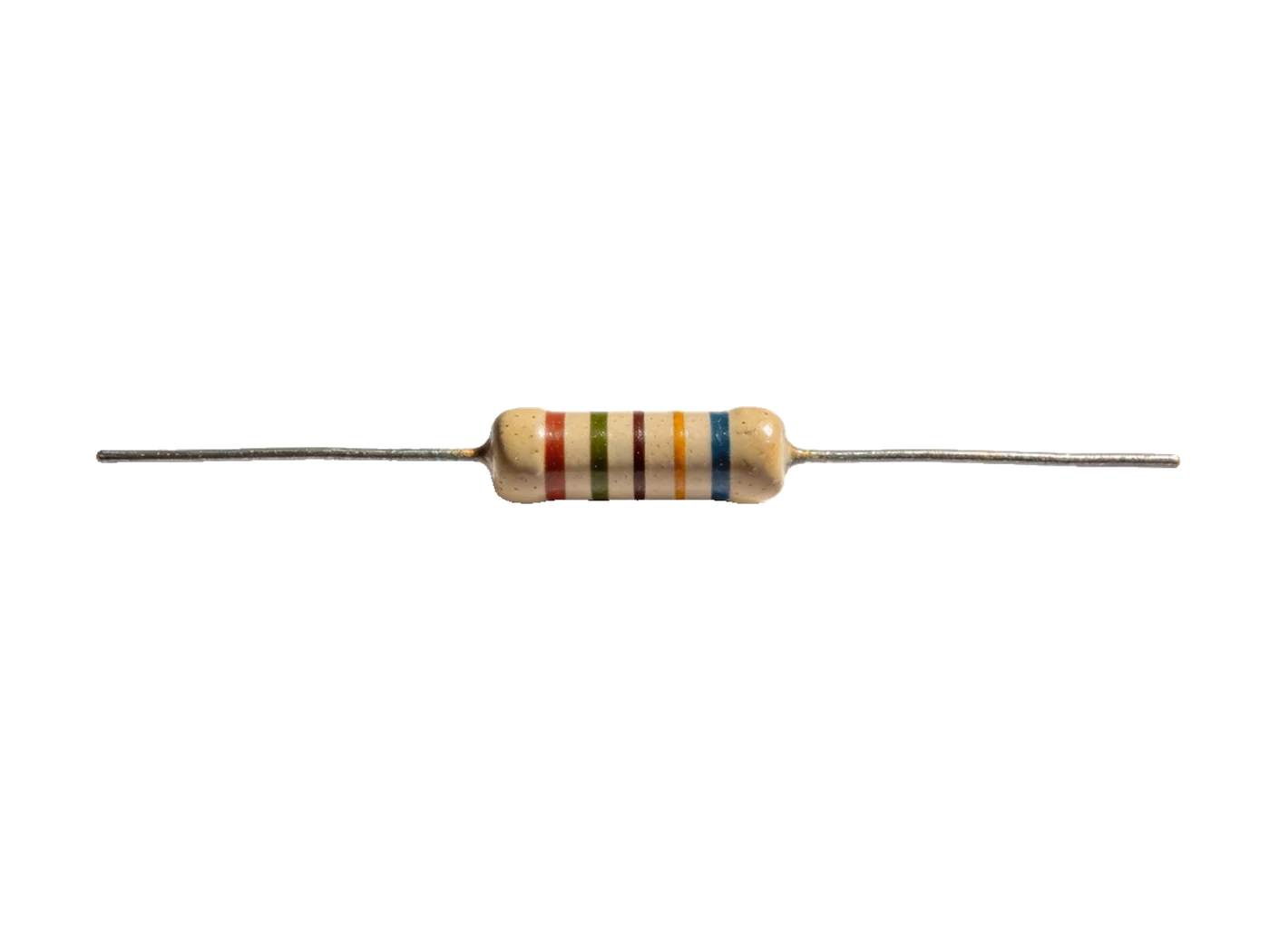
A resistor a hundred times too strong
The wrong grab into a box
A heart beats because it gets a tiny electric signal. If that signal fails, the heart stops. In 1956 there was no machine small enough to put inside a person and do that job. Wilson Greatbatch was not trying to build one. He was building a gadget to record the sound of a heartbeat.
He reached into a box of components for a ten thousand ohm resistor.
He pulled out a one million ohm one. A hundred times the resistance. Wrong part.
The circuit did not record anything. It pulsed. Steadily. At about the rate of a heart.
He sat and listened to it, and understood that he was not holding a recorder any more. He was holding something that could tell a heart when to beat.
1958
Into a dog.
1960
Into a person.
1961
On the market.
It is the mirror of Mars Climate Orbiter. One wrong component each. That one killed a spacecraft. This one is in millions of chests.
Heart Rhythm Society; University at Buffalo Jacobs School of Medicine; Lemelson-MIT; MIT Technology Review, September 2001.
One letter, from nobody in particular
A schoolgirl wrote to a disc jockey
In 1963 the Beatles were the biggest band in Britain and nobody in America had heard of them. American record companies had listened to them and said no.
10 Dec
The segment finally runs, three weeks late.
Marsha Albert, a schoolgirl in Silver Spring, Maryland, watches it and writes to Carroll James, a DJ at her local station. Her question: "Why can't we have music like that here in America?"
James does not have the record. Nobody in America does. Capitol had already turned down the Beatles' first three singles.
So he calls in favours and has a copy of I Want To Hold Your Hand flown over from London by a BOAC flight attendant.
17 Dec
He brings Marsha into the studio and lets her introduce it herself. First Beatles record ever played on American radio.
The phones do not stop. Other stations copy the tape.
26 Dec
Capitol tears up its mid-January release plan and rushes the single out on Boxing Day, the deadest week of the record year.
Number one in America three weeks later. Ed Sullivan on 9 February.
CBS News (2004); Princeton Alumni Weekly on Carroll James; Capitol release records. Note: sources disagree on whether she was fourteen or fifteen.
Sixteen bits where a bigger number was coming
A number too big for its box
Ariane 5 was Europe's big new rocket. Years of work, a new design, four science satellites on board. This was its first flight.
Inside the rocket was a part that kept track of which way it was pointing. A piece of its software took a big number and tried to put it in a small box. The number did not fit.
That software had been copied over from the older rocket, Ariane 4. The report gives the reason it was still there: "for commonality reasons." They kept it because they had always had it.
Ariane 5 did not need it at all once it left the ground. It was doing nothing.
But Ariane 5 picked up sideways speed five times faster than Ariane 4. So the number got bigger and the box stayed the same. Other numbers in that same software were checked for this. This one was not.
+36.7s
The exception fires.
+39s
The rocket veers, breaks up, and explodes at about 3,700 metres.
Software that was doing nothing, kept out of habit, wrecked a rocket in thirty-nine seconds.
ESA, Ariane 501 Inquiry Board Report, chaired by Prof. J. L. Lions, 19 July 1996.

A mould on a piece of fruit somebody bought
The melon from an Illinois market
Before penicillin a cut could kill you. Everyone knows Fleming found the mould. Almost nobody knows it then did nothing at all for eleven years, and that what finished the job was a melon.
1928
Fleming leaves culture plates on a bench, in his words "necessarily exposed to the air." A mould lands on one and kills the bacteria around it. He publishes, cannot make the stuff in any quantity, and largely moves on.
1939
Florey, Chain and Heatley at Oxford pick the abandoned paper back up.
1940
It works, spectacularly. But they can only produce microscopic amounts, and Britain is being bombed and has no industry to spare.
14 July 1941
They are sent to a United States Department of Agriculture fermentation laboratory in Peoria, Illinois. Not a hospital. A lab that knew about corn.
Peoria has two things Oxford never had. A sludge left over from milling corn, which the mould loves eating. And deep tanks with air pumped through them. The amounts jump.
1943
A worldwide hunt for a better mould strain ends at a fruit market in Peoria, on a rotting cantaloupe. Strain NRRL 1951. It is now the official state microbe of Illinois.
A dose was effectively priceless in 1940. Twenty dollars by July 1943. Fifty-five cents by 1946.
The famous butterfly, a spore landing on a plate, sat still for eleven years. It needed a corn by-product and a piece of bad fruit.
Fleming, Nobel Lecture, 11 December 1945; USDA Agricultural Research Service, Peoria; Science History Institute.
A dull job, done carefully
A summer student did the sum properly
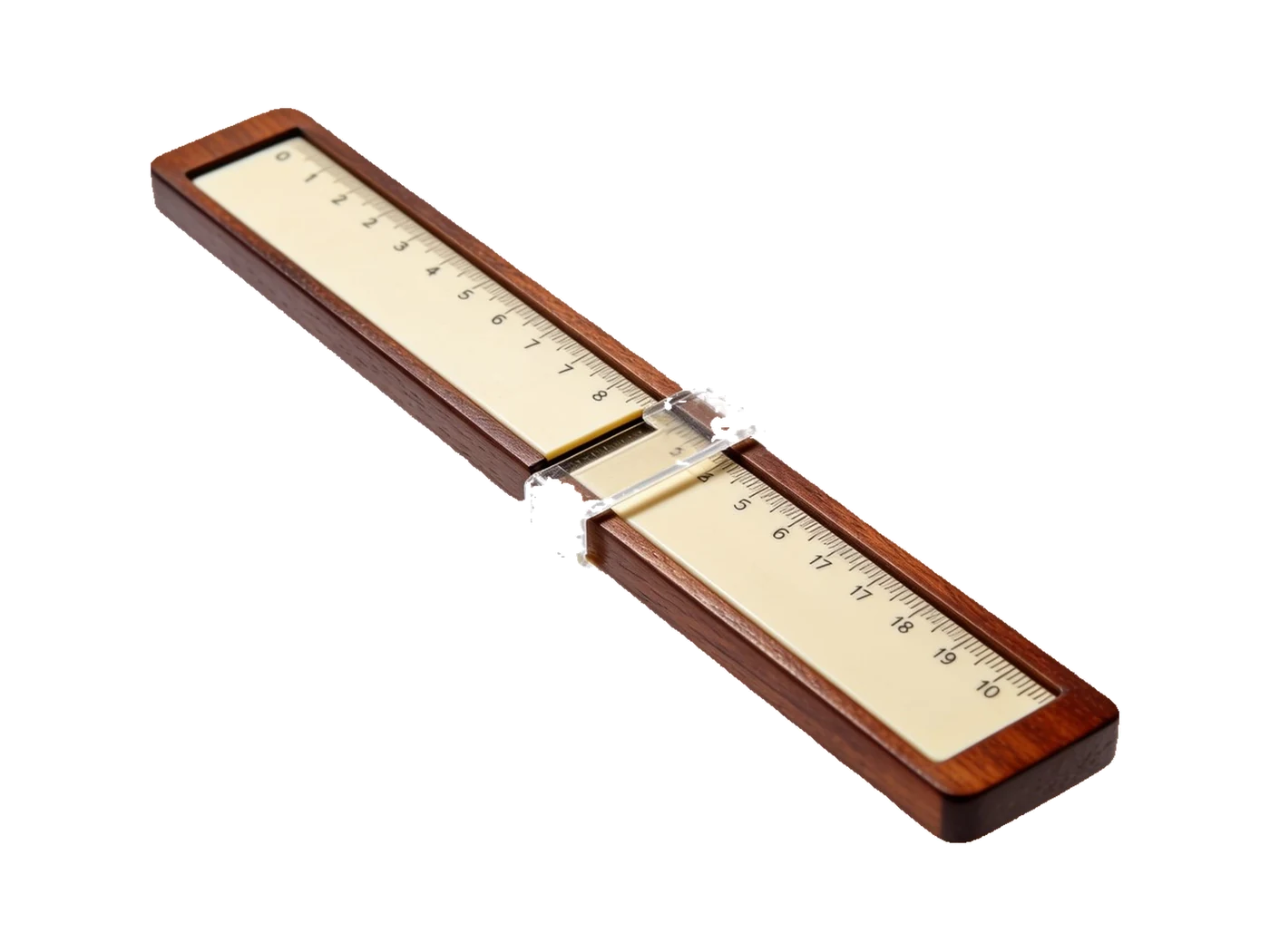
In 1965 nobody had been to the outer planets. Getting there takes so much fuel it was barely possible. Gary Flandro was a student doing part-time work at NASA's Jet Propulsion Laboratory, handed the boring sums nobody else wanted.
Doing the arithmetic, he noticed that Jupiter, Saturn, Uranus and Neptune were going to line up.
Lined up well enough that one spacecraft could be slung from each to the next, on their gravity instead of fuel.
175 years
That alignment comes around about once every 175 years.
1976–79
And the launch window was between 1976 and 1979.
Which meant: go in the next decade, or wait until the 2150s.
1977
The Grand Tour was cut down for cost and became Voyager. Two spacecraft, launched sixteen days apart.
They are the only things we have ever sent out of the solar system, and they are still going, carrying a gold record nobody will ever play.
Caltech Engineering & Science; Caltech Heritage Project interview with Gary Flandro, July 2022; PBS, The Farthest.
Chopping instead of rounding
A stock market halved by a decimal point
A stock market index is one number that tells you how the whole market is doing. Vancouver started a new one in January 1982 and set it at one thousand.
The number was worked out again after every single trade. About three thousand times a day.
And each time, the last digit was chopped off instead of rounded up or down.
Rounding is fair. It goes up as often as it goes down. Truncation only goes one way.
So the index bled a fraction of a point, three thousand times a day, for twenty-two months.
Brokers watched it sink to the 520s straight through a North American bull market and could not work out what was wrong with their city.
524.811
What the index said.
1098.892
What it should have said. It was corrected overnight. The market had lost half of itself to a decimal place.
Wall Street Journal, Kevin Quinn, 8 November 1983, p.37; McCullough & Vinod (1999). The two exact index figures are widely repeated and should be checked against the original before republication.

One machine somebody forgot
The eighth server
Knight Capital was one of the biggest trading firms in America. Its computers bought and sold shares by themselves, very fast. On 1 August 2012 it was putting new software onto the machines that did it.
The deploy went to seven of eight production servers.
The eighth still had old software on it: a routine called Power Peg that nobody had used for eight years.
09:30
The market opens. The new software reuses a switch that the old routine reads a different way. The eighth machine starts buying and selling at full speed, for no reason.
Nobody can find the off switch. Roughly seven billion dollars of unintended orders go out.
10:15
Forty-five minutes after the opening bell, Knight Capital has stopped being a going concern.
$440m
Lost. The firm was sold.
The small cause here is not even a line of code. It is one machine in a rack that somebody did not tick off a list.
SEC administrative order (2013); Knight Capital Group press release, SEC EDGAR, 2 August 2012.
Sunlight hitting cloud at an unusual angle
The man who decided the computer was wrong
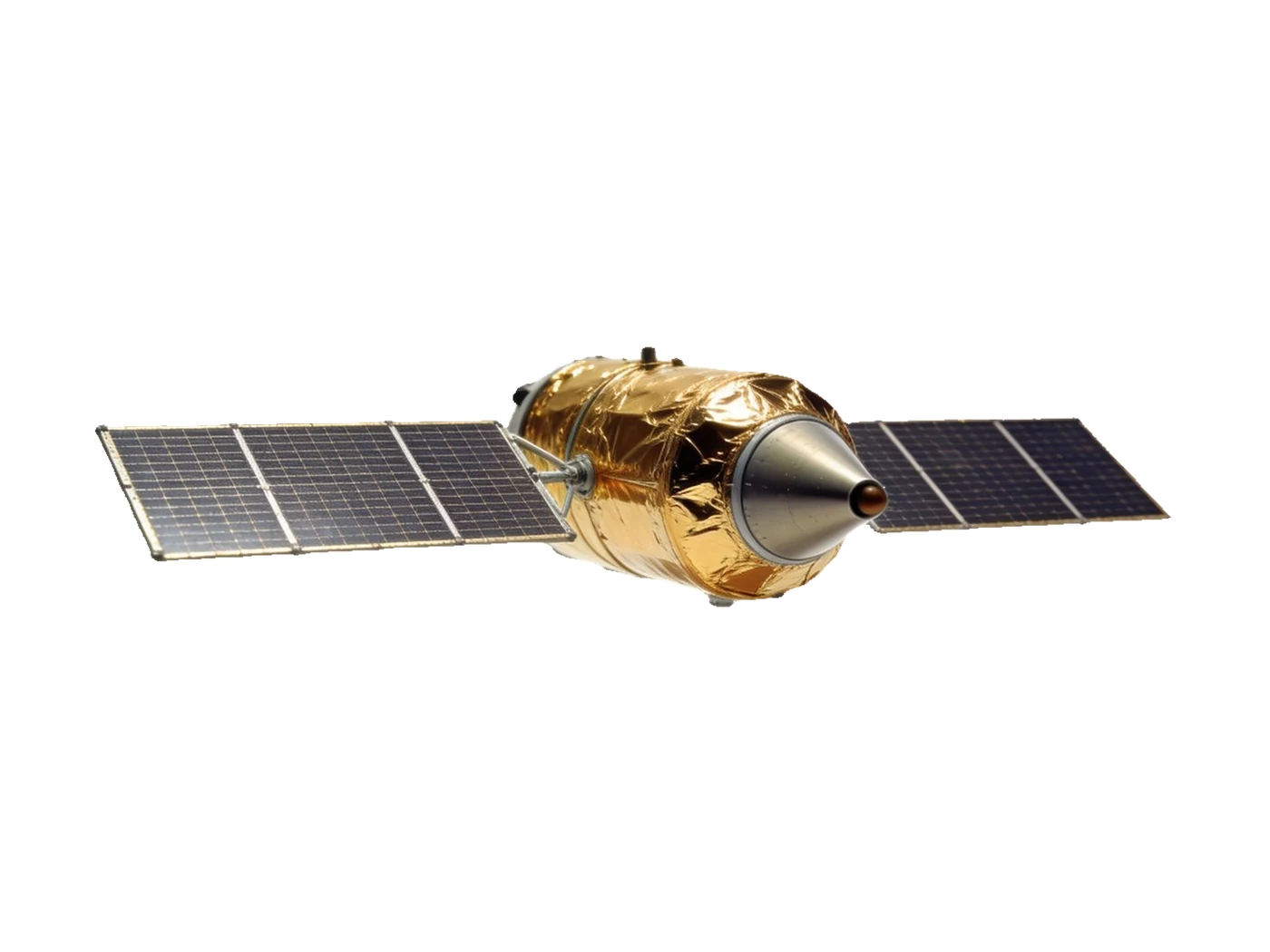
It is 1983 and the Cold War is at its worst. The Soviet Union has satellites watching America for missile launches. If they see one, there are minutes to decide whether to fire back. Stanislav Petrov is the officer on duty that night.
The warning system tells him America has launched a missile. Then it says four more are coming behind it.
The cause, found later: sunlight glinting off high-altitude cloud tops at an unusual angle, which the satellites read as rocket plumes.
He has minutes. The radars on the ground show nothing, but they would not be able to see anything this early anyway.
His reasoning was not technical. It was this: America would not start a nuclear war with five missiles.
He logged it as a malfunction and waited for corroboration that never came.
His own words, to the BBC thirty years later: "I knew perfectly well that nobody would be able to correct my mistake if I had made one."
Be careful with this one. He was one link in a chain, and historians disagree about how close a launch really was. What is certain is what he did, which was to decide that the computer was wrong.
Forden, Podvig & Postol, IEEE Spectrum 37(3), March 2000; Washington Post interview, 10 February 1999; BBC, September 2013.