How do affirmations work?
In June 2020, in the middle of COVID, every buzz on my phone was bad news. So we made a small app called Love Alert. It did one thing: once a day it sent you a kind line as a notification.
"You can't make everyone happy. You're not pizza."
Over 10,000 people downloaded it, in more than 75 countries. I don't know if it helped them, but I know they wanted it, and during COVID it was what I needed too. We shut it down in 2021 because we never worked out how to make money from it.
I still stop when Instagram shows me something like "no worries, you got time, and you can do it." I believe affirmations work. I wanted to know why, so I went and read the studies.
Where it started: a French chemist in 1923.
In January 1923 a French chemist called Émile Coué arrived in New York and told America to say one sentence twenty times every morning, counting on a string tied with twenty knots.
"Every day, in every respect, I am getting better and better."
People went mad for it. Within a week a newspaper cartoonist had him treating the whole Senate. He recorded the sentence in New York that February, and the record still exists.
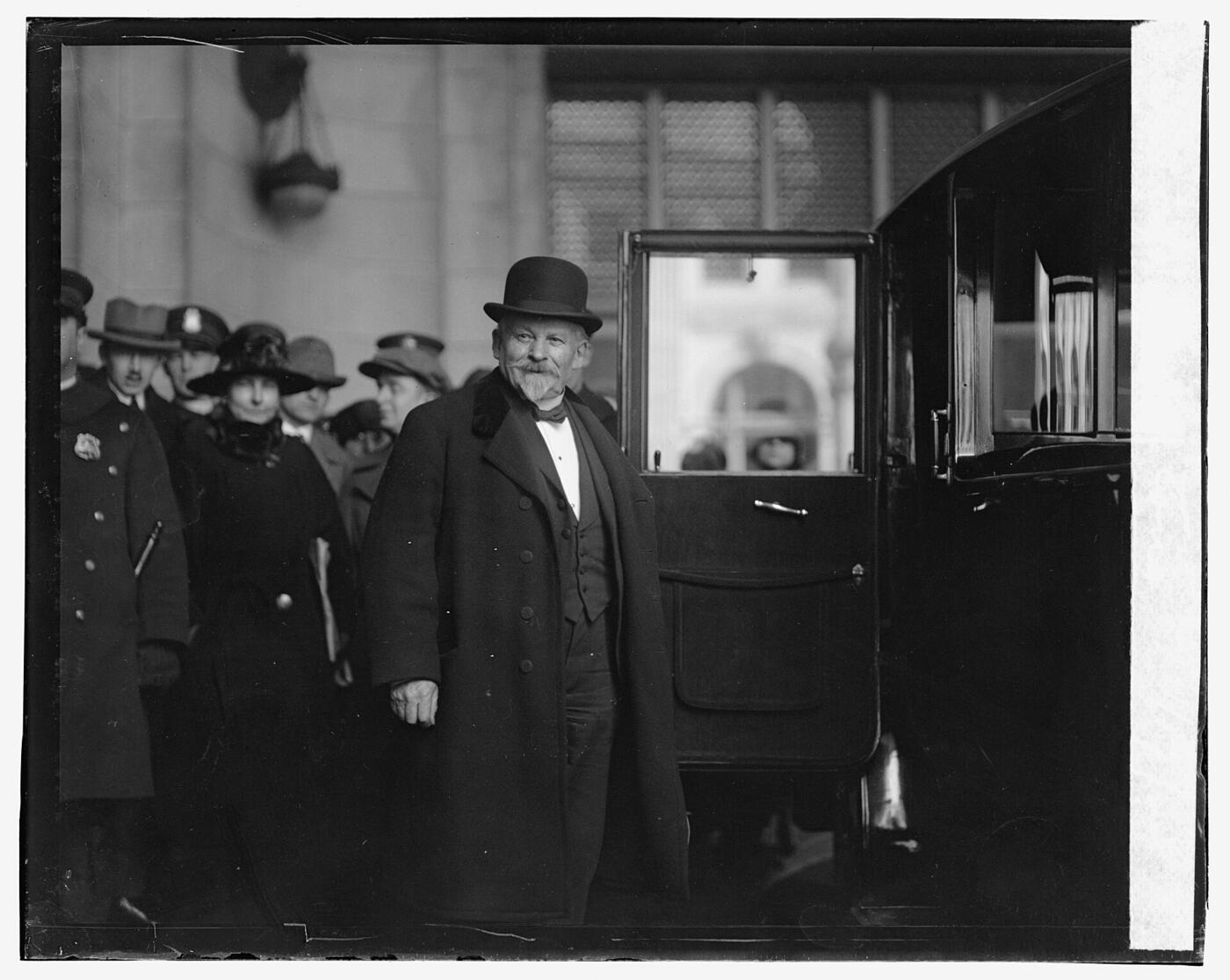
He told reporters, "I have healed nobody," and said people healed themselves. Most affirmation posts on Instagram today are still his idea: an "I am" line you repeat.
Say "I am a lovable person" sixteen times, and for most people nothing happens.In two bigger studies in 2020, people felt no better and no worse afterwards.
The version researchers have tested: writing about what you care about.
Telling yourself something nice and the thing researchers tested turn out to be two different things. Since the 1980s psychologists have tested a different kind of affirmation. You pick something you care about, your family, your friends, music, your faith, and you write for about fifteen minutes on why it matters to you.
Which is funny, because that's not what Love Alert did at all.
Timing matters. It helps when one part of your life is under pressure, like an exam or a scary test result, and you write before the hard moment, about a different part of your life.
The writing seems to work by putting the thing you're scared of next to the rest of your life, so it stops feeling like all of you. The drawing below shows that idea. Pick something you're worried about, then something you care about.
What's weighing on you?
Now pick something you care about.
This is a drawing of the idea, not data and not a treatment. The exercise itself is further down.
What happens, step by step.
- Something threatens you. A bad mark, a hard conversation, news about your health. You get stressed and start protecting yourself.Cohen & Sherman, Annual Review of Psychology, 2014
- You shrink to that one thing. Researchers describe it as "a constricted self disproportionately influenced by the threat." The exam starts to feel like it is you.Critcher & Dunning, 2015
- You remember something else that matters. A value from another part of your life, before the hard moment. Affirming the same thing that's under attack tends to backfire.Sherman & Hartson, 2011; Critcher et al., 2010
- The picture of you gets bigger. The worry stays just as important, but it's less all-defining. In studies, this wider view is what explained the change.Critcher & Dunning, 2015
- You stop defending yourself. People who did the exercise were more open to bad news. Across 144 tests on health messages, they were more likely to accept the advice and to act on it.Epton et al., Health Psychology, 2015
- A small start can grow. One better week can lead to the next, which the researchers call "a recursive process." It only happens when the pressure is real and there's support around you.Cohen et al., Science, 2009; Ferrer & Cohen, 2019
In one study, people who did the exercise before a stressful test didn't get the rise in the stress hormone cortisol that the others got.
Creswell et al., Psychological Science, 2005 (85 people).
The worry stays the same size. There's just more of you around it.
How much does it help?
It helps a little, and it depends on you. Put together, the school studies show it helps students who are under pressure, for example because of a stereotype about people like them, and does almost nothing for everyone else. When one school district gave it to a second year of students, the effect was gone.
Effect sizes, where 0 is no effect and 0.2 is usually called small. Wu, Spreckelsen & Cohen, Journal of Social Issues, 2021 (58 studies). Hanselman et al., Journal of Educational Psychology, 2017. Epton et al., Health Psychology, 2015. Lines show the likely range where it was reported.
In the first big study, Black seventh graders in the US who wrote about their values at the start of term were less than half as likely to end up with a D or below, 9% against 20%.
Cohen et al., Science, 2006.
So why doesn't "I am enough" work?
The best guess is that a line too far from what you believe calls up its opposite. Slide to how true this one feels to you today.
"I am a lovable person"
The famous study behind this was small, 68 students, and it found people with low self-esteem felt worse after repeating the line. Two bigger repeats in 2020 found no change at all. So repeating a line like this probably neither hurts nor helps.
Wood, Perunovic & Lee, Psychological Science, 2009. Flynn & Bordieri, Journal of Contextual Behavioral Science, 2020 (about 225 and 237 people).
In the same 2009 paper, people told a positive line "may or may not be true" felt better than people told to focus only on how it's true.
And hearing it from someone else?
This is the kind Love Alert sent. Nobody has tested an affirmation app, but people have tested kind text messages.
Left: Agyapong et al., Journal of Affective Disorders, 2012, a randomised trial of 54 people with depression and alcohol problems, two supportive texts a day for three months, lower score is better. Right: Agyapong et al., IJERPH, 2021, Text4Hope in Alberta during COVID, one text a day, 2,011 people six weeks in against 756 who had just joined. Not randomised, and run by the team behind the service.
Talking to yourself the way a friend would might help too. In one set of studies, people who coached themselves as "you", or by their own name, felt calmer and did better than people who said "I". A larger study in Japan didn't find it, so treat it as a nudge.
Kross et al., Journal of Personality and Social Psychology, 2014. Dolcos & Albarracín, European Journal of Social Psychology, 2014.
How to do the values exercise yourself.
This is close to how researchers ran it in the studies above. You need about fifteen minutes and somewhere quiet.
- Pick what matters most to you. Look at a list of things people care about, like the one below, and choose the one or two that matter most to you. There's no right answer.
- Write about why. Write why it matters to you, and a time it did. A few honest sentences is enough. Spelling doesn't matter, and nobody else reads it.
- Do it before the hard thing. The night before the exam or the morning of the interview, not after. Schools in the studies ran it two to five times a year, at stressful points.
It helps most when something real is weighing on you. If life is calm, don't expect to feel much.
Steps follow Cohen et al., Science, 2006 and Cohen & Sherman, Annual Review of Psychology, 2014. Each writing took about fifteen minutes.
Step 1. What matters most to you?
Step 2. Why does it matter to you, and when did it?
So, do they work?
Mostly it depends on you. I don't know if Love Alert helped the people who used it, only that they wanted it. It helped me during COVID, and now I have a better idea why: it came from someone else, and it never asked me to believe anything huge.
If you want the version with evidence behind it, write about something you care about for fifteen minutes before something hard.