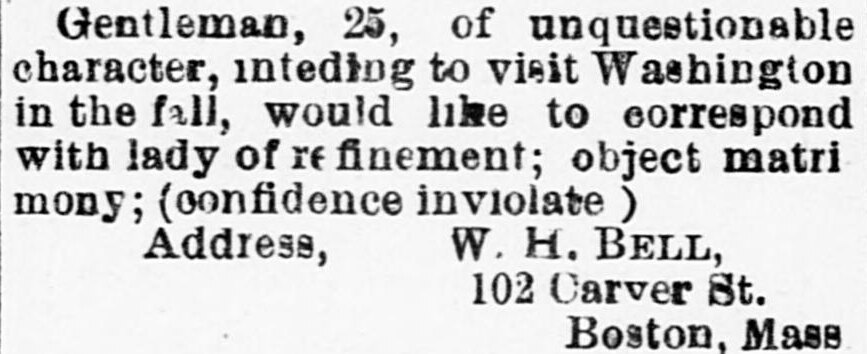
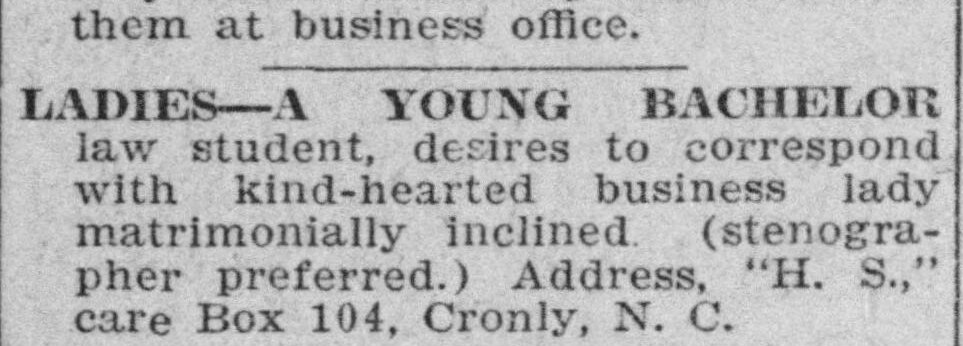

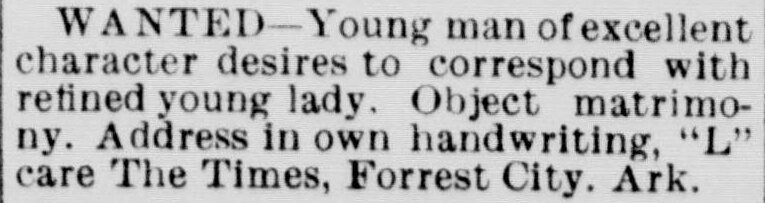

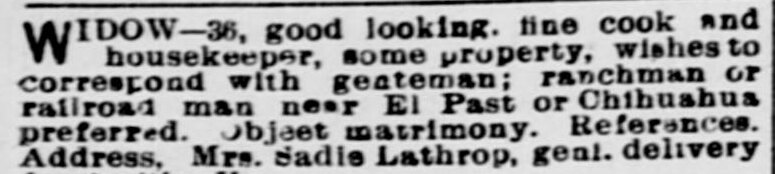
















First, the parlour.
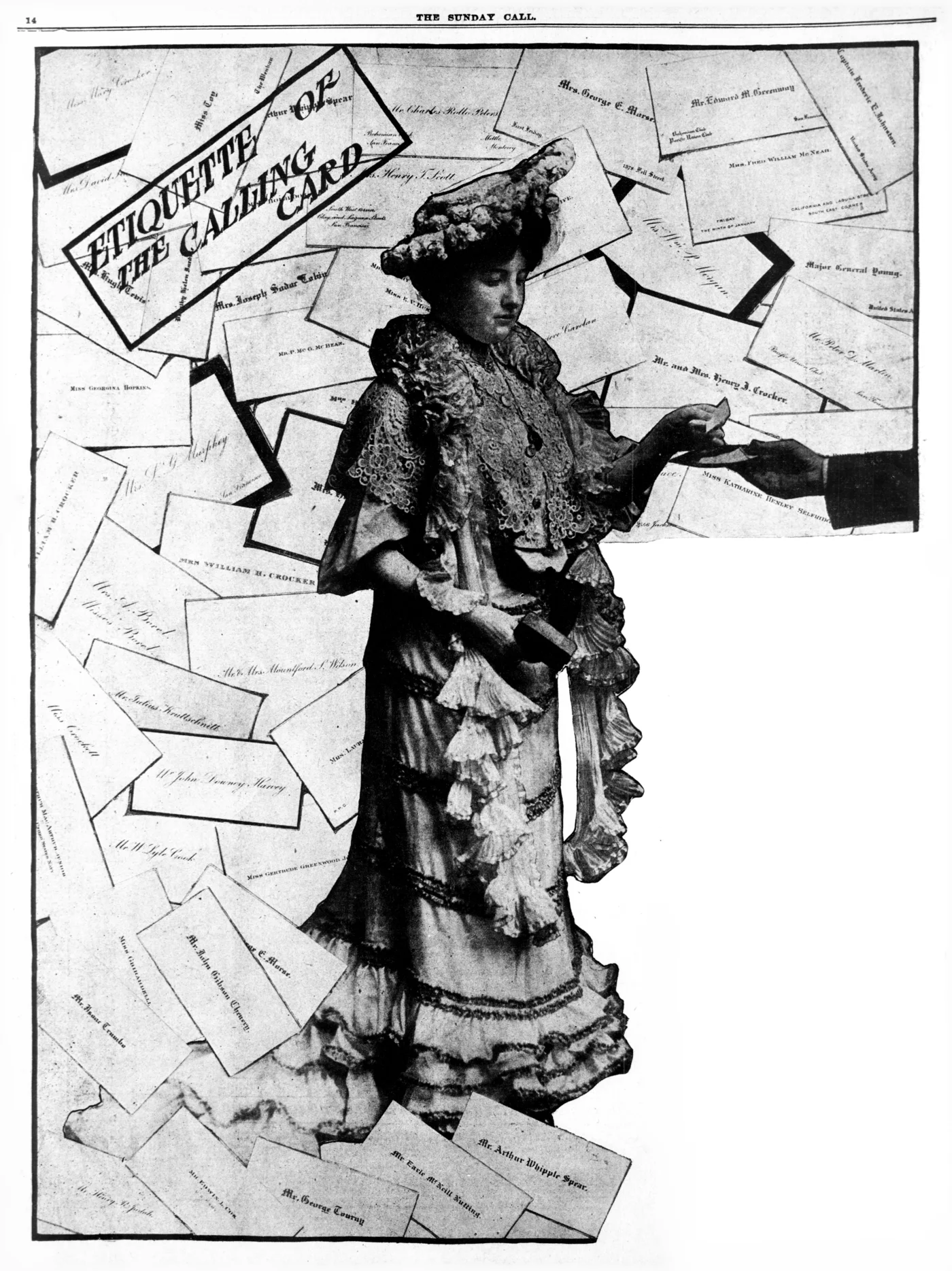
In 1890 a young man didn't take a woman out. He called on her at home, asked for her mother too, and left a card.
An 1881 etiquette book gave him a curfew. Leave by ten: "Two hours is quite long enough for a call."
Even the word "date" was new. It shows up as Chicago slang in a George Ade book of 1896.
But out west, there was no one to call on.
Young men had gone west for mines, ranches and railways. The women mostly stayed east. In Montana there were two men for every woman.
Men for every 100 women, 1890
U.S. Census, 1890, part I
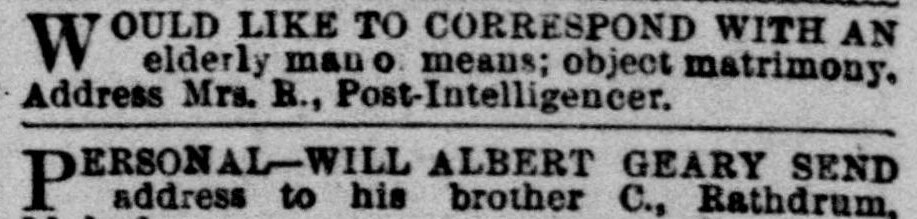
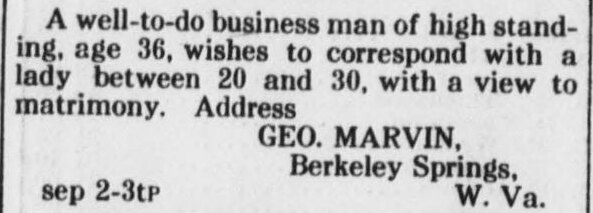
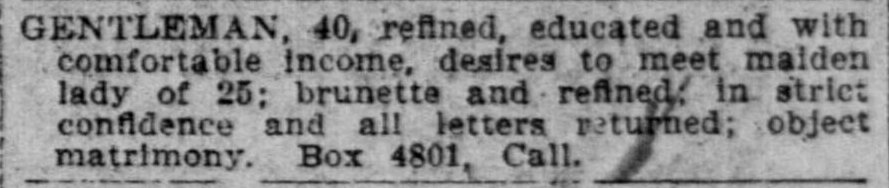
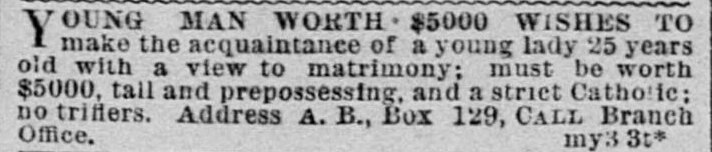
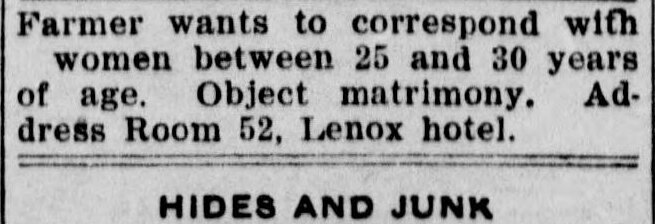
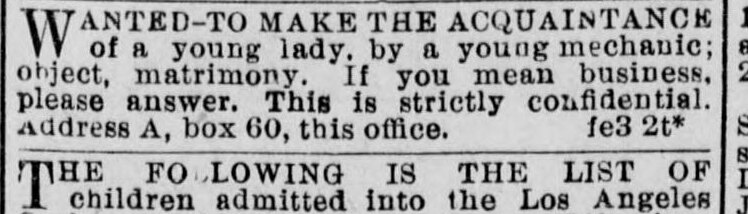
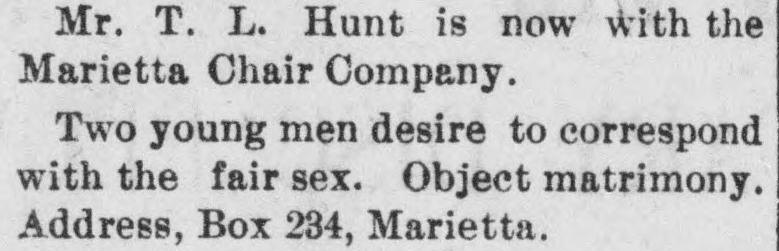
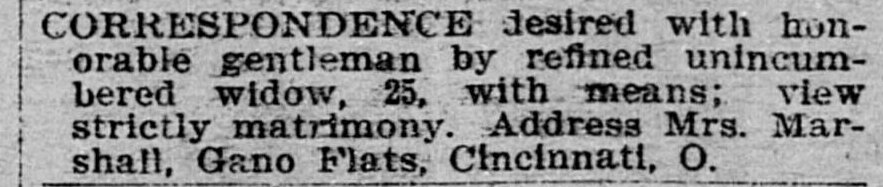
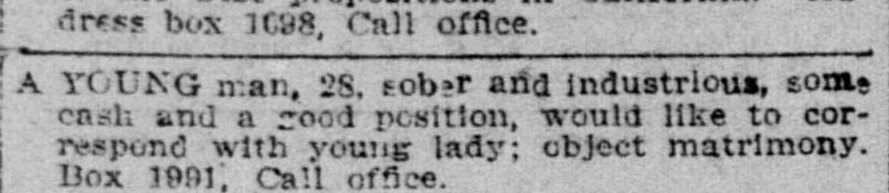
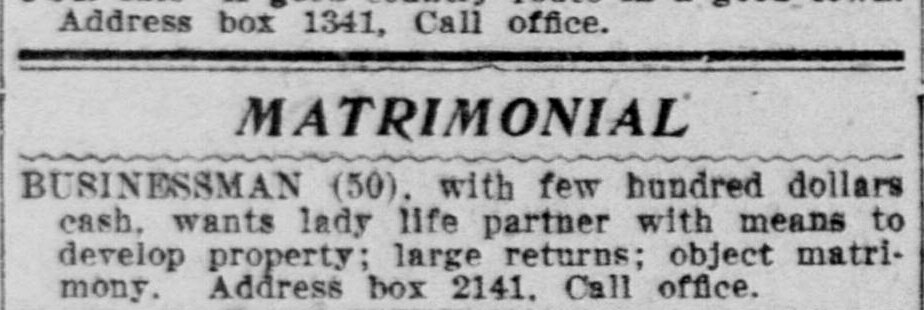
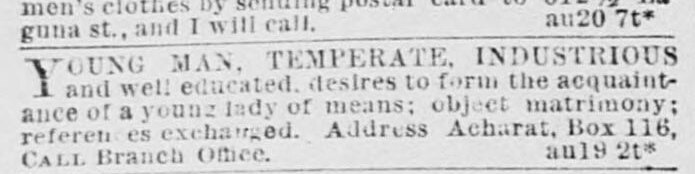
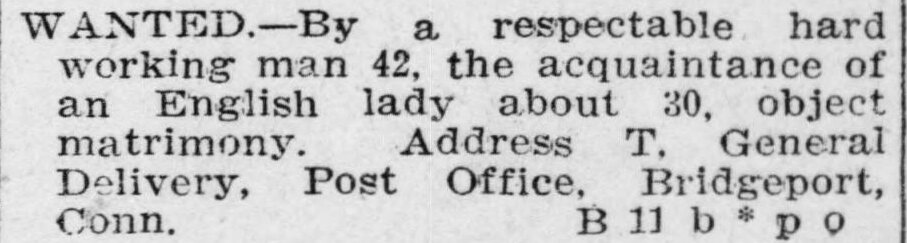
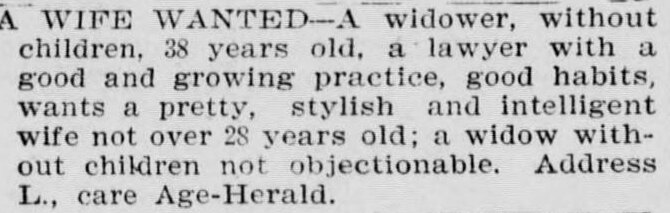
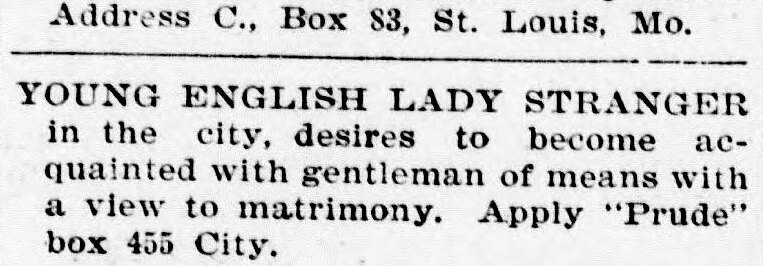
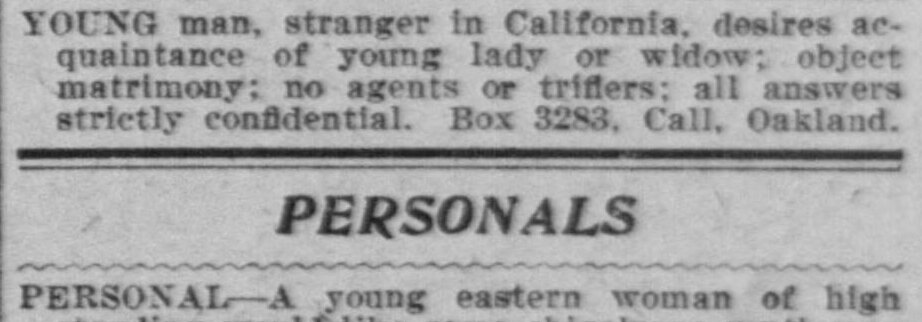
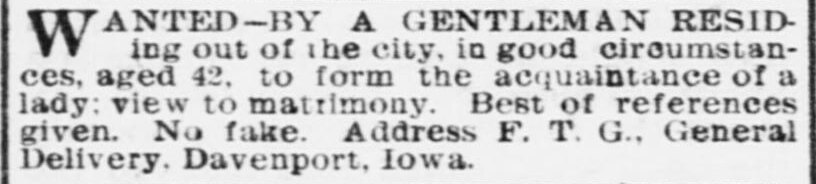
So they used the newspaper.
Write your ad
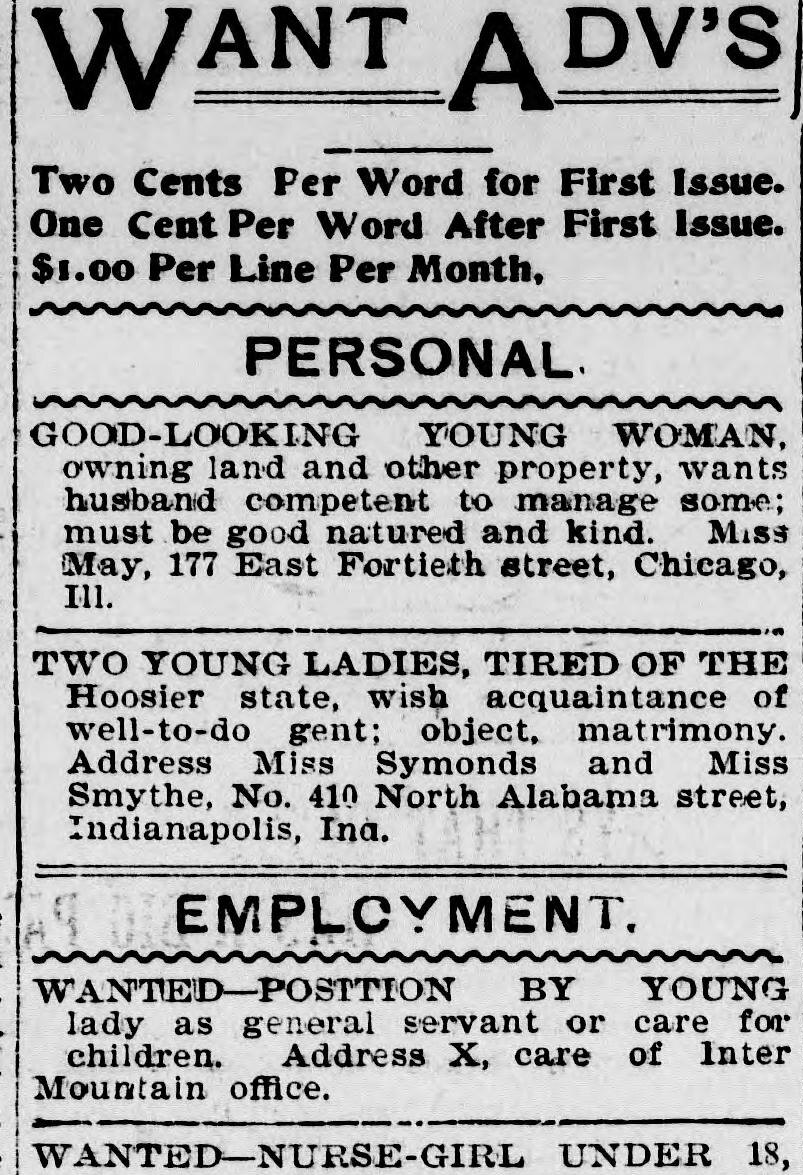
A few lines near the back, at a cent a word. The typical ad here is 25 words, so about 25 cents.
Wait for the post
Letters came to a box number at the paper. Free mail delivery to farms only began in 1896.
Call on her
If the letters went well, you visited. And left by ten.
Here's one.
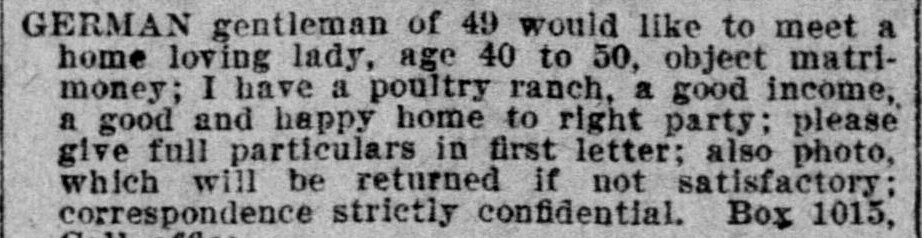
German gentleman of 49
Who he iswould like to meet a home loving lady, age 40 to 50
His filtersobject matrimoney
What he's here forI have a poultry ranch, a good income, a good and happy home to right party
His bioalso photo, which will be returned if not satisfactory
The 1910 swipeBox 1015, Call office
Where to reply
He paid by the word, so he fit a whole life into a few lines. Our daily game works the other way round: one true news sentence, and you find the five words that carry it. Play today's Long Story Short
Then I read 142 more.
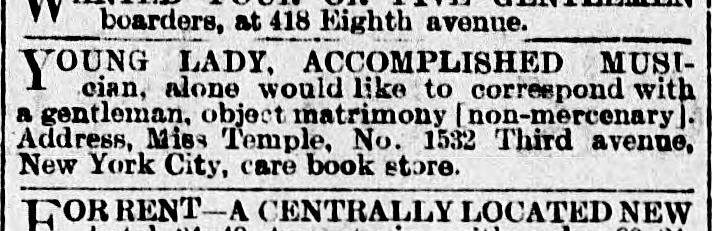
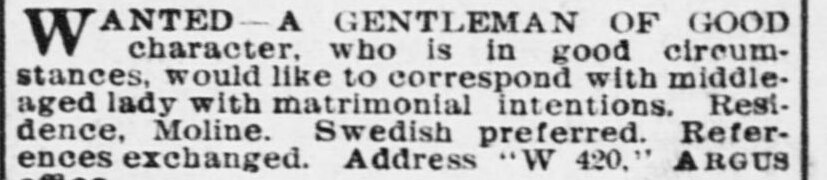
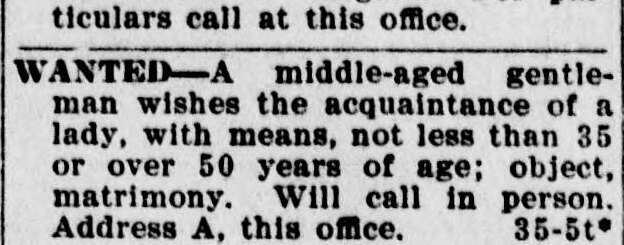
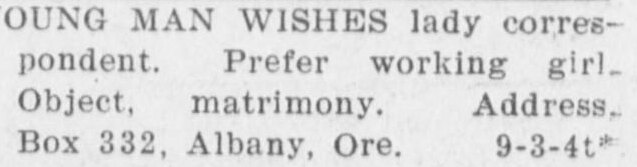
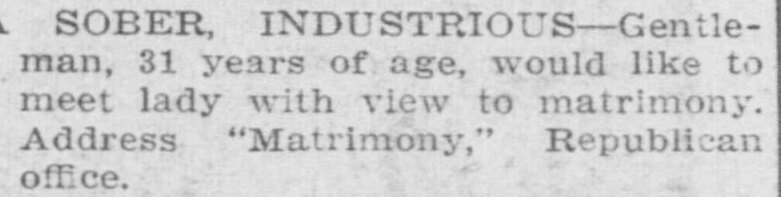
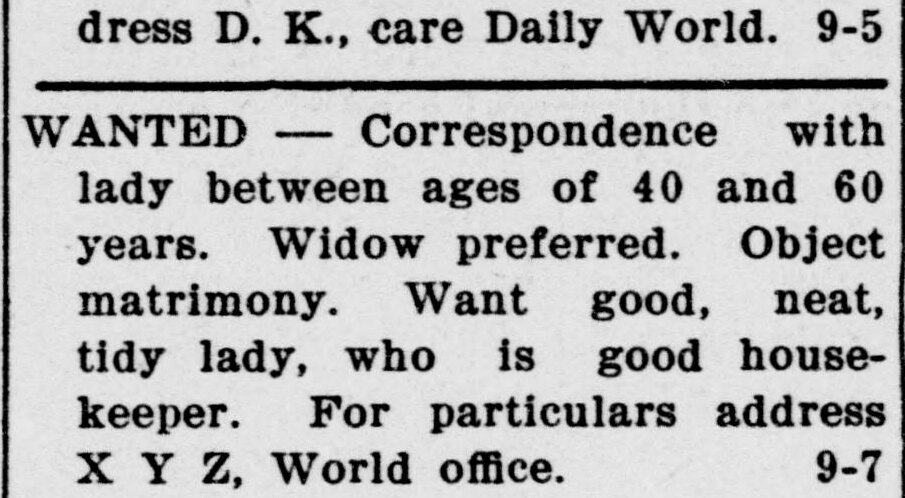
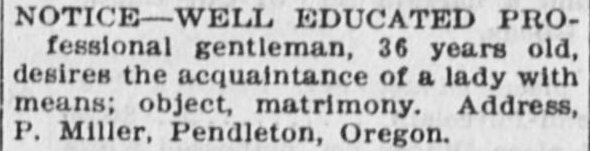
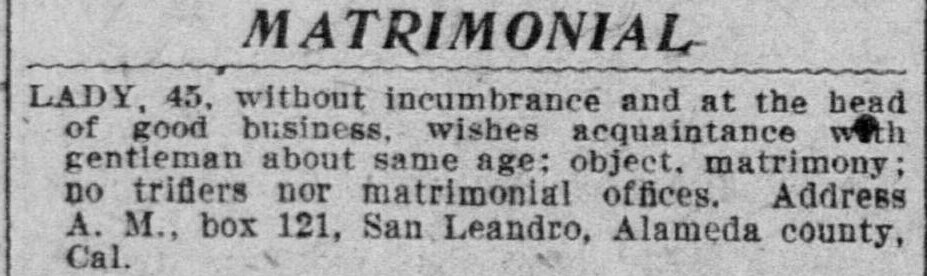
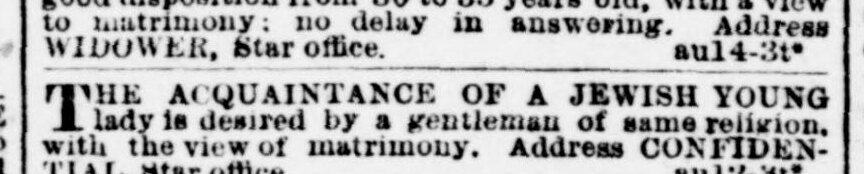
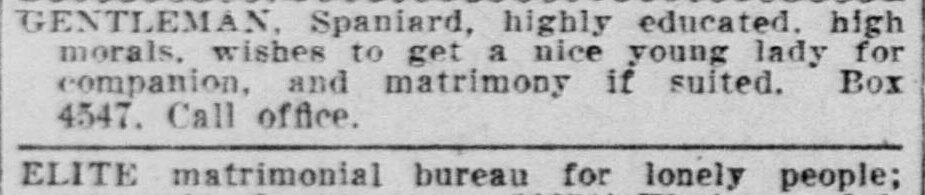
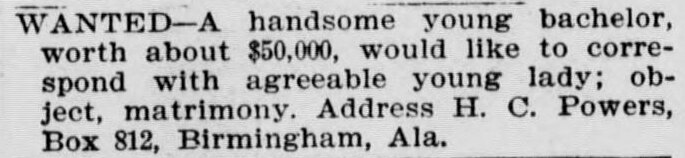
I went through more than 750,000 newspaper pages from 1890, 1900, 1905 and 1910, from the Library of Congress. I kept every ad from someone looking for a husband or a wife, and left out the agencies and the jokes.
Who placed them
105 men27 women10 you can't tell
What they wrote, share of ads
MenWomen
Only 2 of the 142 used the word "lonely".
Most were men, a long way from anyone.

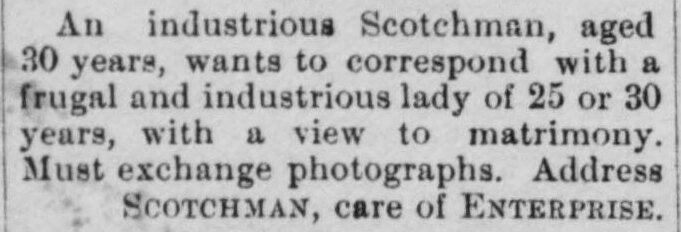
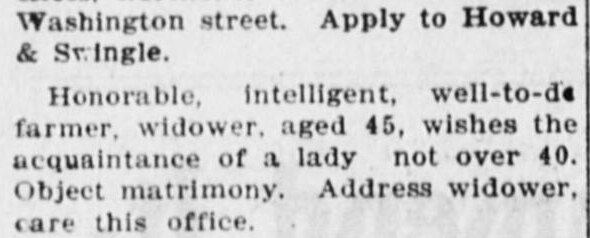
The women talked about money.

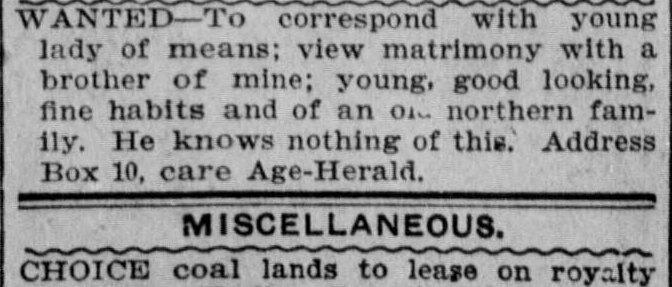
A sister placed one for her brother. "He knows nothing of this."
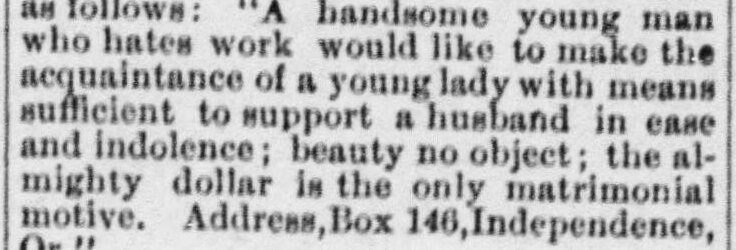
A man who said he hated work wanted a wife who could keep him.
A blind man who made his living on the street wrote one.

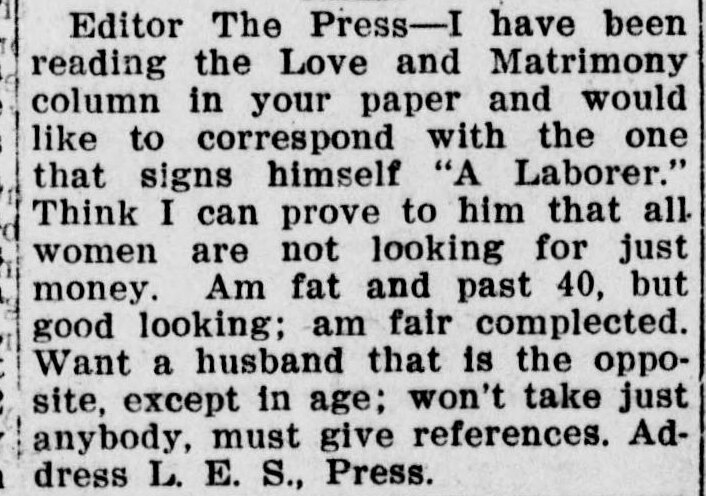
A woman in Spokane wrote in to prove that not every woman wanted money.
Now you write back.
These are real ads from the papers, and every word on the cards is theirs.
Some ads were bait.
On 3 December 1904 a man calling himself Johann Hoch put an ad in Chicago's German paper, the Abend Post. "Widower, without children… own home… object, matrimony."
- 3 Dec 1904The ad runs. Marie Walcker, about 46, runs a sweet shop. Her sister writes back for her.
- 10 DecThey marry. That day she sells the shop for $75 and gives him her $270 savings.
- 12 Jan 1905She dies. Doctors later find arsenic.
- 18 JanHe marries her sister. The next day she gives him $750 and he is gone.
- LaterPolice find him in New York, under another name, with arsenic in a fountain pen.
- 23 Feb 1906He is hanged in Chicago.
"I am a lady standing alone. I am forty-five years of age."Marie Walcker's reply, read out by the Illinois Supreme Court, 1905
Agencies were the bigger trap. They placed ads from "wealthy widows" who didn't exist, then sent a form and asked for a $2 to $5 fee. In 1902 Chicago police found about 200,000 letters in offices one agency man, Oscar Wells, shared with others.
Others ended in a wedding.
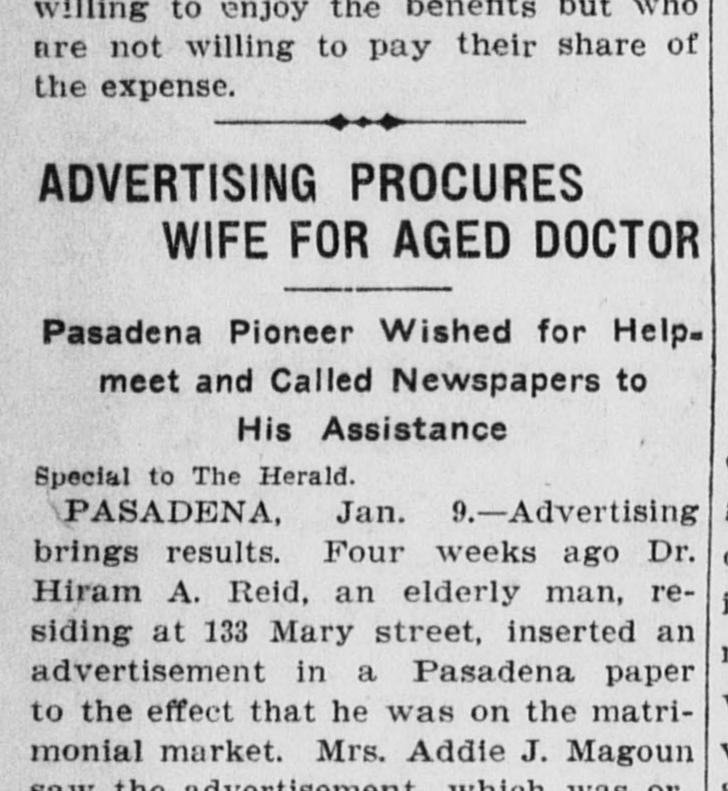
Hiram Reid was 70, a widower, and had written the only history of Pasadena. In December 1904 he put an ad in a Pasadena paper and signed it "David".
"A widower of culture and refinement… with a small home and income enough for two."
Addie Magoun, just in from Vermont, wrote back. On a Saturday morning he stopped the ad. They married that evening.
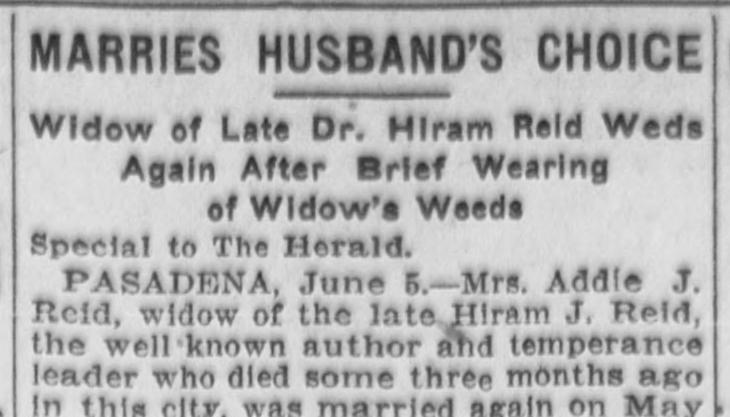
They had a year together before he caught a cold at the Rose Parade and died in January 1906. On his deathbed, she said, he told her to marry again. That May she married their lodger.
"Mrs. Rodriguez thinks that her present husband was chosen for her by Dr. Reid himself."Los Angeles Herald, 6 June 1906
In Virginia a lawyer named Borden swapped photographs with a woman from Indiana, met her off the 8 o'clock train, and signed the marriage contract in the station waiting room. They married that night. The mayor sent a policeman to hold back the crowd.
Then the phone arrived.
In 1890 the census counted 233,678 telephones in the whole country. By 1902 there were 2.3 million. Courting moved out of the parlour and into restaurants, theatres and dance halls.
Get the next one.
One story like this a week, by email. No spam, and you can leave any time.
Play today's Long Story Short.
Every day we take one real news sentence, and you keep the five words that carry it. It takes about two minutes.