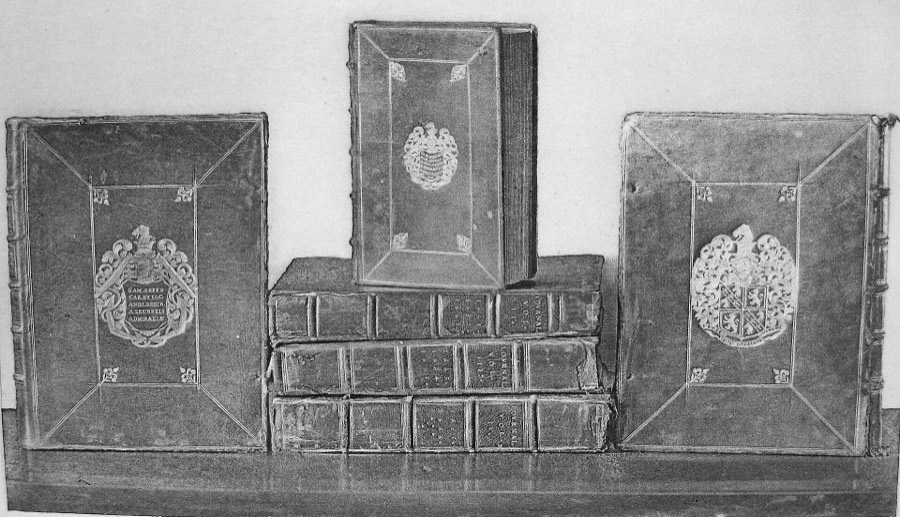
On 4 September 1666, Samuel Pepys buried his cheese.

The Great Fire was three streets away, so he dug a pit in his garden and put his wine and his parmesan in it. Then he went home and wrote it all down, which he'd been doing most nights for six years by then.

That is all a journal is. He's just writing, and writing, and mostly just writing everyday to remember things.

I started doing this a few weeks back and got properly into it, so I went and read everything I could find about whether it actually does anything. I assumed something people have been doing for a thousand years would have proper instructions by now. It mostly doesn't, and the bits everyone repeats are quite new and nobody really checked them.

Ohh if you still don't know, today's drop is about Journaling.

Most people do it to remember things.

Pepys is the only reason we know what a normal Tuesday was like in 1666, and it's about the only way to find out what you were doing in March, unless you count your photo gallery, where you search March 2025 and find pictures of your ex.

In short, journaling is a way for people to remember things.

Some people do it to think, because writing something down makes you sort it out a bit, and that's usually the useful part. And some do it because it makes them feel better, which is the one that's actually been tested.

The oldest one we still have is about a year long.

It belongs to a scholar in Baghdad called Abu Ali ibn al-Banna who died in 1079, and one piece of it is still sitting in a library in Damascus, covering August 1068 to September 1069. Marcus Aurelius was doing the same thing while he was away on campaign, in twelve books he never bothered to name, and nobody printed them until 1558. If you read it you'll notice he keeps saying the same things over and over. He's not making an argument, he's just reminding himself.

Book five opens with him telling himself to get out of bed, and asking whether he was really put on earth to lie there keeping warm. Book two opens with him warning himself that today he is going to run into the busybody and the ungrateful and the arrogant and the envious, so he should be ready for it and not take it personally.

That's the emperor of Rome, leaving himself notes about not wanting to get up in the morning.

Ki no Tsurayuki wrote down a fifty-five day boat trip home to Kyoto in 935, and Pepys kept his going for nine years straight.
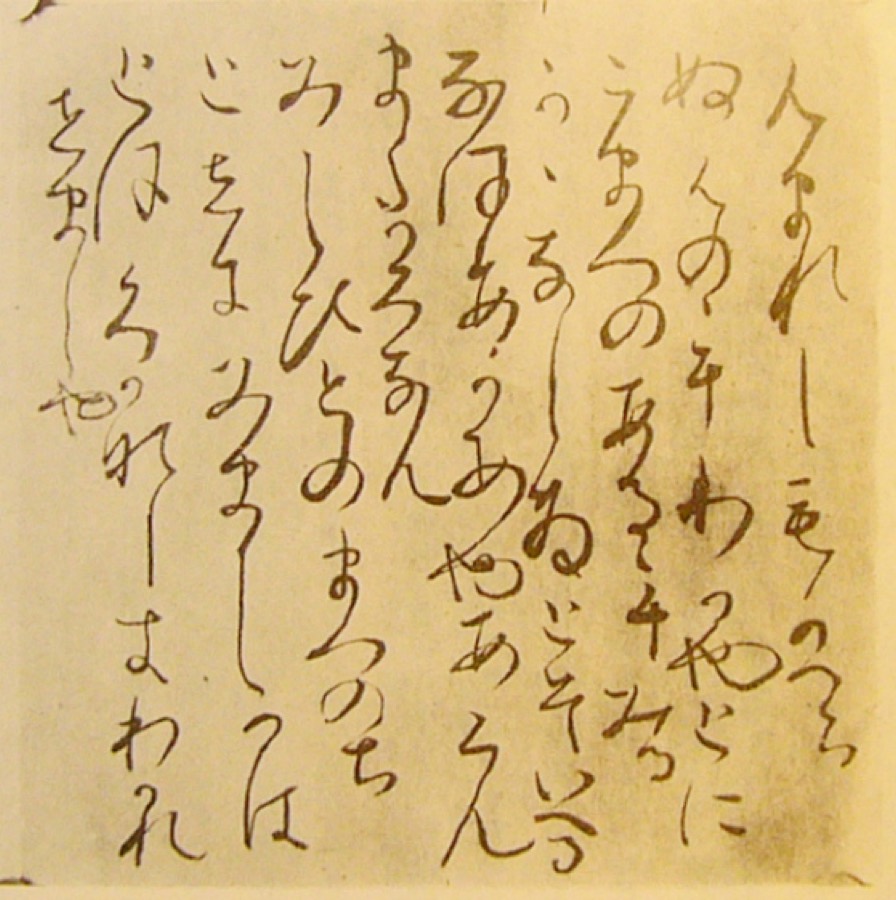
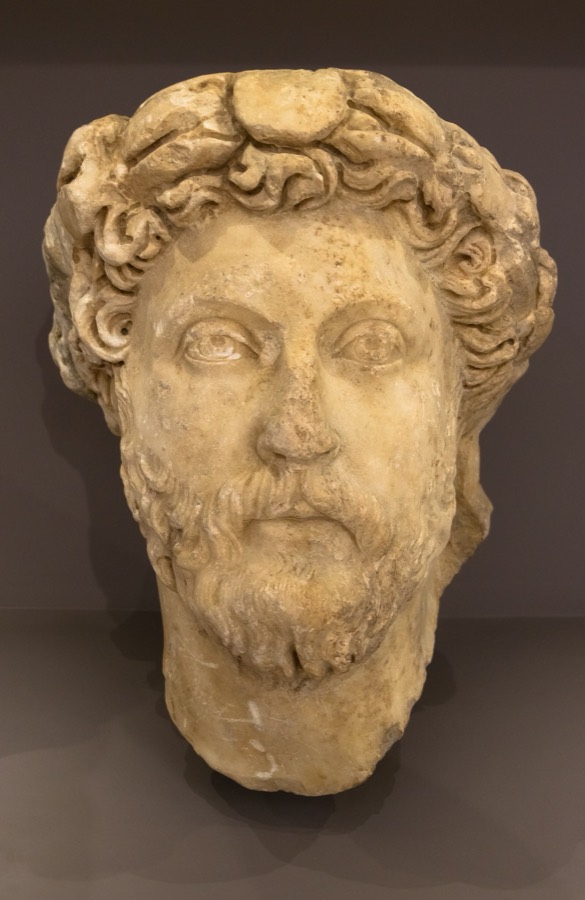
The Tosa Nikki, copied by Fujiwara no Teika Marble head of Marcus Aurelius The manuscript volumes of Samuel Pepys's diary

Meditations 2.1 and 5.1, George Long translation · Tosa Nikki copied by Fujiwara no Teika (1162–1241), public domain · Head of Marcus Aurelius, Heraklion, photo Jebulon, CC0 · Pepys manuscript volumes, public domain. Via Wikimedia Commons.

What it has been shown to do is mostly physical.

This starts in 1986 with James Pennebaker and Sandra Beall (two psychologists at Southern Methodist University in Texas, and Pennebaker basically started this whole field and is still at it, he's a professor emeritus at UT Austin now), who got forty-six students to write about the worst thing that had ever happened to them, while another group wrote about their shoes. There's forty years of studies after that, and the ones that hold up best aren't about mood at all, which is what everyone assumes it's for.

The strongest one is from 1999. A team in New York took patients with asthma, split them in two, and had one half write about stressful things in their life for twenty minutes a day for three days while the other half wrote about their plans for the day. Then they left them alone for four months and tested their breathing.

64 → 76 Lungs get scored out of 100, where 100 is normal for someone your age, height and sex. The asthma patients started on 63.9. Four months later they were on 76.3. The half who wrote about their plans had not moved.
before63.9
after76.3

So they went from breathing at about two thirds of normal to about three quarters, and they did it by writing for an hour in total, spread over three days, four months earlier. Everyone in the trial was already on their normal medication, so this sat on top of the treatment they were getting anyway. The same study ran the same thing on rheumatoid arthritis patients and they came out about 28% less severe on the scale their doctors use, so it happened twice, in two different illnesses, in the same trial.

The paper doesn't say why it worked. They measured it, it held up, and people are still arguing about the reason.

Smyth, Stone, Hurewitz & Kaell, JAMA 1999;281(14):1304–1309. The measure is FEV₁, the amount of air you can force out in one second, scored against what is normal for your age, height and sex. 100% on the bars would be a healthy pair of lungs.

A team in New Zealand tested it on a wound they made themselves.

Forty-nine people aged between sixty-four and ninety-seven wrote for twenty minutes a day for three days, went away for two weeks, then came back and had a punch biopsy taken from the inside of their upper arm. That's the small round tool dermatologists use to take a skin sample, and it leaves a neat hole four millimetres across. Then they photographed it every few days for three weeks to see how fast it closed up.

8 in 10 of the people who wrote about something stressful had healed completely by day eleven. In the group who wrote about their plans for the day, it was four in ten.
stress
plans

They measured stress, mood, behaviour and inflammation in both groups as well, and there was no difference in any of it. So the skin healed faster and the paper can't tell you why.

Koschwanez et al., Psychosomatic Medicine 2013. χ²=4.83, p=.028.

It is not a treatment and I am not going to tell you it is.

Someone put thirty-nine randomised trials together in 2018 and found no lasting effect on depression in healthy adults.

A paper the year after that tested a technique people recommend all the time, where you write about yourself in the third person. Some of them came out worse than they went in.

So the effects here are real and they do repeat, but they're small, and they don't cover everything. If you're having a hard time, a word in a box is not going to help. Anyone who tells you it will is selling you something.

Nobody ever checked whether you needed that long.

Three pages every morning, by hand, before you do anything else. That one's Julia Cameron's, from 1992, and it's been repeated so many times since that it sounds like a rule now rather than one person's routine. The fifteen minutes in the studies is the same story, someone picked that number in 1986 and everyone after just kept using it.

198660 min
20084 min

In 2008 Chad Burton and Laura King went looking for the smallest amount that still does anything, and they found it at two minutes a day for two days. The people who did that reported fewer physical complaints a month later, and what they wrote averaged seventy-six words. They also split the group in half, so one half wrote about something bad that had happened and the other half wrote about something good, and on health both halves came out the same. The only difference was the ones who wrote about the bad thing felt worse afterwards, so there's no reason to put yourself through that.

Burton & King, Br. J. Health Psychology 2008. Both bars are total writing time on the same scale.

The part that works is just naming it.

In 2007 Matthew Lieberman's lab at UCLA put people in a scanner and watched the amygdala settle down when they put a word to what they were feeling. They call it affect labelling. It's not explaining the feeling or working out where it came from, it's just the word. Nothing in any of this says you get more out of it by writing more, and the researchers who ask people for their mood six times a day have spent years showing that one question gets you most of what a whole questionnaire would.

So this asks for one word a day.

It won't ask what's wrong and it won't ask you to explain the word, and you can change it any time before midnight. Try and attach it to something you already do without thinking, because when Phillippa Lally's team at UCL followed ninety-six people for twelve weeks, the habits that stuck were the ones tied to something already in the day rather than to a plan.

We're starting this today.

You open the link, you write one word about your day, and you're done. No name, no questions, no rating your mood out of five, nothing shouting at you about a streak. Just the word. That is affect labelling, the thing from the scanner study, and that's it.

We'll ask for your email once. Not to send you things, but because the words are saved in your browser and nowhere else, so they disappear if you clear your history or switch to a different device. If that happens we can put your calendar back. That's the only reason we want it, and that part is free forever.

Then there's everyone else. If you want to see what the rest of the world wrote today (by world I mean my other subscribers, I have started calling them my world, cringe, I know), how many of them picked the same word as you, and what that looks like across a week and a year, that one is in the Hidden Tab. Still no names, still nothing attached to anybody, just the words and how many of each there were.

The Hidden Tab is the members bit of sheets.works, it has been running a while and this is just going into it. There are thirteen things in there already, It's Just Paper where I went through twenty-two thousand banknotes, the six Biopsies, How to Read a Painting, The Weather of Wealth, and a few more. So you're not paying for this page, you're paying for all of that and this comes with it.

So alone doesn't have to stay alone, alone.


    There is a lot more in there: what moved since yesterday, the hour people write at, heavy days against light ones, and the word that won each month this year.

    This bit is live. Counts only, no names, and it starts from nothing again every midnight.

    See everyone else.

    Every word that went in today, how many people picked the one you picked, what moved since yesterday, and the heavy days against the light ones. Plus thirteen other pieces already sitting in the Hidden Tab.

    $10 a month, or $100 a year.

    Join the Hidden Tab

    Cancel in two clicks. Your own calendar stays free either way.

    Write today's word

    Takes about four seconds.