A teacher and a professor from Omaha gave Warren Buffett $25,000 each in 1961 and never touched it. They died with $800 million and gave nearly all of it away
Donald and Mildred Othmer put $25,000 each into Warren Buffett's partnership in 1961, took their share in Berkshire Hathaway stock in 1970 and did not sell any of it, and when Mildred died in 1998 the two of them had left about $800 million to a university in Brooklyn, another in Nebraska, a hospital, a library in Philadelphia and the Omaha school board. Buffett's letter of 18 September, his last as Berkshire's chairman, begins with the shareholders who thought in decades, and the Othmers were among the earliest of them.
24 September 2026
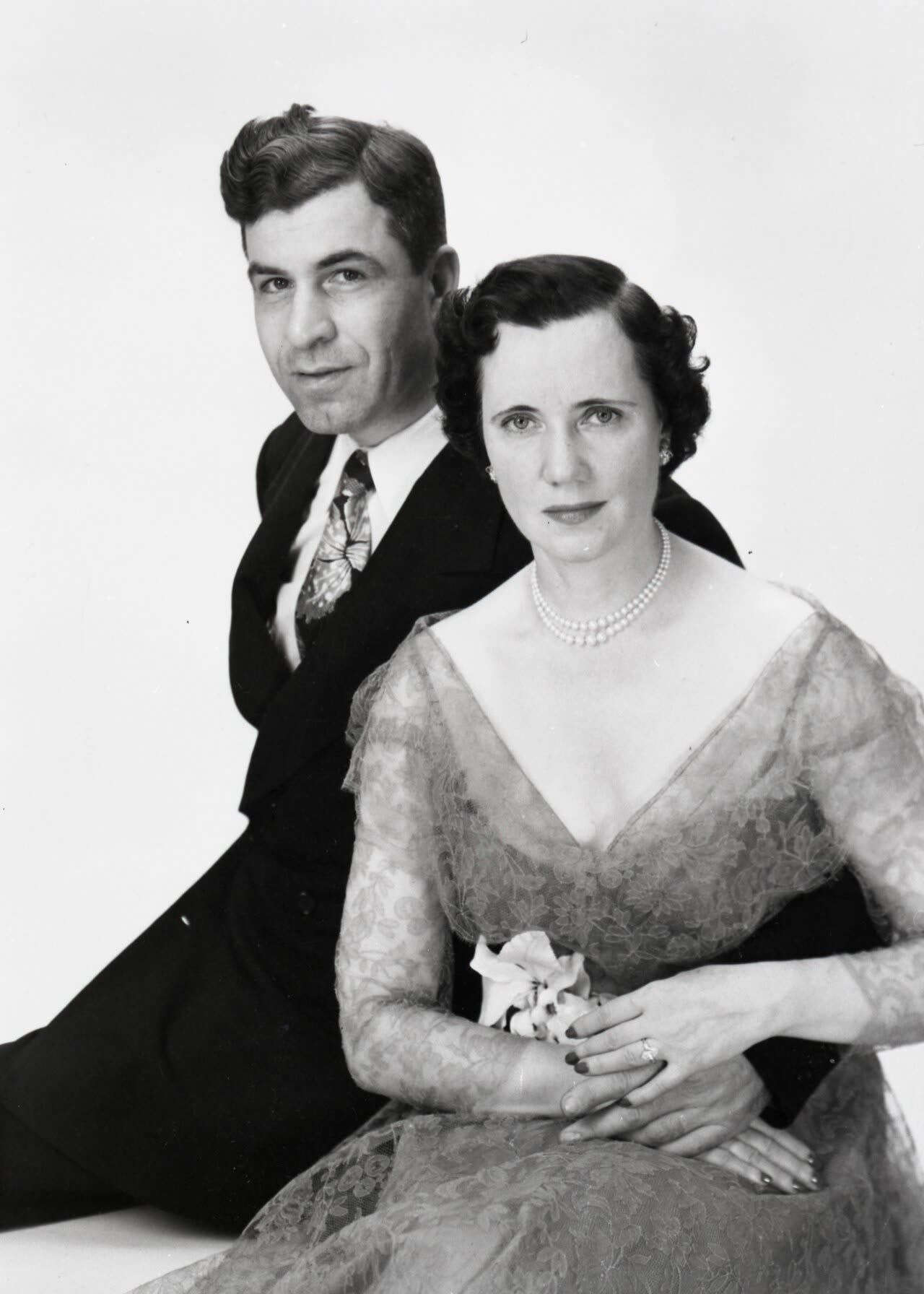
Photo: Science History Institute, CC BY-SA 3.0
Warren Buffett, 96, gave up the chairmanship of Berkshire Hathaway on Friday 18 September in a 330-word letter to shareholders whose first paragraph was about the shareholders themselves: "From the beginning, Charlie and I looked for owners who thought in decades rather than quarters, and we were fortunate to find a great many of you." Among the earliest of those owners were Donald and Mildred Othmer, a chemical engineering professor and a former schoolteacher who both came from his part of Omaha, and whose money now sits in two university buildings, a library in Philadelphia and, for a time, a hospital in Brooklyn.
Mildred Topp was born in Omaha in 1907 and grew up down the street from the Buffett family, according to a booklet Polytechnic University printed about the couple in 2002, and her mother ran a dress shop in the city called Topp's. She read chemistry and economics at the University of Nebraska, taught English at Benson High School in Omaha, and moved to New York in the 1940s, where she took a master's degree at Columbia Teachers College in 1945 and worked as the buyer for her mother's shop, according to the Chemical Heritage Foundation's 1999 volume on the couple, which also records that her friends called her Mid.
Donald Othmer, born in Omaha in 1904, was the son of a sheet-metal worker, and after a doctorate in chemical engineering at the University of Michigan he worked for Eastman Kodak in Rochester, where he invented a laboratory still that is still manufactured and learned to blow glass so that he could build it himself, according to the Science History Institute. Kodak paid him $10 for each of the 40 patents he filed there, the Chemical Educator's review of the 1999 volume says, and in September 1932 he joined the chemical engineering department at the Polytechnic Institute of Brooklyn, where he remained until his death 63 years later.
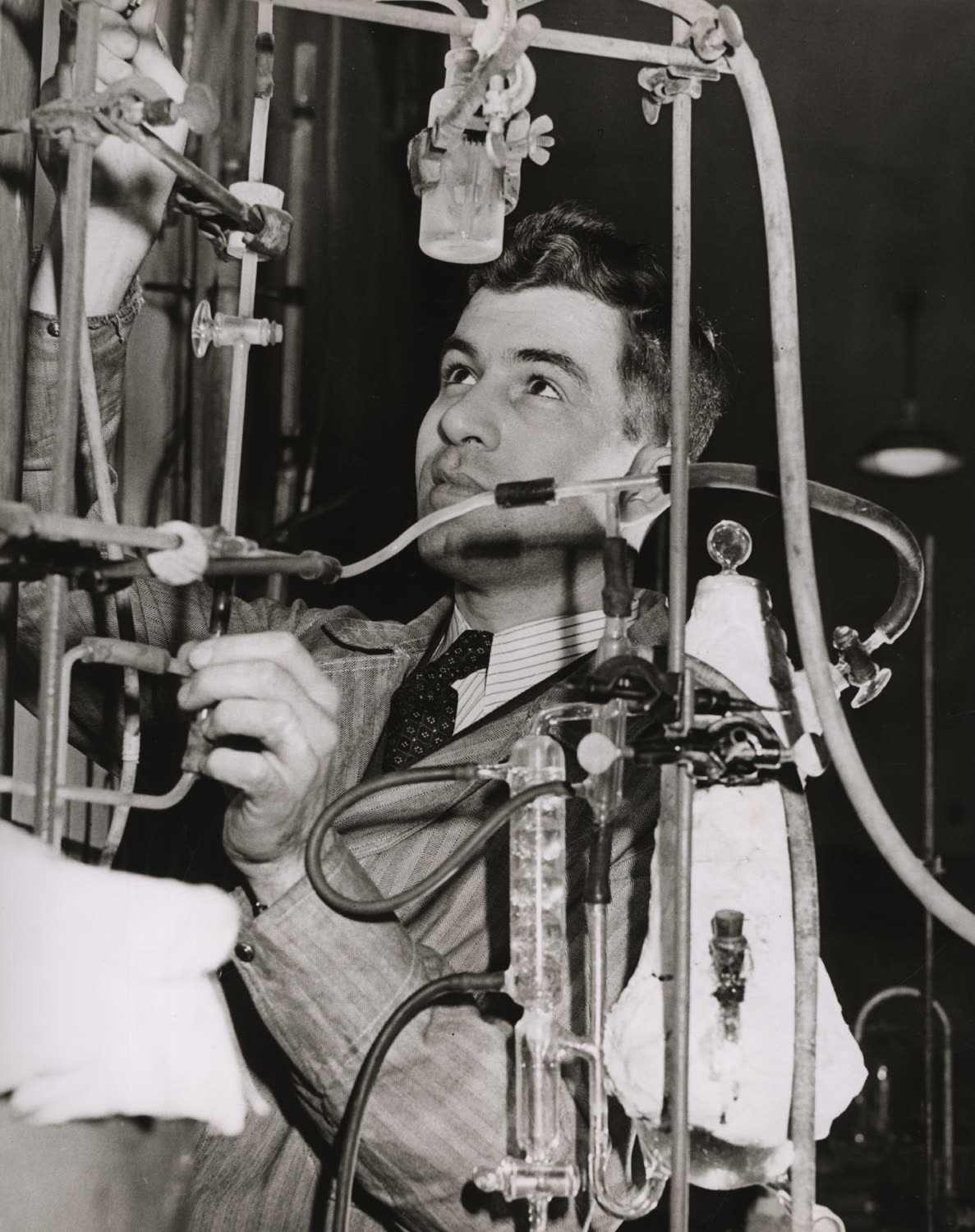
Photo: Science History Institute
They married in Manhattan on 18 November 1950, when she was 43 and he was 46, and lived in a townhouse in Brooklyn Heights, and they had no children, the New York Times wrote in 1998, "unless you count the students he invited home to dinner." They took the subway, the Associated Press reported, signed the round-robin letters they sent to family "Midon," a contraction of both their names, and had agreed when they married never to spend more than three days apart, according to the 1999 volume.
Twenty-five thousand each
In 1961, according to the Wall Street Journal, they each put $25,000 into the investment partnership that Buffett, then 31, was running from his house in Omaha, and the Times dates the investment to the early 1960s. Mildred's mother was a friend of the Buffett family, Forbes reported in 1998, and that was how the Othmers knew him.
The one recorded occasion on which Donald mentioned the investment to anyone at work was described to the Times by W. Fred Schurig, a colleague and former student of his at Poly, who said that Othmer came back from a trip to Omaha decades earlier talking about "this guy Buffett" and how lucrative investing with him would be, and that when Schurig said he had $5,000 and asked whether Buffett would take it, Othmer replied, "That's not enough; he wouldn't touch that," and never brought the subject up again.
When Buffett wound up the partnership at the end of the 1960s the Othmers took their share in stock of Berkshire Hathaway, the textile company he had taken control of in 1965, and received about 14,500 shares at $42 each in 1970, a holding worth about $609,000, according to the Journal. They did not sell any of it over the following 25 years, and Buffett told the Times in 1998 that "they just rode along" and that the investment "never changed their lives."
The wills
They signed their wills in August 1988, when Berkshire traded at about $4,700 a share and the holding was worth about $68 million, and Donald drafted much of his own, the Times reported, down to a small Rembrandt etching and twelve carved elephants, each in a different Burmese wood. He died on 1 November 1995, aged 91 and still involved with the university, and Mildred died on 9 April 1998, aged 90, in a nursing home, after several years of Alzheimer's disease during which her niece, Mary Seina of Omaha, had cared for her, the Chronicle of Philanthropy reported.
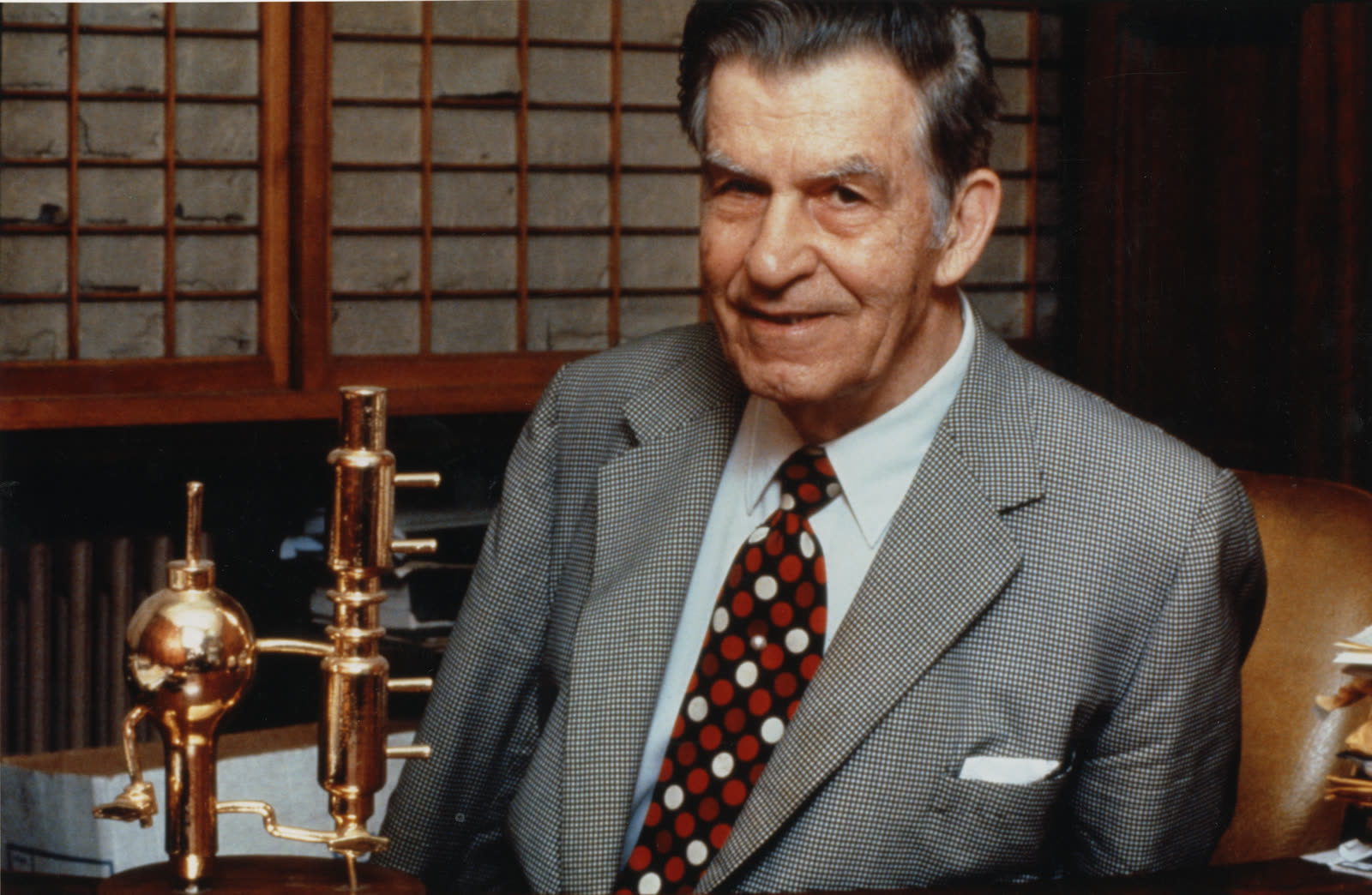
Photo: Science History Institute
The size of the estates became public on 13 July 1998, when the Times reported under the headline "Staggering Bequests by Unassuming Couple" that the two were worth about three-quarters of a billion dollars between them, almost all of it in Berkshire stock, which had closed the previous Friday at $77,250 a share. Donald's roughly 7,000 shares had been sold after his death at just under $30,000 each, and Mildred's estate held about 7,500 more.
Their wills left nearly all of it to institutions the two of them had been part of: about $175 million to Polytechnic University, roughly four times its endowment at the time; more than $100 million each to the University of Nebraska, where both had studied, and to the Chemical Heritage Foundation in Philadelphia; $135 million to Long Island College Hospital in Brooklyn, on whose board Donald had served; between $60 million and $75 million to Planned Parenthood of New York, on whose board Mildred had served; smaller sums to the Brooklyn Botanic Garden, where she had volunteered, and to the Brooklyn Historical Society; and $12 million to the Omaha Board of Education, which had employed her as a teacher, according to figures published by the Times, the Associated Press and the Chronicle of Philanthropy in 1998.
Buffett told the Times that the Othmers were "high-quality, nice people, who had no children and wanted to translate their wealth into something beneficial to society." Mrs Seina, who had been left less than $2 million, contested her aunt's will in Douglas County court, saying that Mildred had revoked it in 1995 and wanted more to go to her family, and the charities replied that her illness meant she had not been capable of that decision by then; the dispute was settled in August 1998 with Mrs Seina receiving $19.95 million and the remainder distributed as the 1988 will directed, the Chronicle of Philanthropy reported.
What the money did
The University of Nebraska opened Othmer Hall, a four-storey brick and limestone building housing its chemical engineering department, in September 2002, and Polytechnic opened the Donald F. and Mildred Topp Othmer Residence Hall, its first dormitory, with room for 400 students, the same autumn. The Chemical Heritage Foundation, since renamed the Science History Institute, named its library after the couple and established an Othmer Gold Medal.
The bequest to Long Island College Hospital was to be held "in perpetuity" with only the income spent, but from 2000 onwards the hospital's administrators obtained court approval, repeatedly, to borrow against the fund, to pledge it as collateral and to draw on it for malpractice payments and operating costs, and in each case the court found that keeping the hospital open was what the Othmers would have wanted, the Wall Street Journal reported in July 2013, by which time most of the endowment had been spent. The hospital closed at midnight on 22 May 2014 after sixteen months of lawsuits and protests, the Times reported, and the State University of New York, which owned it, sold the site on Hicks Street to a developer for $240 million.
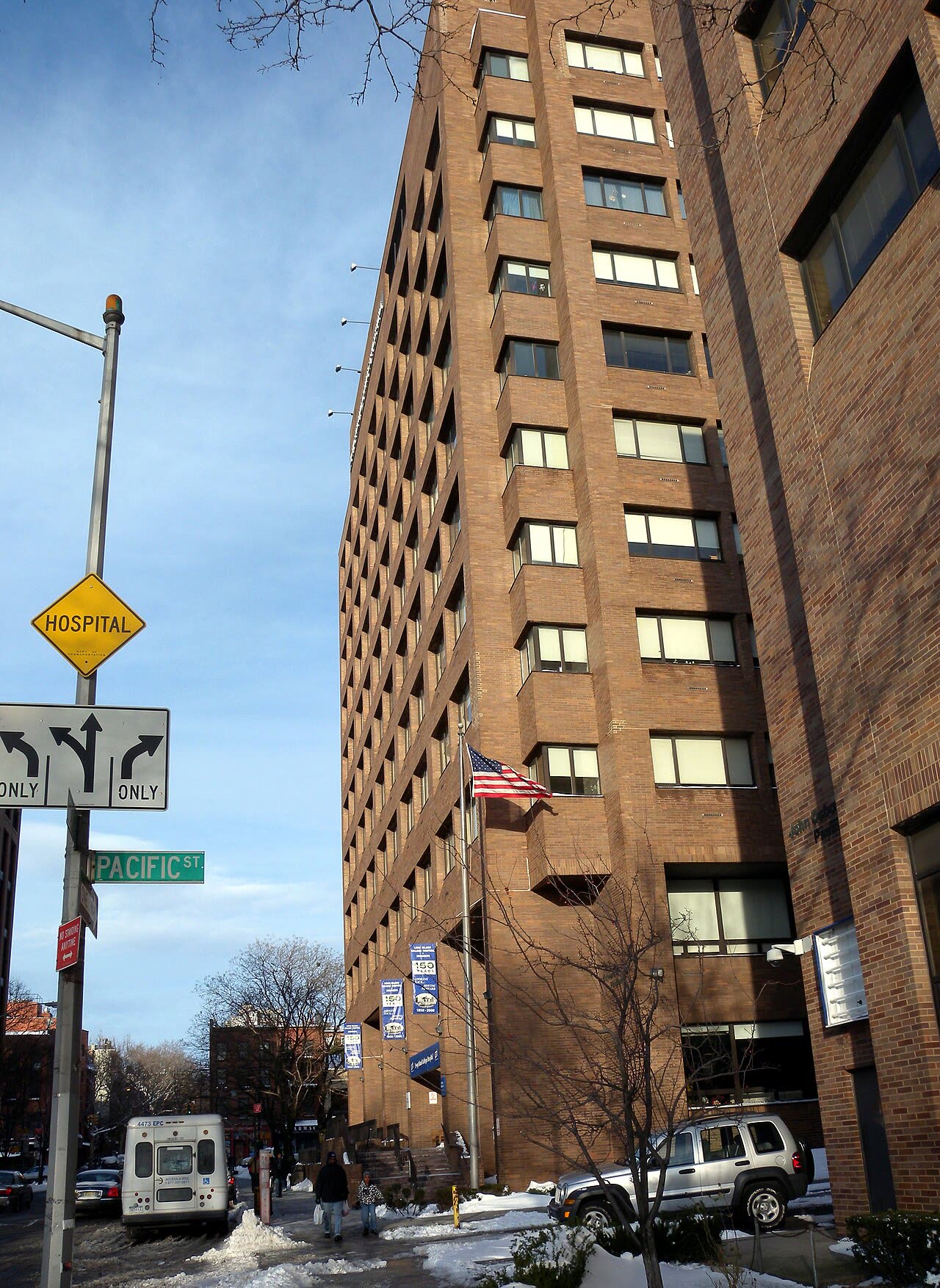
Photo: Jim Henderson, Wikimedia Commons, CC0
Buffett learned what had happened from a Brooklyn resident who emailed him in 2013, and told the Journal: "This came as a huge surprise to me. I would think if they were alive they would feel betrayed."
Friday
Berkshire's A shares closed at about $763,600 on 18 September, the day of the letter, a price at which the 14,500 shares the Othmers received in 1970 would be worth about $11 billion had they never been sold. Buffett, having passed the chairmanship to his son Howard, 71, ended the letter by saying that he looked forward "to remaining a shareholder alongside you."
Photo: Mark Hirschey, Wikimedia Commons, CC BY-SA 2.0
The Othmer Residence Hall in Brooklyn still houses 400 students, Othmer Hall in Lincoln still houses Nebraska's chemical engineering department, and the Othmer Library in Philadelphia holds Donald's papers, 170 linear feet of them, including the photographs on this page.
Carry a story in five words
We run a game called Long Story Short: one real news sentence a day, and you keep the five words that carry it. Today's is below. Do play.
How to play
One real news sentence. The job is to keep the five words that carry the story and let the rest go, then guess. Blue means the right word in the right place, orange means it is one of the five but sitting somewhere else, and grey means it is not one of them. Five tries. The result beats the process, the name or the job beats the place, and little words like a, the and of never count.
Yesterday: John Hanson has now returned an illustrated magazine that was borrowed from Concord Public Library in 1894, soon after a yearlong freeze on overdue fines began. The five: magazine borrowed in 1894 returned.