The people counting the stars we're losing
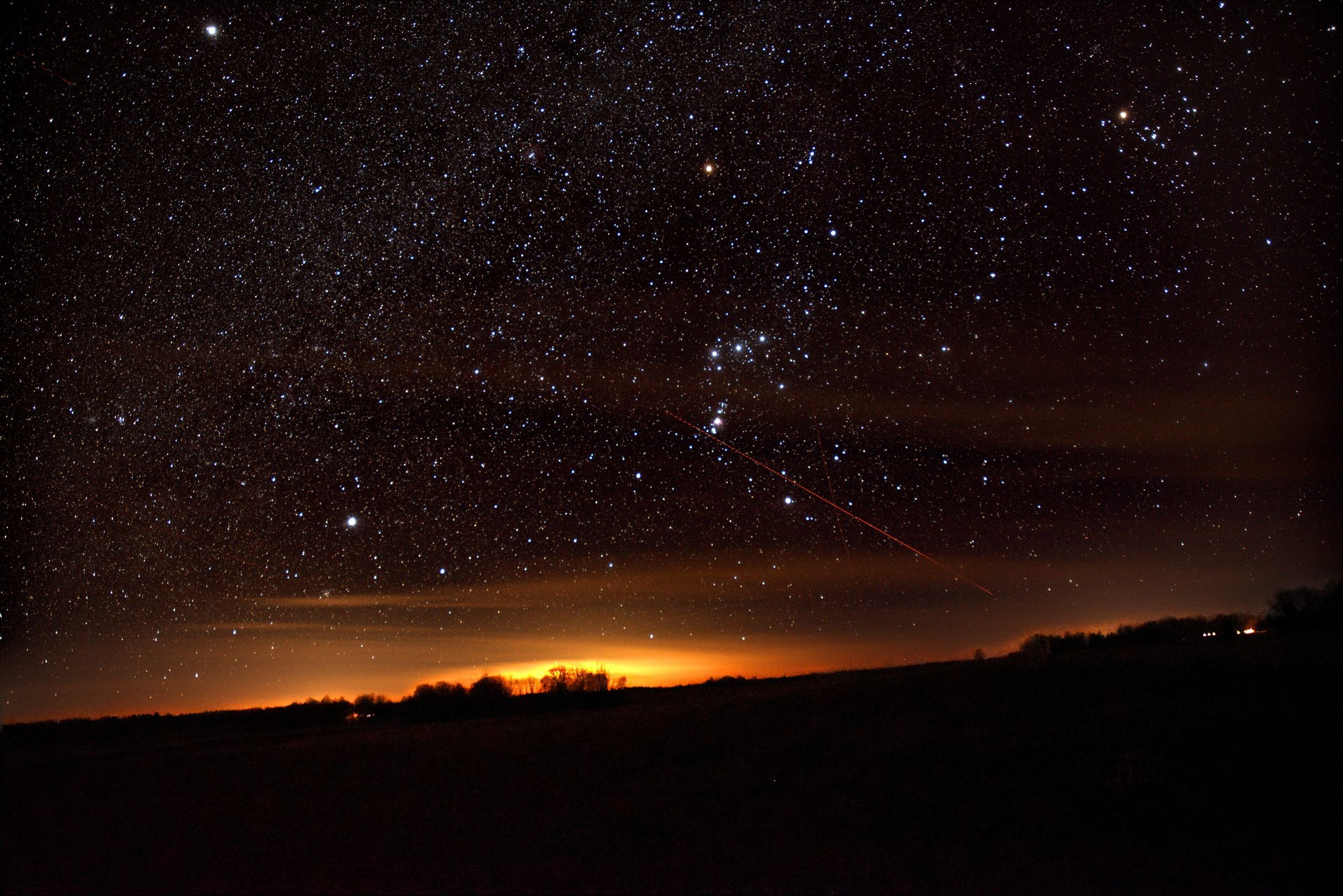
Orion, Estonia · Taavi Niittee, CC0
Since 2006, people in more than 180 countries have stepped outside, found Orion, and reported how many stars they could see. In the same places, year after year, they've been seeing fewer.
In March 2007, someone in Arizona went outside on a very clear night, looked for Orion, and typed this into a website run by astronomers in Tucson:
"To the north by the mountains, it looked like the sun never fully set. I went out on an extremely clear night and i saw at least seven stars. This was a whole lot of fun. Orion was really amazing. I was awe struck!!!"
That report is one of 319,075 that people have sent to Globe at Night since 2006. The ask has barely changed in twenty years. You go outside more than an hour after sunset, find a constellation, and pick which of seven star charts looks most like your sky. Chart one shows only the brightest stars, and chart seven is what a properly dark night looks like.
I downloaded every one of those reports, and the record shows the same thing again and again: in the same places, people are seeing fewer stars than they used to.
Here's Orion at each of the seven levels, drawn from a real star catalogue, so every dot is a star that's actually there. Think about the sky over your house on a clear night and pick the one that looks closest.
This is the same patch of sky at each level, with the sky getting brighter from left to right, and under each one, how many people reported it on a clear night.
Across 78,511 clear-sky reports of Orion, the most common answer was chart three, which has 8 stars inside the constellation's border, against 343 under a sky dark enough for chart seven.

Each dot is a patch of the world about 100 kilometres across, sized by how many clear-sky reports came from it and coloured by the average chart people picked there, amber where the sky is pale and white where people still see a lot of stars.
Clear-sky naked-eye reports, all constellations, 2006 to 2025, grouped into one-degree squares.
All reports sent to Globe at Night each year.
Most of the reports come from the United States, followed by Croatia, Uruguay and Spain, with clusters in Japan, Chile, South Korea, India and Australia too. The notes people left describe looking up from back porches, car parks and the gaps between buildings.
People don't report from the same spots every year, so a plain average can mislead. To get round that, I looked for places, each a square about 10 kilometres across, where people sent at least three clear-sky Orion reports between 2011 and 2015 and at least three more between 2019 and 2023. There are 197 of them, in the United States, Japan, Chile, Croatia, Spain and 16 other countries, and in 146, three out of every four, people saw fewer stars the second time.
Each line is one place: its average chart in 2011 to 2015 on the left, and in 2019 to 2023 on the right. Amber lines lost stars.
That matches what the scientists found. In 2023 the journal Science published an analysis of 51,351 Globe at Night reports, which worked out that the night sky got about 9.6% brighter every year between 2011 and 2022. As Science News put it, a baby born somewhere with about 250 visible stars would see about 100 by their 18th birthday.
Satellites had shown a slower rise, because their sensors miss much of the blue light that LED street lights give off, and most of the light that spills sideways instead of upwards. People standing in their gardens don't miss it.
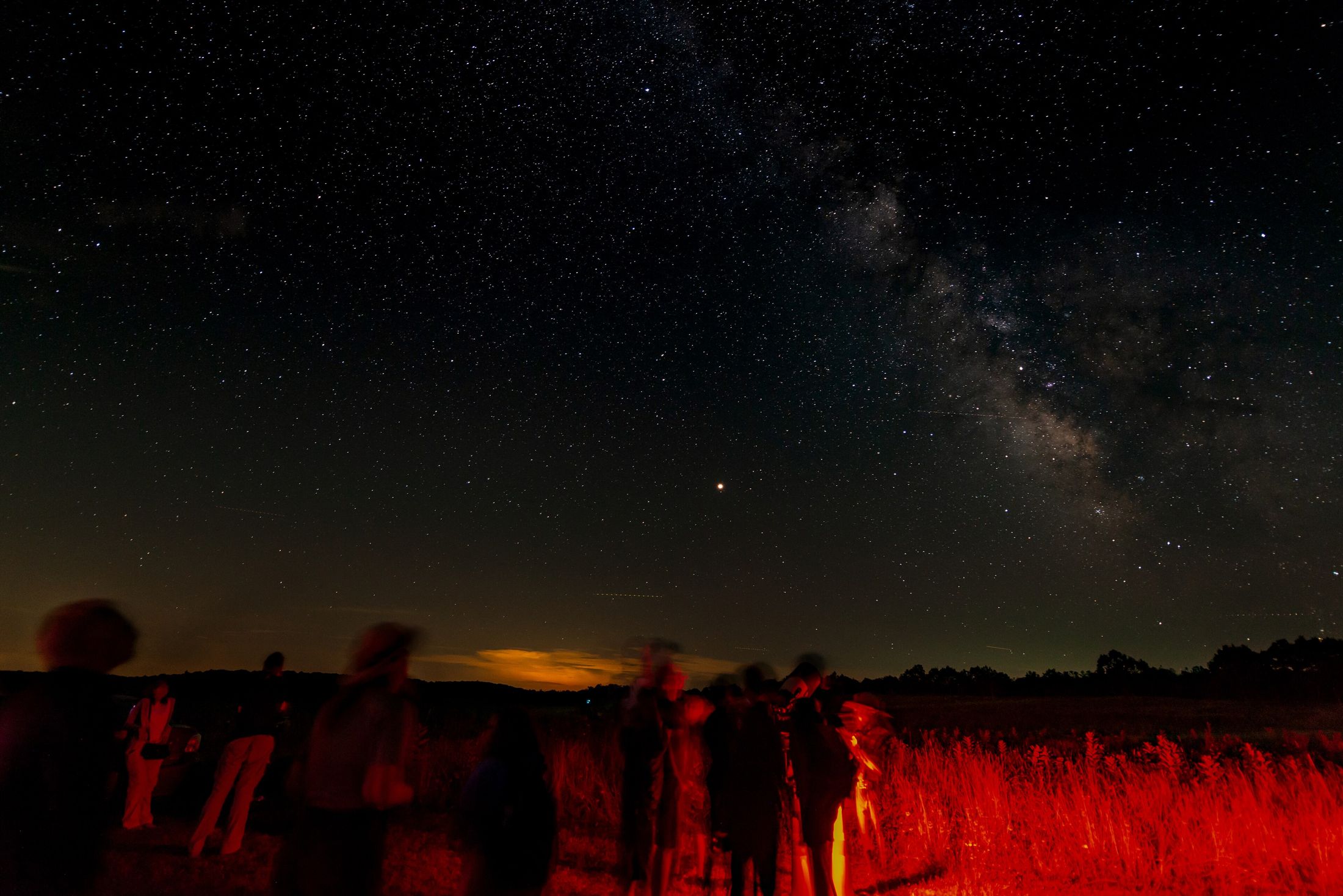
More than half the reports come with a note about the night. These are a few of them, word for word.
"the stars were so bright that I couldn't believe I was surrounded by lights."
"Dark and crisp, with the winter Milky Way easily visible overhead."
"I was between two buildings."
"No haze - the lights of the city buildings were clearly visible from the back porch"
"Only the basic stars of Orion and the ones around it are visible."
"There was 1 dim streetlight in my area that was unshielded and yellow tone."
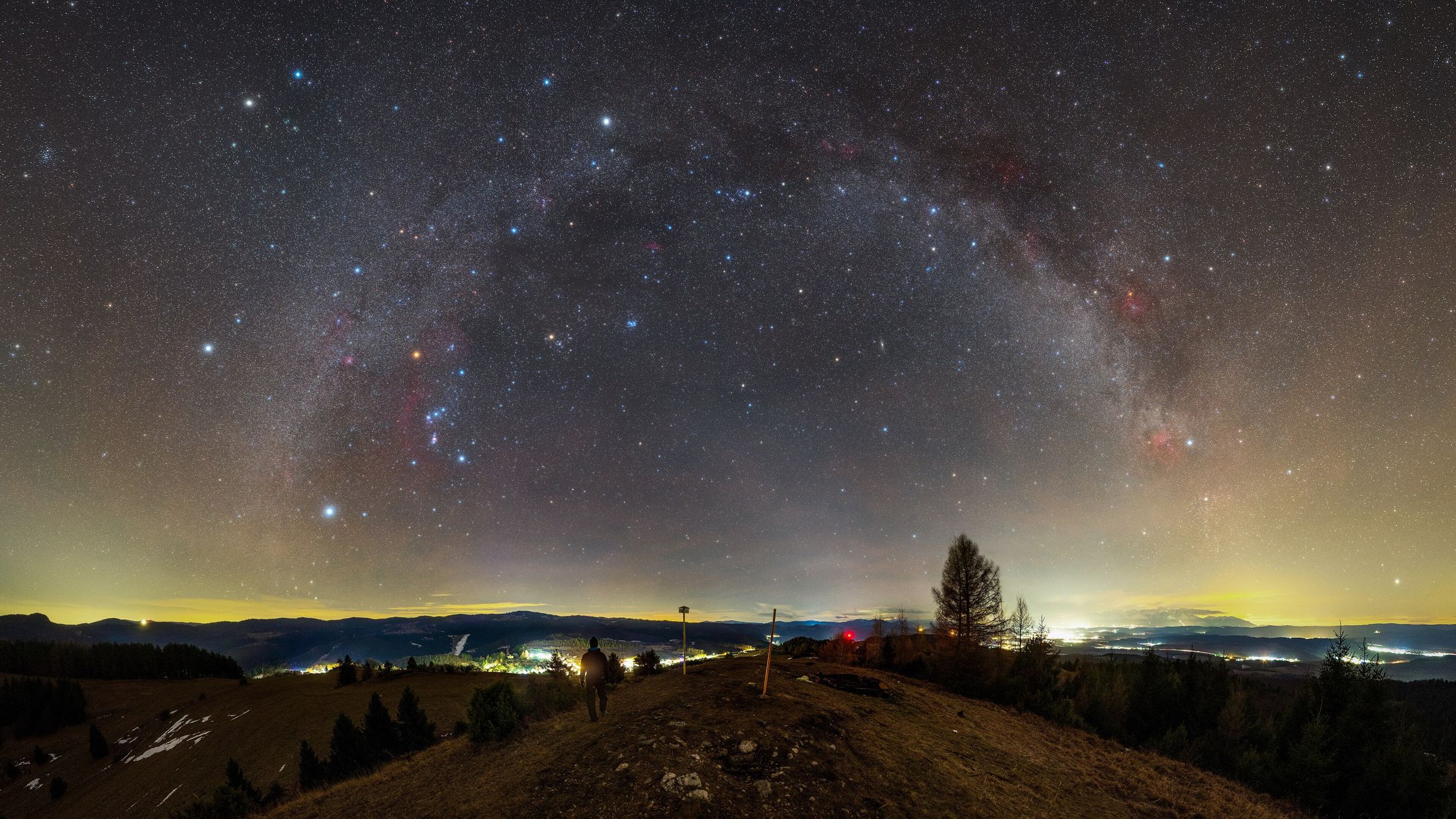
You can add to the record tonight. This month Globe at Night is asking people in the northern hemisphere to find Cygnus, and people in the southern hemisphere to find Grus, and Orion comes back in the winter campaigns. A night where you can barely see anything is still worth reporting, because that's exactly what the record is for.
Report your sky at Globe at NightIf you'd rather fix the cause, DarkSky International's advice for outdoor lights is short: only light what you need, point it down, keep it dim and warm-coloured, and switch it off when nobody's there.
The data is every Globe at Night report from 2006 to 2025, downloaded from globeatnight.org: 319,075 rows. For the charts I used naked-eye reports only, made under clear skies, and for the same-place comparison only Orion reports, grouped into squares 0.1 degrees of latitude and longitude across, about 10 kilometres. Star counts for each chart come from the HYG star catalogue as packaged in d3-celestial, counting stars inside Orion's official boundary down to each chart's faintest magnitude. The 9.6% figure comes from Kyba, Altıntaş, Walker and Newhouse, Science 379 (2023), and the 250 and 100 stars from Science News's report on that paper. The world map is Natural Earth, via world-atlas.
A report records what one person saw on one night, so the moon, haze and eyesight all add noise. That's why I only compare places with several reports in each period, and why the Science study used a model that accounts for where and when people looked.
This page is not affiliated with NOIRLab, Globe at Night or DarkSky International. It just admires the people who go outside and count. · The Data Drop