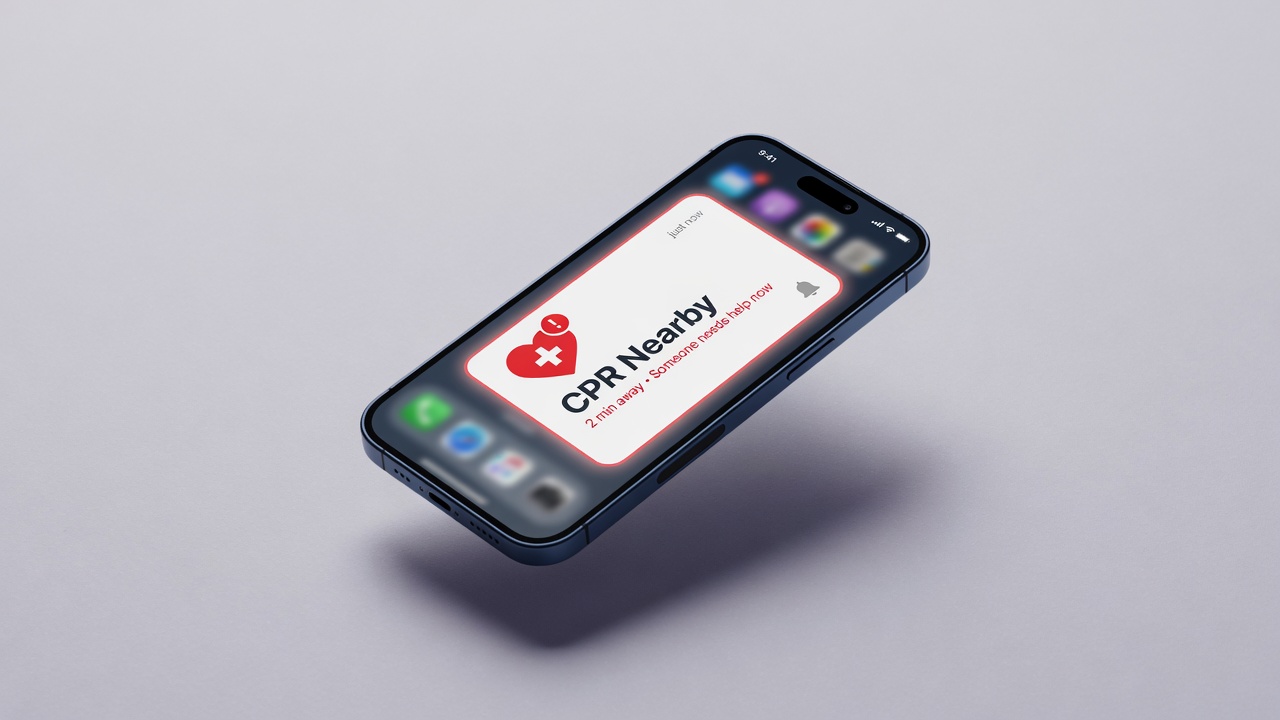
The phone does not detect a collapse on its own. Someone has to call emergency services first. If the dispatcher thinks it is a cardiac arrest, apps like PulsePoint, GoodSAM, or Heartrunner can alert trained people nearby who already opted in. About 1.4 million people keep PulsePoint on their phone in a normal month.
PulsePoint’s public average for how long it takes from the notification to hands on a chest. I copied that number from their stats page on 25 July 2026.
Pretty simple, once you see the steps.

A dispatcher flags a suspected cardiac arrest. That is the trigger. The app then looks for people nearby who already said they can help. Only those phones get a message.

On PulsePoint the average is 2 minutes 53 seconds from the notification to compressions. Volunteers who arrive before the ambulance are often about 3 minutes 18 seconds ahead of it, on the same board.

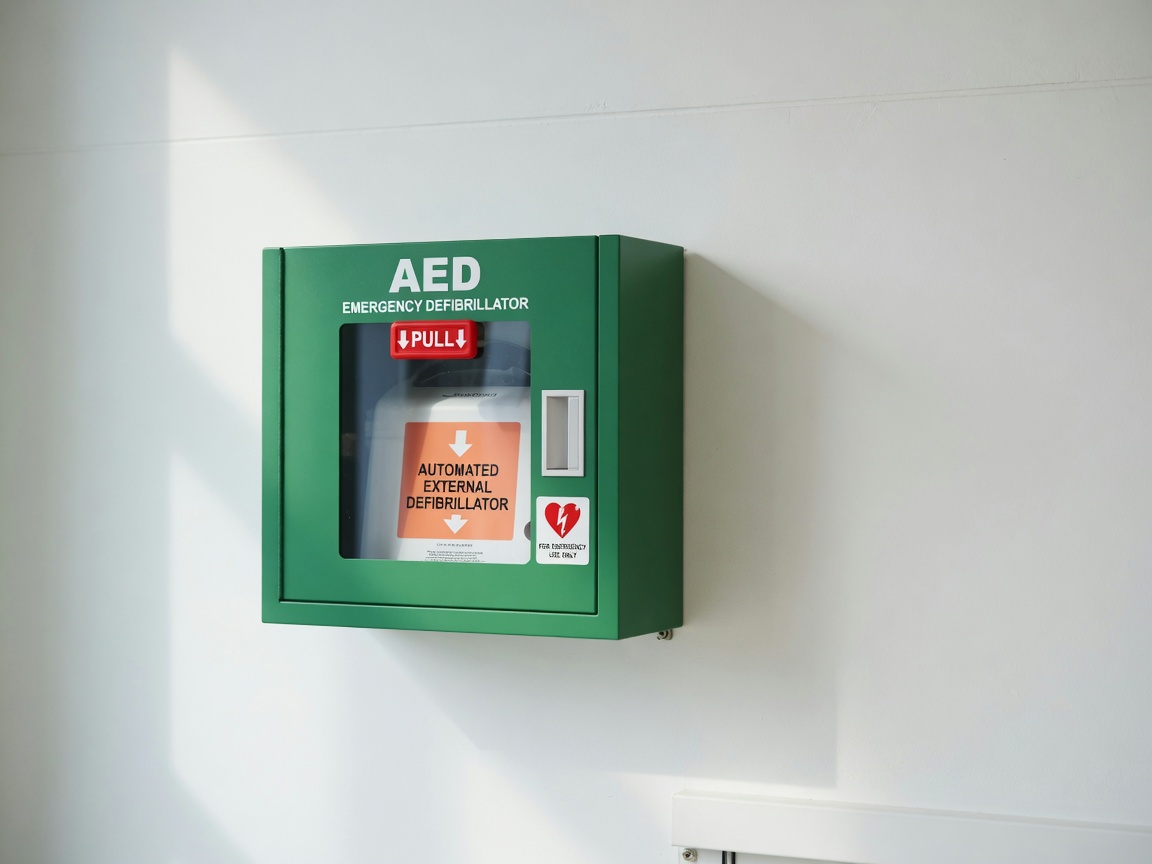
PulsePoint lists about 216,000 public AEDs. Sometimes the alert sends you to a wall box as well as to the person who needs help.
A short course and a phone is enough to join.

About 1.4 million people a month keep PulsePoint ready. Cardiac arrests are still rare enough that most volunteers wait. The system needs that extra capacity so someone free is nearby when it does happen.
Pulled on 25 July 2026. These are the app’s counters, not hospital survival stats.
Small true stories about ordinary things. Free. No spam. Unsubscribe anytime.
Heartrunner is part of the national system there. About one adult in fifty is enrolled. The denser the signup, the more likely someone close can respond.
A few papers look at the same basic idea in different places.
Before and after communities connected. Journal of Clinical Medicine, 2026. Observational, not a randomised trial.
Adjusted odds of surviving to leave hospital when a volunteer arrived before EMS. 9,196 arrests. Association, not proof the volunteer caused every save.
That is normal. You need a lot of people signed up so a few are free on any given day.

I only read the public stats and the papers. What stuck with me is how many people already opted in, even though most of them will never get a buzz.
Depends on the country.
Learn CPR if you haven’t. Install the app if it works where you live. You may never get a call, and that is still useful.
PulsePoint public stats at pulsepoint.org/stats, read 25 July 2026: 388,753 CPR activations; 1,377,671 nearby-responder alerts; 216,192 alertable AEDs; early-arrival advantage 3m 18s; community response time 2m 53s (30-day averages). The counters change over time.
Bystander CPR 42.9% → 56.8%: Journal of Clinical Medicine 2026, 15(1), 5. Victoria GoodSAM: Delardes et al., Medical Journal of Australia 2025 (9,196 arrests; adjusted OR 1.37). Heartrunner Denmark and Sweden: Resuscitation literature. These studies report associations, not pure cause.
Not medical advice. No patient locations. Not affiliated with PulsePoint, GoodSAM, or Heartrunner. Photos are illustrative.
Other stories about people helping strangers.
Ten million people volunteered. Most of us are never called.
You mail a postcard to a stranger. A different stranger mails one to you. 87 million cards.
After an earthquake, thousands of people traced rooftops for rescuers they will never meet.
Five years of searches about helping, wound into circles.
The Data Drop · free, every week