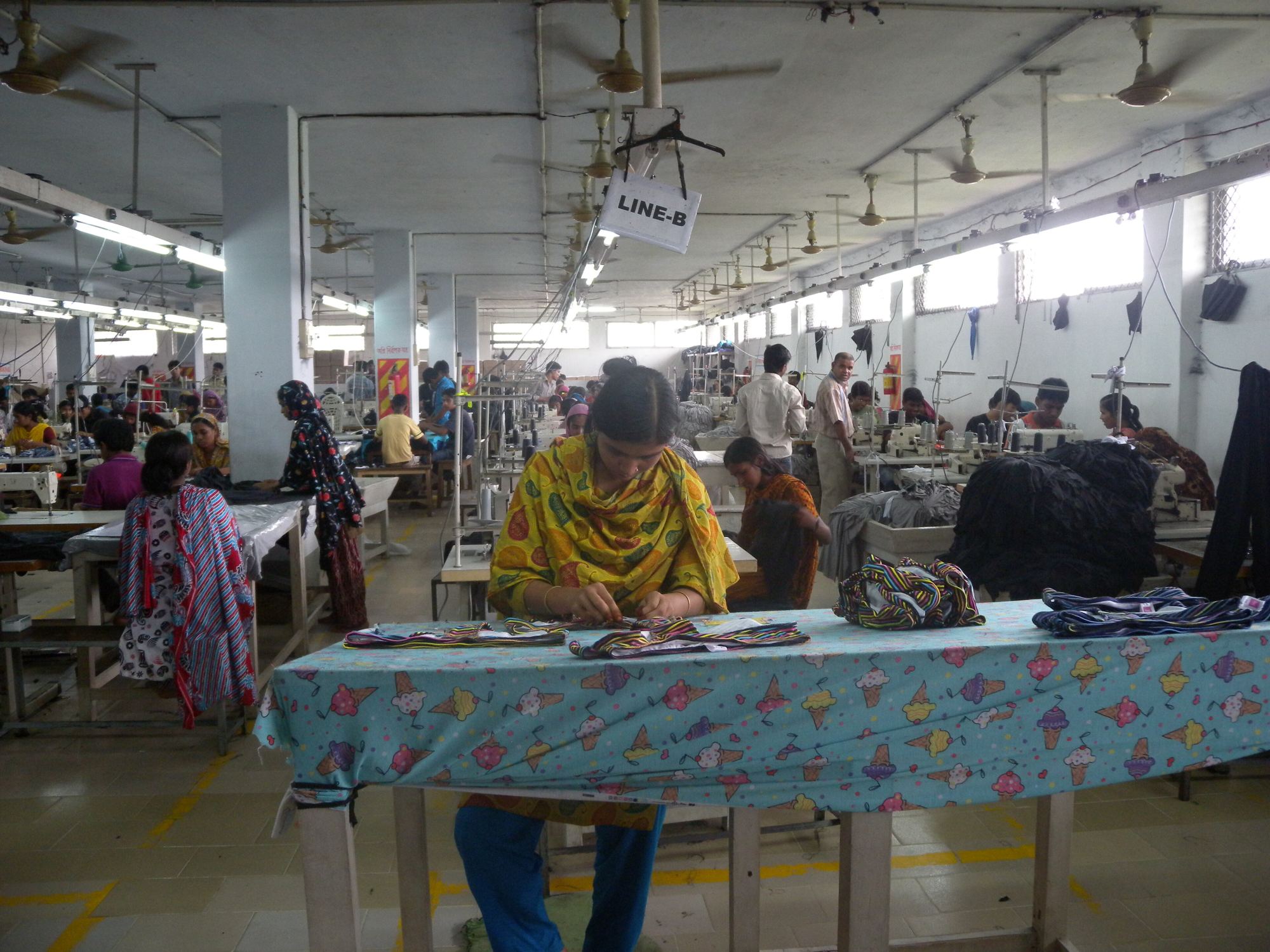
The eye of the needle
Garment factory, Bangladesh · Tareq Salahuddin, CC BY 2.0
In the factories that make our clothes, women are let go at around 35, about the age their near sight starts to fail. A $10 pair of glasses changes what happens next, and one nonprofit has now tested the eyes of nearly a million garment workers.
Mosammat Mala Begum started work in a garment factory in Dhaka when she was 13. She was married the same year. She stayed at that factory, near Purabi Cinema Hall in Mirpur, for about seventeen years, until one day the owner told her and 14 of her co-workers, all of them between 25 and 32, that the factory was letting them go.
"Older people cannot work in garment factories as owners throw them out for different reasons," she told The Business Standard in 2022. The owner offered the fifteen of them factory jobs in Jordan if they paid for their own flights, and Mala spent her severance of Tk60,000 on the ticket, worked there for three years, came home to her five daughters and decided to stay. At 36 she knew no factory in Dhaka would take her back, so she works as a maid instead, in an apartment building near the factory where she started.
When the women's group Karmajibi Nari surveyed 3,014 women in 327 garment factories around Dhaka, 86 per cent were between 18 and 35, and only 9 per cent were older than 35. The average woman had worked in the industry for just under five years. Only 8.4 per cent had been there more than ten.
Industry insiders who spoke to The Financial Express gave the obvious reasons: the work is relentless, the pressure is high, and some owners treat older staff badly. Women also leave to look after families. All of that is true. None of them mentioned eyesight, which starts to change for everyone at about the same age.
The lens inside your eye is soft when you are young, and a ring of muscle squeezes it to focus on things close to you. Year by year the lens stiffens. By your late thirties it can no longer bend far enough to bring a needle at arm's length into focus, and by your mid-forties most people are holding their phone further away to read it. Doctors call this presbyopia. It is not a disease. It happens to everyone who lives long enough, and the fix is a pair of reading glasses.
The WHO counts 826 million people whose near sight is failing and who have no glasses to fix it, making presbyopia the single biggest cause of poor near vision in the world. In low-income countries, two out of three people who need glasses do not have them, and in parts of sub-Saharan Africa more than 80 per cent of failing near sight goes uncorrected.
Now picture the job. A sewing machine operator in Dhaka holds her work about 25 centimetres from her eyes for ten or twelve hours a day. She threads needles, lines up seams to within a millimetre and spots skipped stitches on dark cloth. Drag the slider to see roughly what happens to that view as an average eye gets older.
This is a sketch, not a prescription. It uses Hofstetter's standard formula for how far an average eye can focus at each age, and assumes, as optometrists usually do, that a worker can only hold about two thirds of that focus for hours at a stretch. Real eyes vary a lot, and long-sighted eyes, which are common in rural Bangladesh, struggle years earlier.
That last point turned up in a real factory survey. In 2019 the eye charity Orbis tested 915 women at four garment factories in Bangladesh, two in the city and two in the countryside. Only 85 of them owned glasses. More than a quarter, 245 women, could not see well up close. In the 30 to 34 age group, about one in five already had poor near vision. Among rural women over 40, it was 86 per cent.
The same study found something else. Even after allowing for years on the job, hours, education, job type and where they lived, the women who could not see well up close earned $6.51 a month less than those who could. That is about 7 per cent of a median monthly wage of $96.
Put the two charts next to each other and the shape is hard to miss. The factory workforce thins out sharply in the mid-thirties, in exactly the years when near sight is going. Nobody has run a study proving that one causes the other, and plenty of things push women out of these jobs. But Ella Gudwin, who runs VisionSpring, the nonprofit at the centre of this story, has spent years inside these factories, and she does not think it is a coincidence.
"Imagine you're in a garment factory, you're a senior sewing machine operator at the top of your game, and then you fall out of the workforce after coming through every barrier as a woman in employment for lack of a $1.50 pair of glasses."
She told the same interviewer that VisionSpring often hears of workers being moved down rather than out. They start on a sewing line and end up in packing or hanging garments, "because they can no longer handle that fine, precision work". The pay is lower there, and the skill they spent fifteen years building goes to waste.
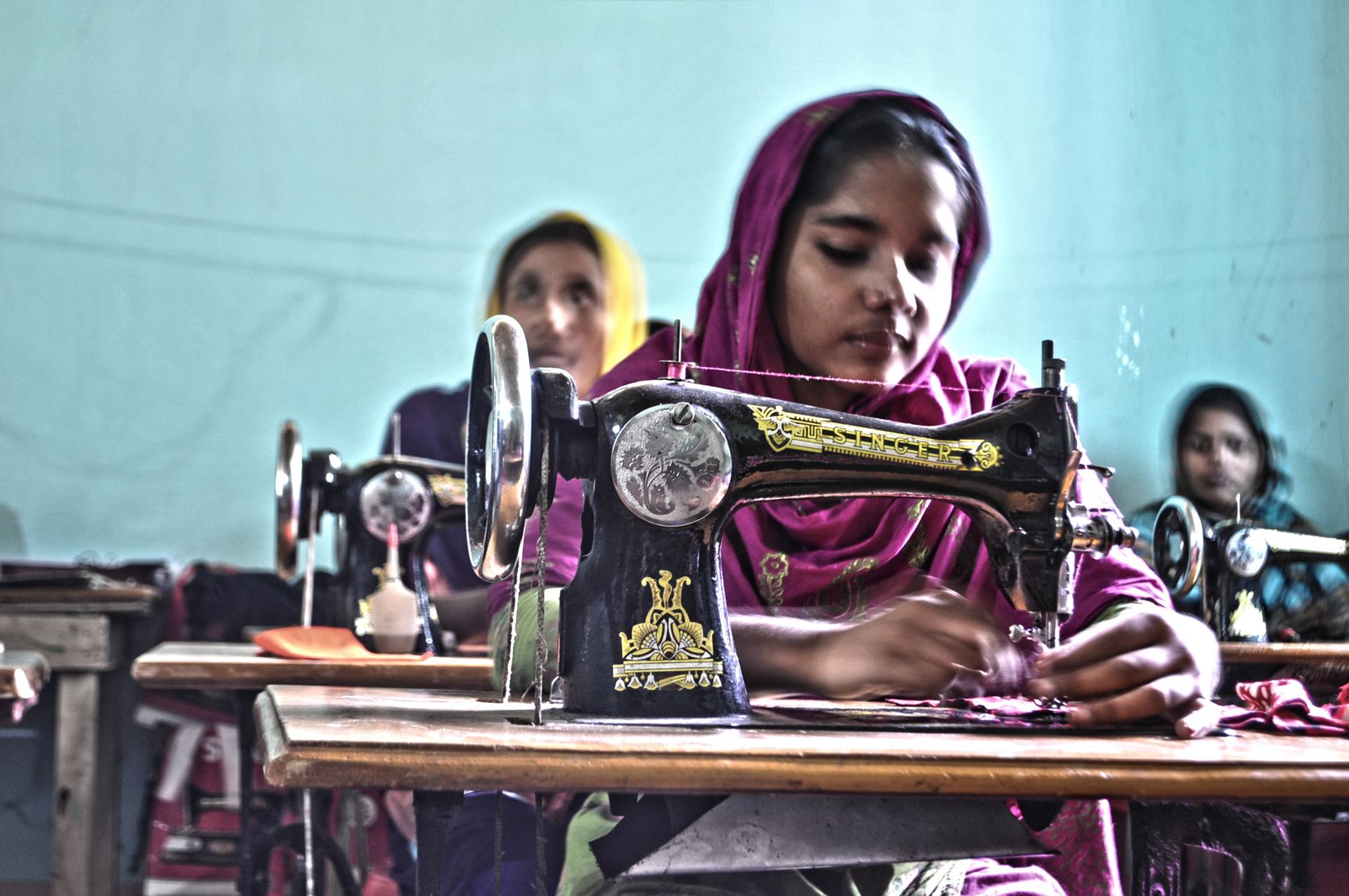
For a long time the case for glasses at work rested on common sense and a few stories from factory floors. Then, in the summer of 2017, a team led by Nathan Congdon of Queen's University Belfast, working with VisionSpring and the eye charity Orbis, ran the first proper experiment.
They went to a tea estate in Assam, in north-east India, where pickers are paid by the weight of leaves they bring in. Of the 2,699 permanent workers, 1,297 were 40 or older and agreed to an eye test. 751 of them had good distance vision but poor near vision, and not one of them owned glasses.
The researchers split them into two groups by lottery. One group got reading glasses straight away, chosen for the distance between their eyes and the tea bush, at a cost of $10.20 a pair including delivery. The other group got exactly the same glasses, but only after the study ended. Then they weighed the tea.
Both groups picked more as the season peaked. But the pickers with glasses went from 25.0 kg a day to 34.8 kg, while the pickers without went from 26.0 kg to 30.6 kg. The gap between them, 5.25 kg a day, works out at a 21.7 per cent rise in productivity. For pickers over 50 it was 31.6 per cent. Since pay depended on weight, that was a rise in income too.
The researchers checked on the pickers seven times without warning to see if they were really wearing the glasses. By the end, 84.5 per cent were. The Lancet Global Health paper called it a substantial increase "with little cost and high intervention uptake", and the release announcing it called it the largest productivity increase ever recorded from any health intervention.
In 2024 another team, working with BRAC and VisionSpring in rural Bangladesh, tried the same idea on tradespeople and hand-workers. After eight months, the median monthly income of those who got glasses was $47.10, against $35.30 in the comparison group. That is a third more.

Tea picking is close work, but it is outdoors, in daylight, and the reward for better sight is easy to weigh. A garment factory is different. Output depends on the line, the machine and the target the manager sets, and most sewing operators are younger than tea pickers. Factory owners could reasonably ask whether the Assam result would hold up on their floors.
So between November 2023 and May 2024, VisionSpring and the Good Business Lab ran a second trial inside the factories of Shahi Exports, India's largest apparel maker, in the state of Karnataka. They identified 4,990 potentially eligible workers aged 35 and over, gave full eye exams to 3,648 and enrolled 682 who could not see well up close and did not own glasses. Their average age was 41, and 99 per cent were women.
Again, a lottery decided who got glasses first. Again, everyone got them in the end. This time the measure was the number of pieces each worker finished per hour, compared with the factory's target.
5.7 per cent is much smaller than the tea result, and the researchers are open about the uncertainty: the true effect could be anywhere from about 1 to 10 per cent. But a factory runs on thin margins and huge volumes, and the maths is lopsided. For under ₹1,000, or about $10, per worker, Shahi got back about ₹4,000 per worker within six weeks, which the company projects to about $162 a year. Over the 12 weeks of the trial, the researchers put the return on that money at 337 per cent.
One detail in the results is easy to miss. In the fourth week of the trial, 41 per cent of the workers given glasses were wearing them. By week twelve it was 65 per cent. People who had never worn glasses took a while to trust them, and once they noticed the difference they kept them on. Shahi has since committed to expanding eye care to 100,000 workers across all of its factories.
How many people are we talking about? Most big clothing brands now publish lists of the factories that make their clothes. Primark's is one of the most detailed. Its Global Sourcing Map, last updated in November 2025, lists 797 factories in 15 countries with the number of people each one employs and how many of them are women.
Each square below is one of those factories, sized by its workforce and grouped by country. Together they employ 763,635 people, 458,689 of them in Bangladesh alone. The trial at Shahi found that about one in four sewing machine operators had near or distance vision that nobody had corrected, and VisionSpring finds the same share in Bangladesh. Press the button to shade a quarter of every factory.
Primark Global Sourcing Map data, November 2025. 797 factories with a published workforce. The one in four is a rough guide taken from the Shahi screening, not a measurement of any factory shown here.
One in four of 763,635 is about 190,000 people. That is one brand. The researchers behind the Shahi trial put the number of garment workers in India, Bangladesh, Vietnam and Cambodia at about 53 million, and estimated that correcting their sight could add the equivalent of $27 billion a year in output, or 3.8 billion more garments. Those figures are projections built on a 12-week trial, so they give a sense of scale rather than a forecast.
Primark is one of the brands paying for VisionSpring's factory programme, and its list is detailed enough to do this sum, which is why it is used here.
Jordan Kassalow, an optometrist, started VisionSpring in 2001 with the idea that reading glasses were a tool for earning a living, not a luxury. Ella Gudwin became its chief executive in 2015. The organisation sells or gives glasses to people living on less than $4 a day, and in its first twenty years it reached its first 10 million customers.
The factory programme began after Gudwin met a garment worker in Bangladesh in 2016 who had lost her job because she could no longer see her work well enough. VisionSpring started working with the garment industry in 2018 and called it Clear Vision Workplace. Levi Strauss joined early, followed by VF Corporation, which owns The North Face and Vans, Deckers, which owns UGG and HOKA, Primark, Warby Parker and more than 150 manufacturers. In Bangladesh it works through the garment makers' association, the BGMEA.
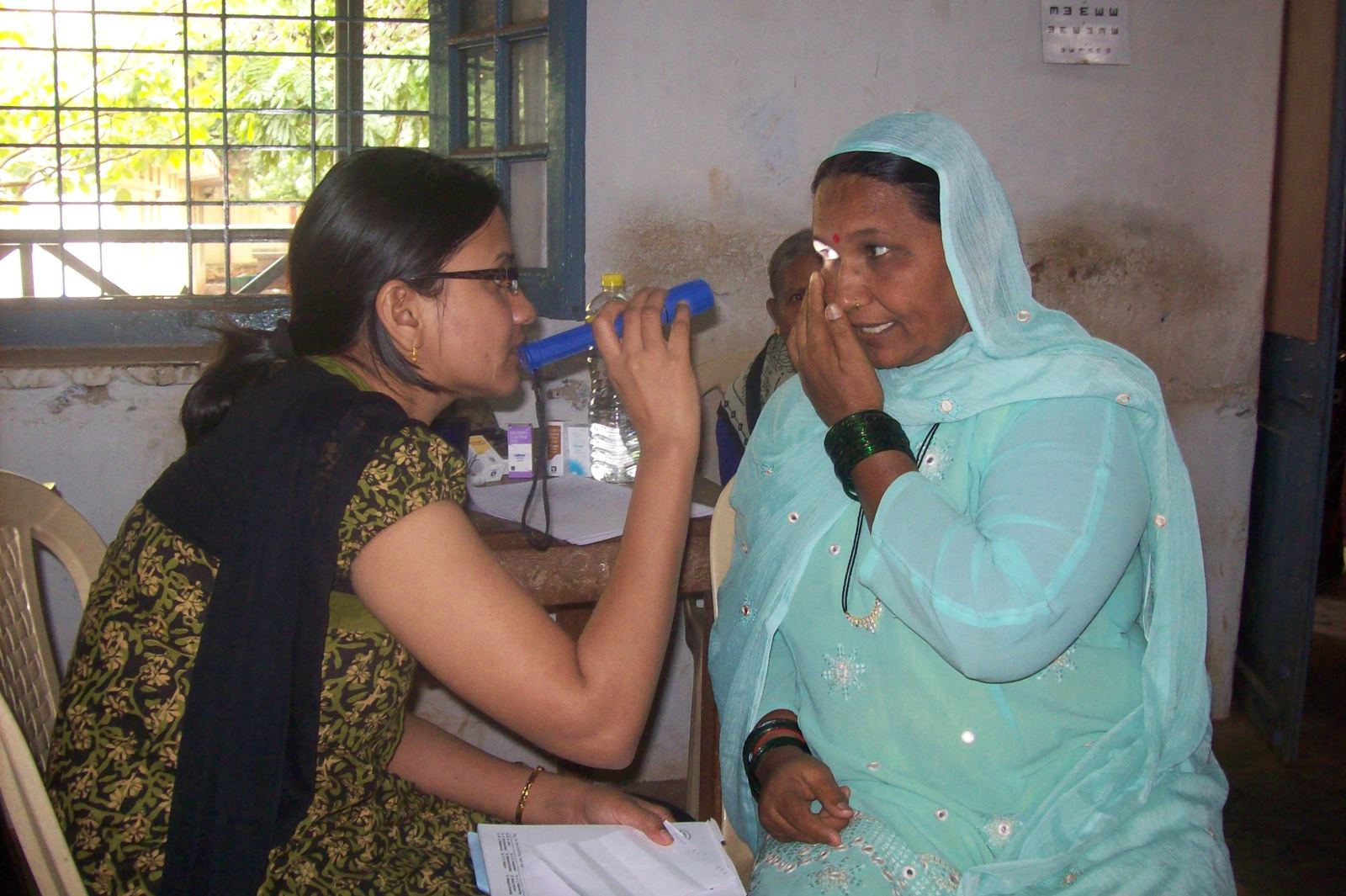
The method is built around the fact that a factory cannot stop its lines. A mobile team of optometrists and counsellors sets up inside the factory and works through 250 to 350 workers a day, using a screening that takes about fifteen minutes each. People who only need reading glasses get them on the spot. Anyone who needs a prescription gets theirs within two weeks. The worker pays nothing. The cost, about $6 per person screened in Bangladesh and $14 in Vietnam, is paid by the factory, the brand or both.
Getting factories to agree was the hard part. Managers often heard "your workers can't see" as a criticism of how they run their floors, and on thin margins an eye test looked like a nice extra. Fahima Akhter, a director at the Bangladeshi manufacturer Masco Group, told the Associated Press this July that her managers had not realised how many workers had poor eyesight, because they rarely complained. Masco screened about 5,000 workers, and around 30 per cent needed glasses. It plans to test the rest of its 20,000-strong workforce.
"We don't consider it a cost. It is an investment."
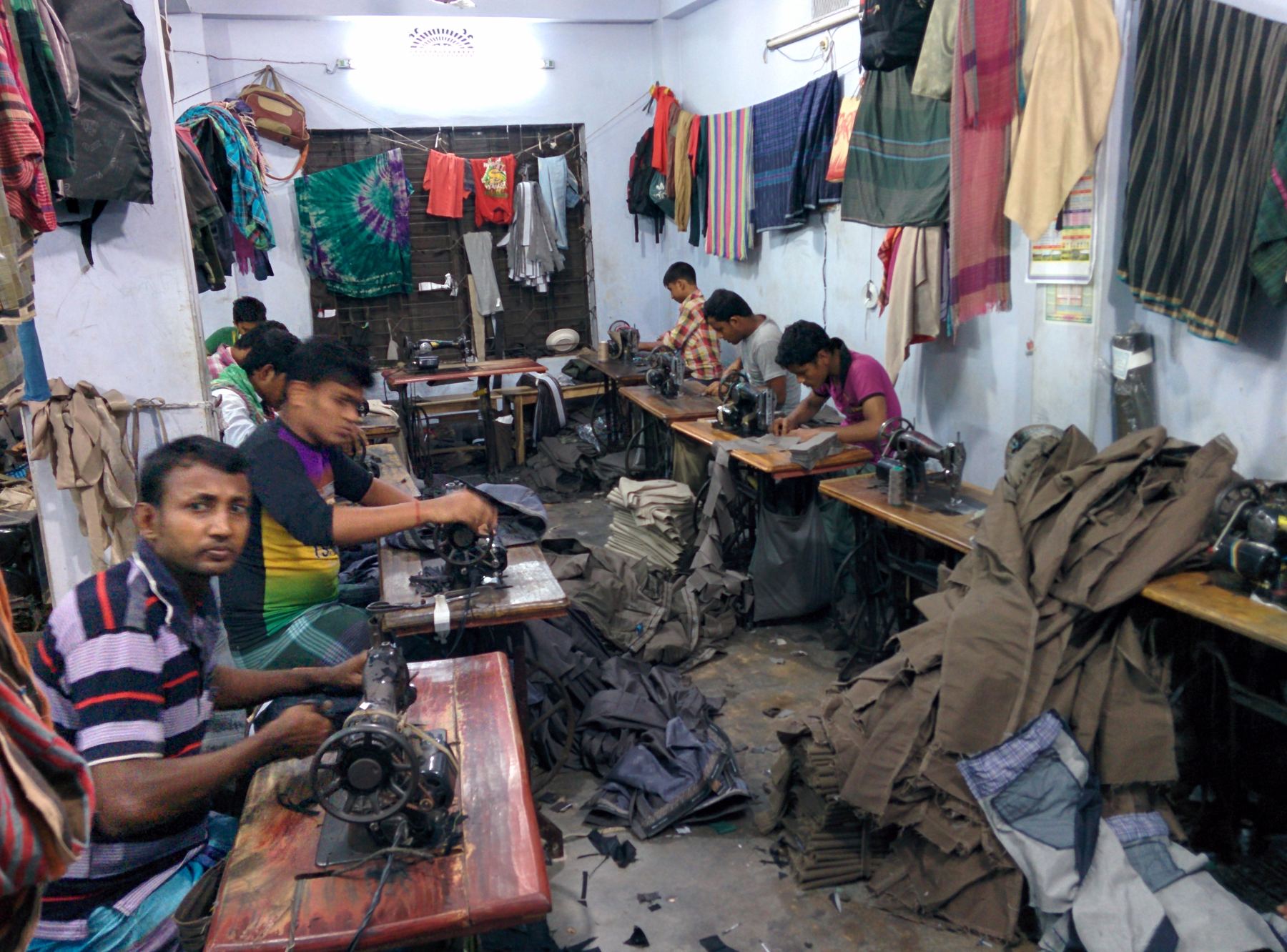
The numbers are about productivity because productivity is what persuades a factory owner. The people who got the glasses mostly talk about other things.
Ruma Aktar sews at a garment factory in Bangladesh where the targets run into thousands of pieces a day. She told the Associated Press that the glasses made her faster at threading needles and eased her headaches and eye strain.
"Before I got the glasses, it took me a long time to thread the needle. Now I can thread it in just a short time. I make far fewer alterations than before."
Nguyen Thi Trang has worked on the sewing line at the Domex factory in Binh Duong, in southern Vietnam, for more than twenty years. At 43 she started making mistakes on dark fabrics, and at home she could not read the labels on her children's medicine. She had one day off a week and could not afford an eye exam, so she never had one, until VisionSpring's team came to her factory. The first pair of glasses made her dizzy for a moment. Then, she told the WHO, everything came into focus. She went back to reading bedtime stories.
"They told me I looked prettier wearing glasses."
Le Thi Hiu, 51, packs and labels clothes at the Regent Garment Factory in Hai Duong, in northern Vietnam, where she has worked for twelve years. For three years her eyes felt as if a thin film covered them, and she put it down to age. The screening found presbyopia, and she went home with a pair of +2.00 reading glasses. Her husband has not been able to work since a motorbike accident, so she is the family's main earner, and her grandson's parents work late shifts, so they asked her to help him practise writing.
"Without glasses, small text just blurs together. I often relied on younger colleagues to read tiny letters on clothing tags. Not anymore, now I can read everything myself."
She can see the letters he writes now, too. Look back at the label in the drawing at the top of this page. Those tiny letters on the tag are the ones she used to ask a younger colleague to read.
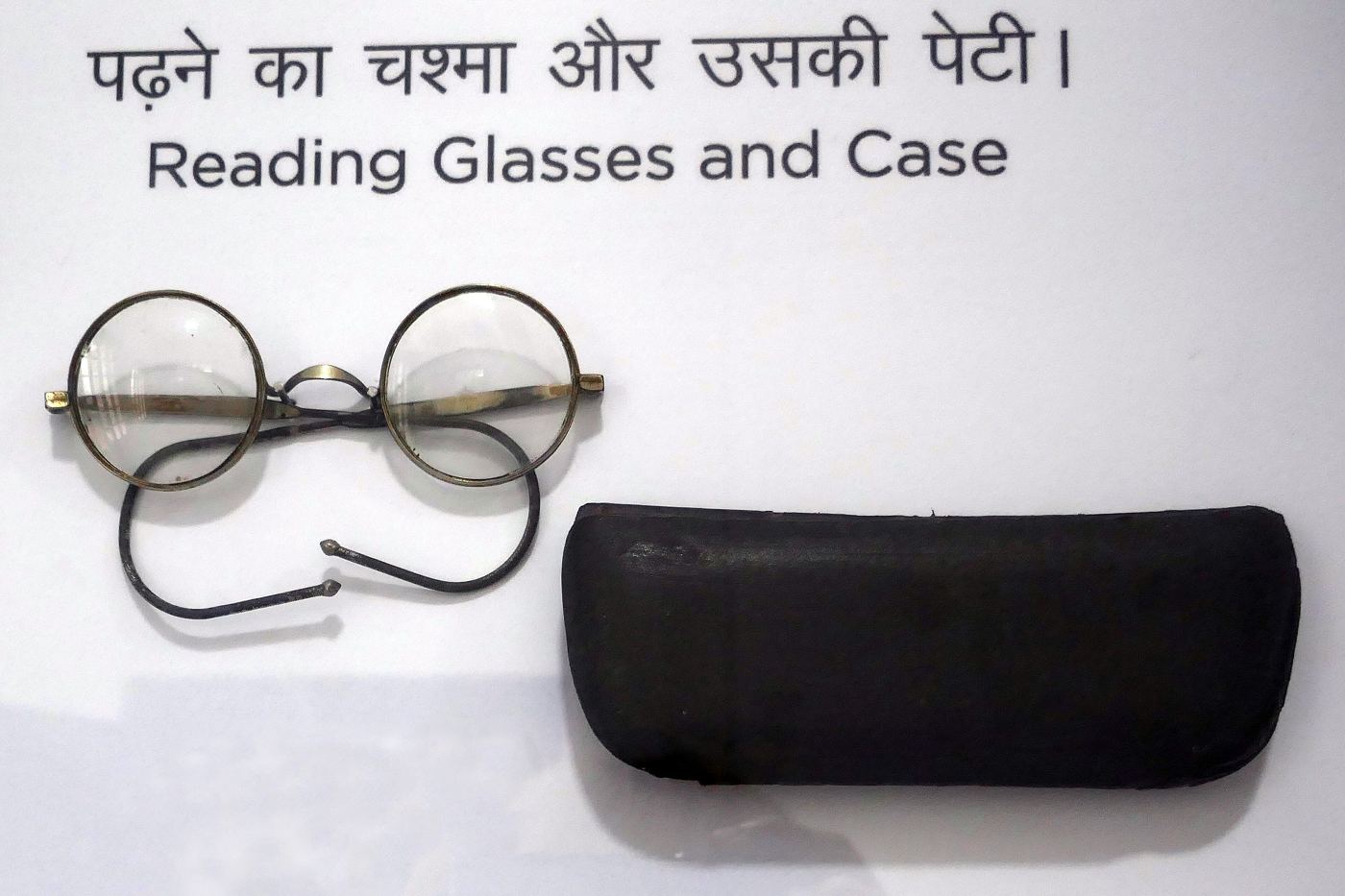
Reading glasses were invented in Italy in the late 1200s. A basic pair can be made for about $1.50. The glasses are cheap and the evidence for them is now solid. What gets in the way is that the people who need them most work twelve-hour days, earn about $100 a month and live a long way from anyone who could test their eyes.
Mala Begum was let go at around 30, with fourteen colleagues, at the age when a fifth of women in these factories already struggle to see up close. We don't know whether her eyes had anything to do with it, and nothing in her story says anyone ever checked.
VisionSpring's stated goal is that everyone who needs glasses will have them by 2050. The factory programme is expected to pass one million workers screened by the end of this year. If you work at a clothing brand or a factory and want to know what it would take to test your workers' eyes, VisionSpring publishes its research and runs the programme with brands and manufacturers directly.
VisionSpring's research and programmesThis page is not affiliated with VisionSpring, Primark, Shahi Exports or any brand named here. It just admires the people who bring the eye charts into the factory. · The Data Drop
The age profile of Bangladesh's garment workforce comes from the Karmajibi Nari survey of 3,014 women in 327 factories and the Awaj Foundation's Workers' Voice Report 2019, both as reported by The Financial Express (22 August 2019), and the Asian Centre for Development's 2020 survey (average age 25.9) as reported by The Business Standard. Mala Begum's story is from The Business Standard, 29 April 2022.
Near vision by age is from Ahmed et al., "Vision Impairment and Productivity Among Female Garment Workers in Bangladesh", Asia-Pacific Journal of Ophthalmology 11(1), 2022, which reports urban and rural figures for ages 30 to 34, 35 to 39 and 40 and over in its text. The $6.51 earnings gap is from its multivariable model. Global figures are from the WHO fact sheet on blindness and vision impairment, 10 February 2026.
The blur drawing uses Hofstetter's average amplitude of accommodation, 18.5 minus 0.3 times age in dioptres, a working distance of 25 cm (4 dioptres), and the common rule that about two thirds of that amplitude can be held comfortably. Blur grows with the shortfall. It shows an average eye, not a particular worker.
Trial results are from Reddy et al., "Effect of providing near glasses on productivity among rural Indian tea workers with presbyopia (PROSPER)", The Lancet Global Health, 2018 (NCT03228199); the over-50s figure is from the IAPB release of 25 July 2018. PROSPER II is Pant et al., British Journal of Ophthalmology, April 2026 (NCT04629820), with cost and return figures from Shahi Exports' release of 12 May 2026 and the AOP report of 6 May 2026. THRIVE is Sehrin et al., PLOS One, 3 April 2024.
Factory data is Primark's Global Sourcing Map (gsm-data-11-25.json), downloaded 8 October 2026; 797 factories list a workforce. Programme figures are from IAPB (October 2023), FashionNetwork (20 March 2026), VisionSpring's own posts (June 2026), Sourcing Journal (2026), the Associated Press (19 July 2026, also published by Fortune), the WHO (14 May 2025) and IAPB's Every Story Counts.