A brown pelican with a treble hook through its wing walked up to NOAA's shark laboratory in Panama City, Florida, and tapped on the glass door until the biologists let it in.
The biologists were at their desks working on shark data when they heard tapping at the glass. On the step was a brown pelican with heavy fishing line wrapped round it, a double-barbed treble hook deep in its right wing and cactus spines in its left foot. They held it the way they hold sharks for tagging, cut the barb, unwound the line, and ten minutes later it flew off.
17 September 2026
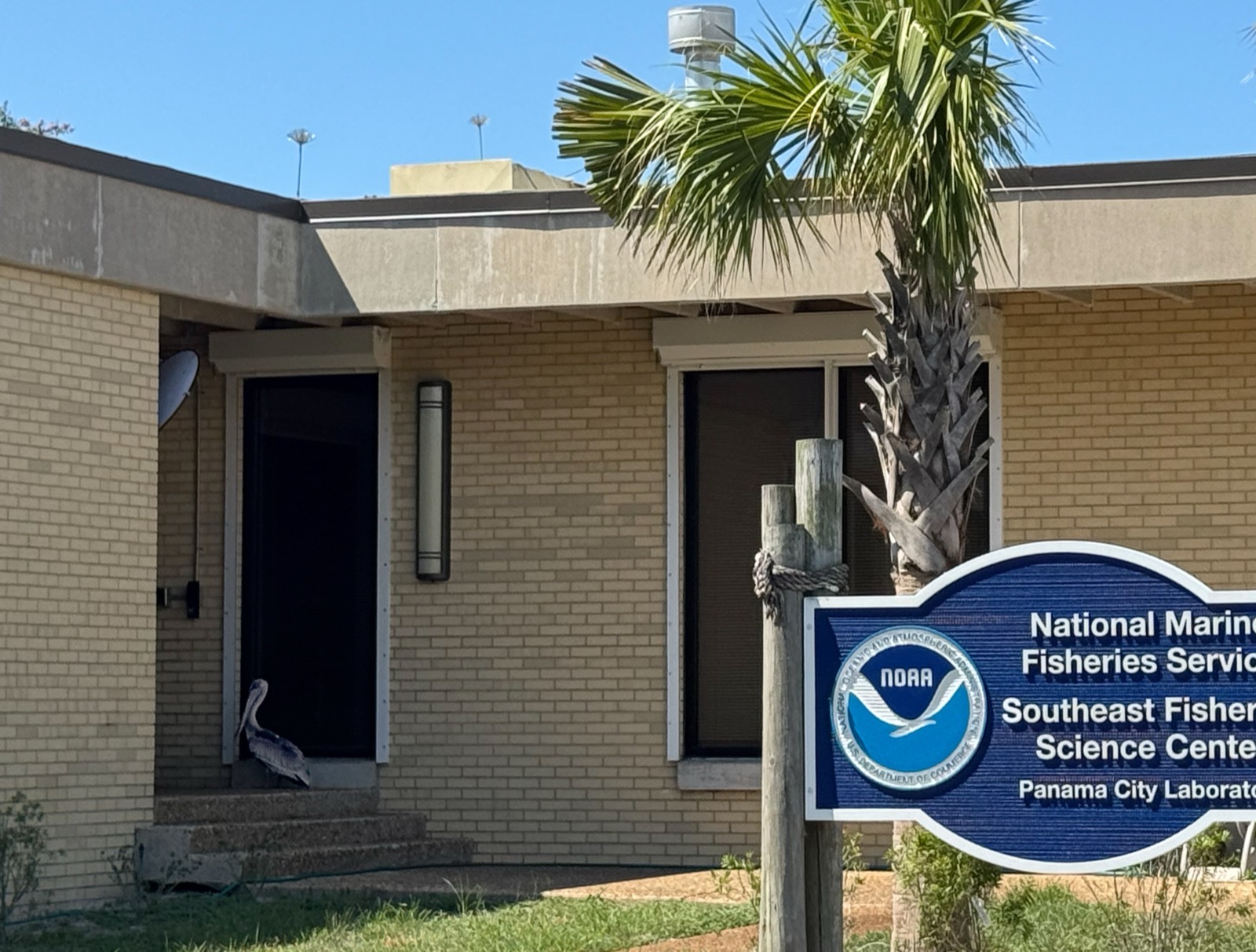
Photo: Ty Jones, NOAA Fisheries
A brown pelican with a fishing hook embedded in its wing walked up to a NOAA fisheries laboratory in Panama City, Florida, and tapped its beak against the glass front door until a biologist came and opened it, NOAA Fisheries said in an account published on Tuesday.
The laboratory is the Southeast Fisheries Science Center's Panama City station, where the staff work on shark and fish population data and, at sea, catch, tag and release sharks and sawfish. It was an ordinary Tuesday, NOAA said, when they heard tapping at the building's glass entrance and found the bird standing on the stoop, rapping the door again and again with its beak.
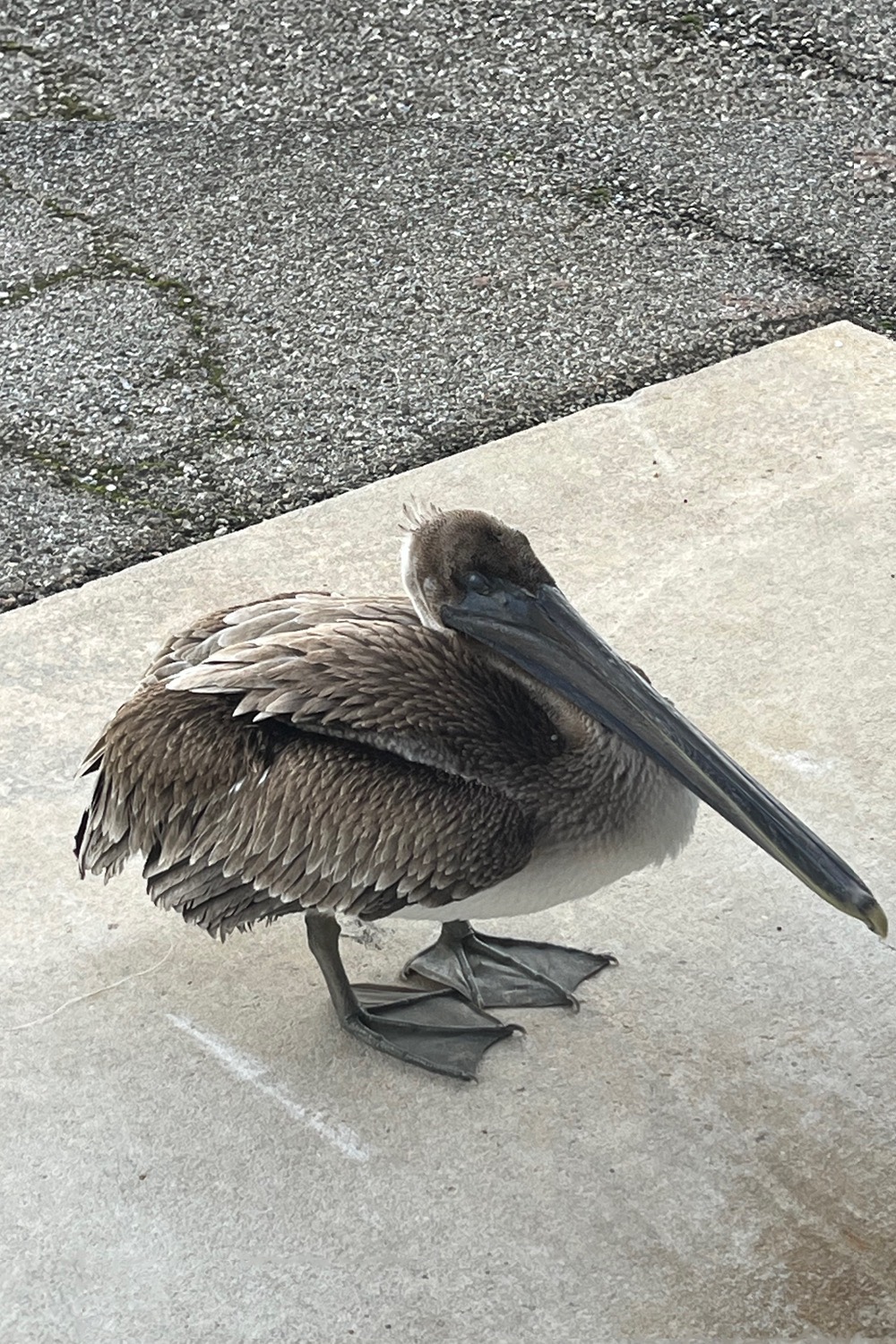
Photo: Albert Gabel, NOAA Fisheries
What was wrong with it
When the door was opened the problem was plain. The pelican was tangled in heavy-duty fishing line, a double-barbed treble hook was embedded deep in its right wing, and it had cactus spines in its left foot. NOAA said the bird seemed to be looking for help.
The people inside were shark scientists, and they handled the bird the way they handle a shark on deck when they fit it with an acoustic tag. Three of them, Annsli Hilton, Naeem Willett and Dr John Carlson, held the pelican still, snipped the barb off the hook and drew it out, then unwound several feet of monofilament from the wing. NOAA said the bird stayed calm for the ten minutes it took, as if it knew it was in good hands.
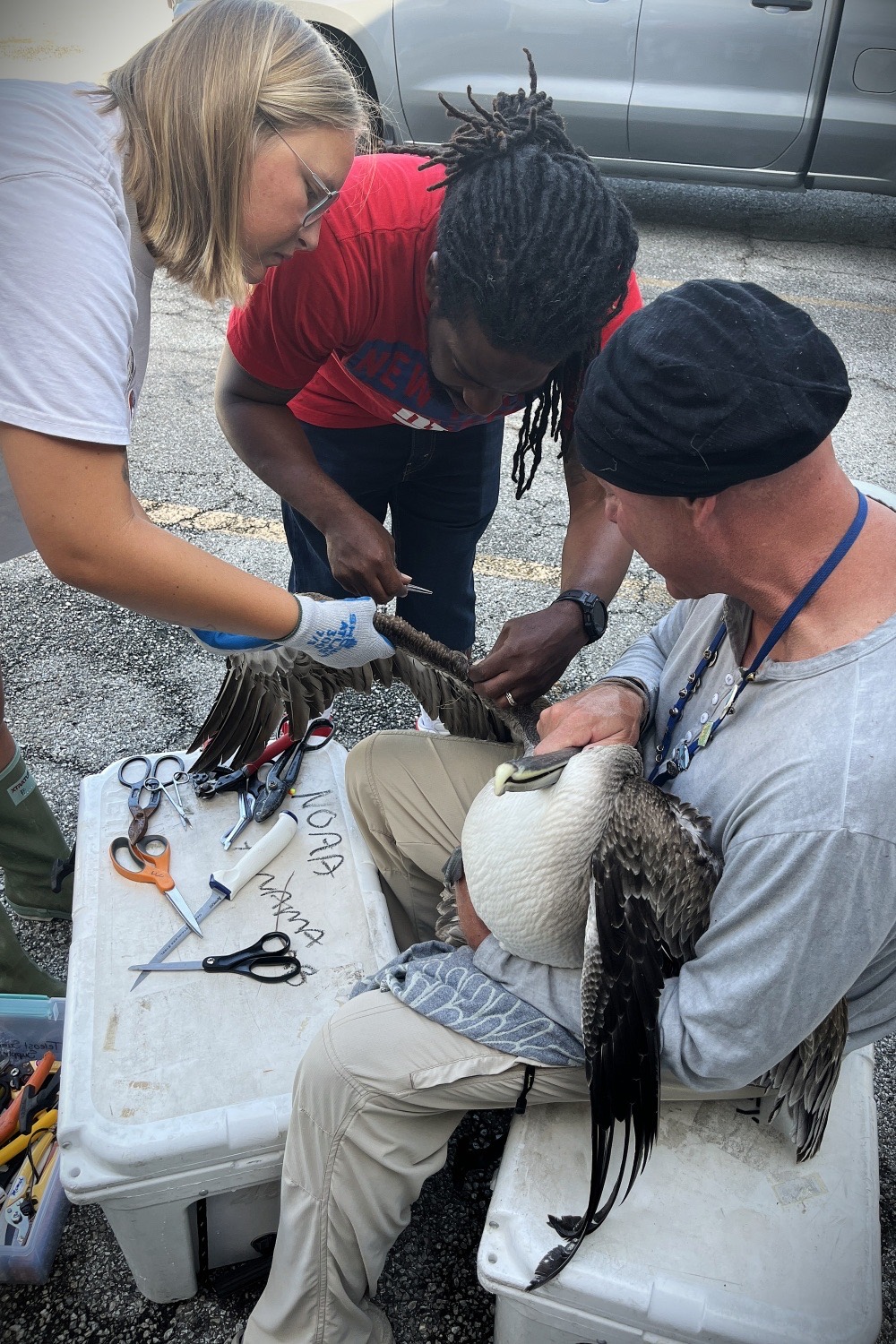
Photo: Michelle Duncan, NOAA Fisheries
Afterwards
Once it was free and had been checked over, the pelican took off, NOAA said, with no hook and no line on it.
NOAA added the warning its biologists give every year. Discarded fishing line is nearly invisible in the water and takes hundreds of years to break down, and it strangles and injures coastal birds and animals. The agency asked anglers to keep used line in a container, to put scrap monofilament in the recycling bins at boat ramps, and to use barbless hooks, which are far easier to take out of a wing.
Carry a story in five words
We run a game called Long Story Short: one real news sentence a day, and you keep the five words that carry it. Today's is below. Do play.
How to play
One real news sentence. Tap the five words a headline would keep, in whatever order the headline reads, then guess. Blue means right word, right spot. Orange means it is in the headline, somewhere else. Grey means it is not in it. Five tries. The result beats the process, the name or the job beats the place, and little words like a, the and of never count.
Yesterday: Troy police formed a human chain down the seawall and rescued both the eight-year-old in the Hudson River and the neighbor who went in after her. The five: police human chain rescued eight-year-old.