A Brighton couple have cleaned a road sign a day since September, and filmed every one
Paul Richmond-Watson, 47, and his wife Ruth, 25, started because the signs around them had gone too dirty to read at night. Each one takes about 25 minutes. They post the videos as Filthy Signs ASMR, and people have begun recognising them in the street.
18 November 2026
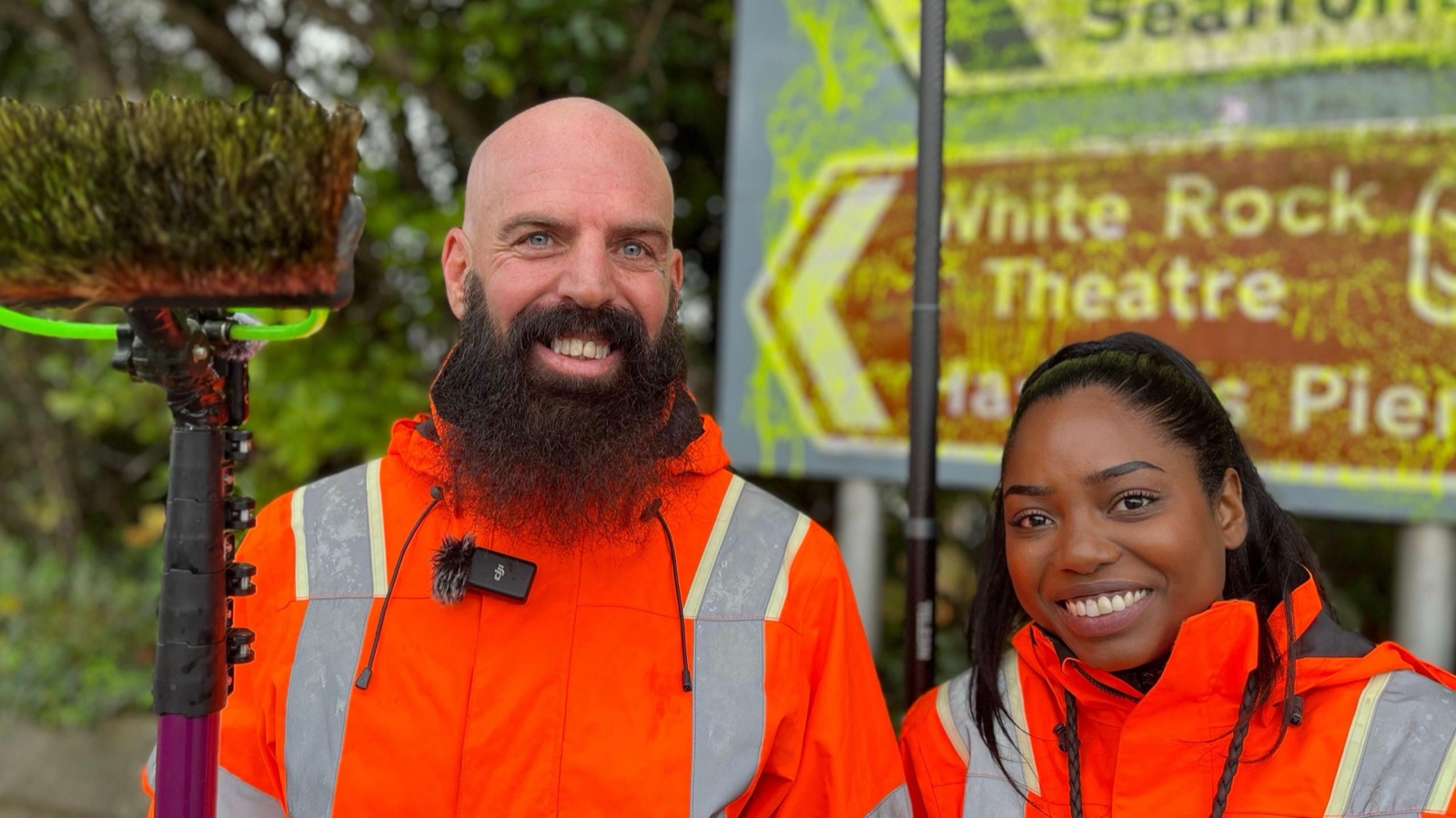
Photo: George Carden, via BBC News
Paul Richmond-Watson, 47, and his wife Ruth, 25, have cleaned at least one road sign a day around Brighton since September, BBC News reported. They film every one of them for a social media account they call Filthy Signs ASMR. They had gone looking for a hobby they could do together and settled on this.
Why the signs
Ruth said it was a problem she kept noticing from the car. “The amount of time we drive around and can’t read anything,” she said. “It’s a problem I do see.” Paul put it more broadly. “Britain is quite unique in having filthy road signs,” he said. “It is a bit of a state really and we are just trying to smarten it up.”
The idea came from window cleaners, who scrub a street sign near a job to advertise themselves. Paul has worked as a window cleaner, and before that in waste disposal.
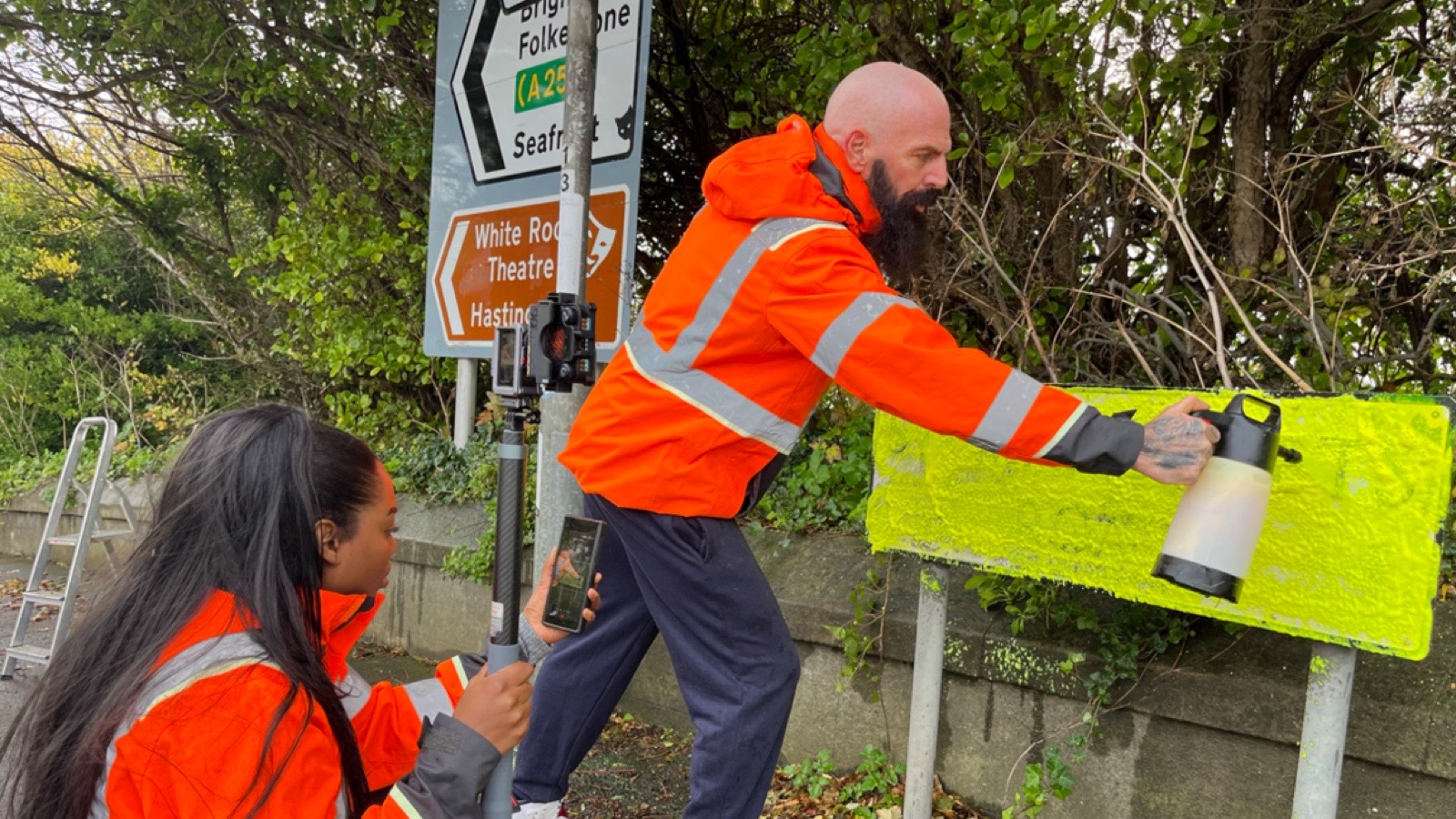
Photo: George Carden, via BBC News
Twenty-five minutes a sign
Each sign takes 20 to 25 minutes, setting up included. They work with a backpack water pump, a hose, a snow foam gun loaded with a biodegradable pH-neutral foam, and a long-handled brush, while Ruth films on a camera on a tripod. They have since bought equipment for cutting back the branches that grow across signs, which Paul called a “massive issue” that people comment on a lot.
The first one did not go smoothly, and Ruth got soap in her eye. “The first one that we did was a bit of a learning curve, but it was so satisfying and fun,” Paul said. “It is quite a bonding experience for us. We don’t really know what we are doing but we are giving it a good go.”
What the highways authority says
East Sussex Highways looks after almost 50,000 signs on the county’s road network, and would rather people reported them than cleaned them. “It’s great to see people taking pride in their towns and villages,” a spokesperson said. “Cleaning signs by the side of a road can pose a danger and we would always encourage people to report issues to us to ensure the work can be done safely and without putting members of the public at risk.” Hastings Borough Council thanked volunteers who help care for the town, and asked residents to report dirty, damaged or obstructed signs to the relevant authority.
People have started to notice
Residents send them signs to clean now, and they get recognised while they are out working. They pay for it themselves and have sold some of their possessions to cover it, though a few cleaning supply companies have since sent them equipment. Paul thinks part of the appeal is the watching. “I think it’s the satisfaction seeing the filth slide off and the reveal of the clean sign underneath and the scrubbing sounds,” he said.
Paul is originally from New Zealand and Ruth from Mauritius. They met on the street two years ago and married last year. They want to drive around Britain cleaning signs as they go, and would like other people to take it up.
“Driving past it a few weeks later and seeing it still sparkle is amazing,” Paul said. “You feel quite proud of yourself.”
Carry a story in five words
We run a game called Long Story Short: one real news sentence a day, and you keep the five words that carry it. Today’s is below. Do play.
How to play
One real news sentence. The job is to keep the five words that carry the story and let the rest go, then guess. Blue means the right word in the right place, orange the right word in the wrong place.
Yesterday: A guide dog that waits beside a blind Suffolk priest at the altar rail while she receives communion became an honorary canon, a title usually reserved for clergy. The five were guide dog became honorary canon.