On Jeju, an 85-year-old learns her letters and writes her first letter to the father killed in 4.3
Ko Bok-ja was a child when her father was killed in the violence on Jeju known in Korea as 4.3, and she never went to school. He had said his eldest girl should learn her letters too. Since 2022 she has been in a literacy class, and the first letter she wrote him is a poem.
11 October 2026
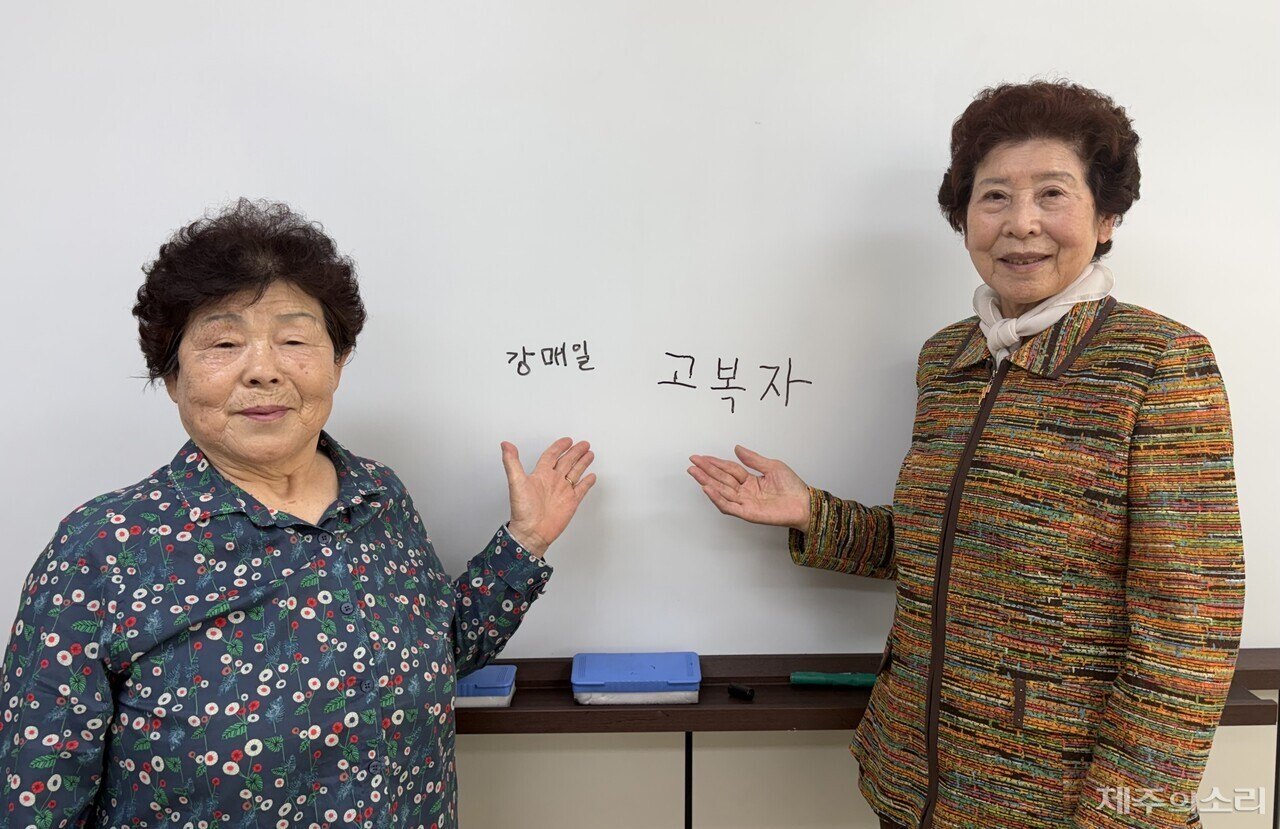
Photo: Won So-jeong, Jeju Sori
Ko Bok-ja is 85 and lives on Jeju, the island off the southern tip of Korea. She was a small child when her father was killed in the violence that began on Jeju on 3 April 1948. Koreans call it 4.3, and tens of thousands of islanders died in it. She never went to school. At eight she was carrying other people’s babies on her back.
Her father had worried about her. “Our eldest girl should learn her letters too,” he used to say.
She worked all her life, selling things to raise her children, cooking in restaurants and helping at a temple. She kept away from places where she might be asked to write, Jeju Sori reported, because she could not write her own name on a hospital form.
The class
In 2022 she joined Yeongrak Hakdang, a reading and writing class for older people at the Yeongrak welfare centre in Jeju City. Kang Mae-il, now 82, who also lost her father in 4.3, started the same year. Kang says that knowing her letters means she can now find the right clinic in a hospital without someone to take her.
Ko’s memory is going, she told the paper, but she still wants to learn one more letter every day. When the women call themselves foolish for forgetting a lesson, Park Eun-ju, who leads the team at the centre, tells them: “You forget so that you come back to learn tomorrow.”
The letter
The first thing she wrote to her father is a poem in the Jeju dialect, “Father, Spring Has Come”. Last year it won a prize at Korea’s national exhibition of poems by adult learners. This is it, in our translation.
To my father, whom I miss! It is your eldest girl, the one who minded babies at eight. Every April all these years I have thought of you, who died in 4.3, but I did not know my letters, so I could never send you news. “Our eldest girl should learn her letters too,” you said, Father, worrying about her while you lived. Now your eldest, at 86, has become the student Ko Bok-ja and is learning her letters, and writing to you for the first time, the knot of 4.3 in her heart is slowly coming loose. Now I pray that you, where you are, can let go of the sorrow of 4.3 too, and rest in peace. From your eldest daughter, Bok-ja.Ko Bok-ja, “Father, Spring Has Come”
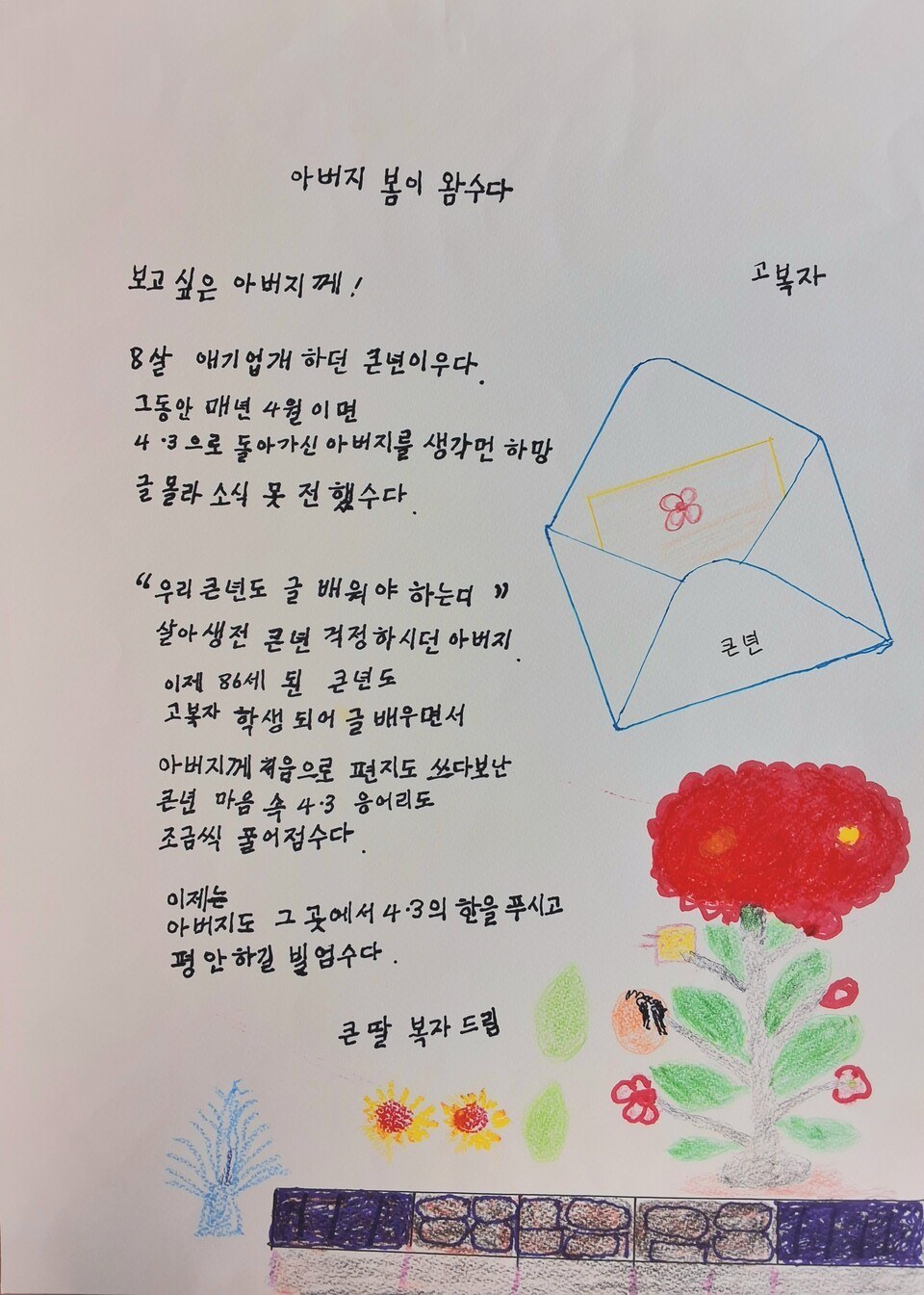
Photo: Jeju Sori
Another of her poems, “Studying Grandma”, ends with a promise to herself: “I will study again tomorrow, my name, earned after eighty, so I don’t forget it.”
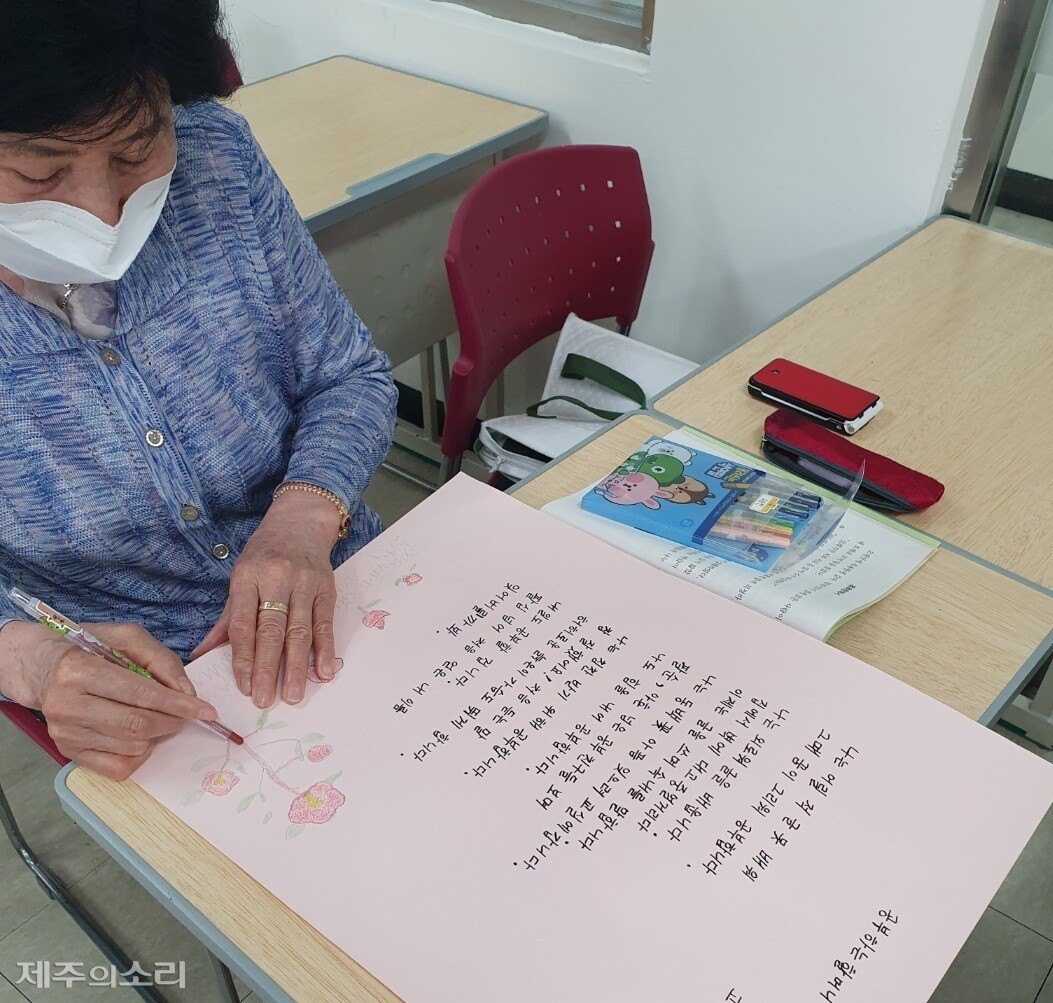
Photo: Jeju Sori
Jeju Sori met the two women on 6 October for a series marking the hundredth Hangul Day, Korea’s celebration of its alphabet, on 9 October.
Carry a story in five words
We run a game called Long Story Short: one real news sentence a day, and you keep the five words that carry it. Today’s is below. Do play.
How to play
One real news sentence. The job is to keep the five words that carry the story and let the rest go, then guess. Blue means the right word in the right place, orange the right word in the wrong place.
Yesterday: An 11-year-old who had learned from YouTube what to do saved a choking six-year-old boy at McDonald’s by patting him on the back until a chicken nugget came out. The five were 11-year-old saved choking six-year-old boy.