Lou Romano painted Up between January and March 2008, one small picture per beat, and he put the whole set on his own blog the year after, which is where these came from. There are 121 of them and we measured the colour in every one.
Someone paints the film before anyone makes it, one small picture for each scene, in order, all of them on one sheet, so you can look at the whole of Up at once and see where it goes light and where it goes dark. At Pixar the production designer does this, and the job is the colour and the light in a scene, while other people draw Carl and build his house. It happens first because that is the cheapest moment to change your mind.
His own caption under it, posted in June 2009, reads: A closer look at the color script (done January-March 2008). Digital.
He numbered the paintings 1 to 122 himself, 115 is missing from his own post, and that leaves the 121 below. Up came out on 29 May 2009, so the sheet is older than the film by more than a year.
“Some explorations of old age and loneliness. The idea was to keep Carl isolated within the frame and suggest his loss with composition and light.” Lou Romano, posting his development work for Up, May 2009
The house under its balloons is the picture on the poster, and in the plan it is four paintings, numbered 62 to 65, marking 10 between them. The black and white newsreel marks 5, so the most famous image in the film sits closer to the part with no colour in it at all than to anything else.
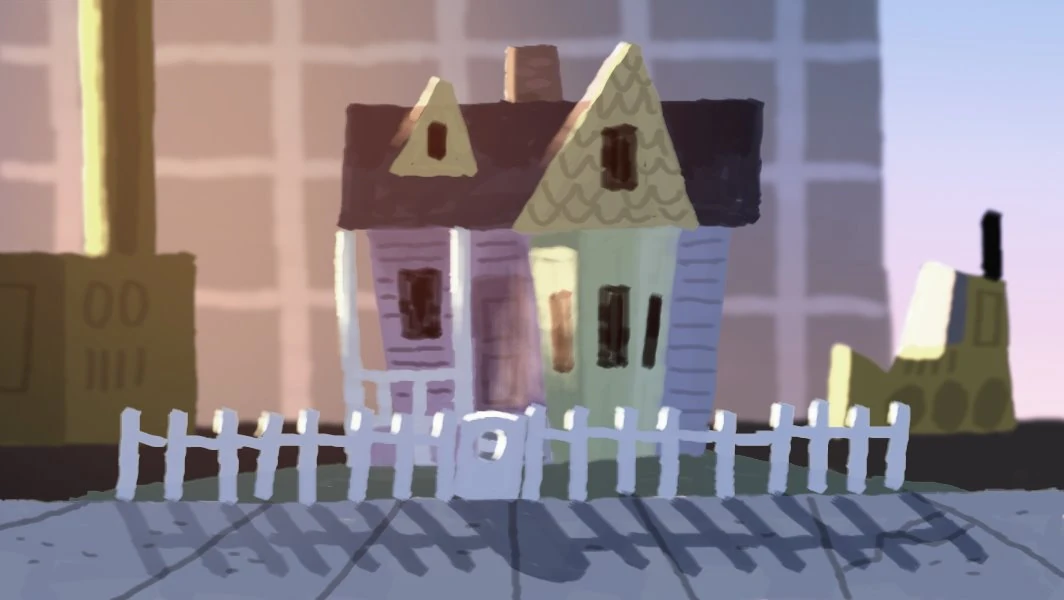
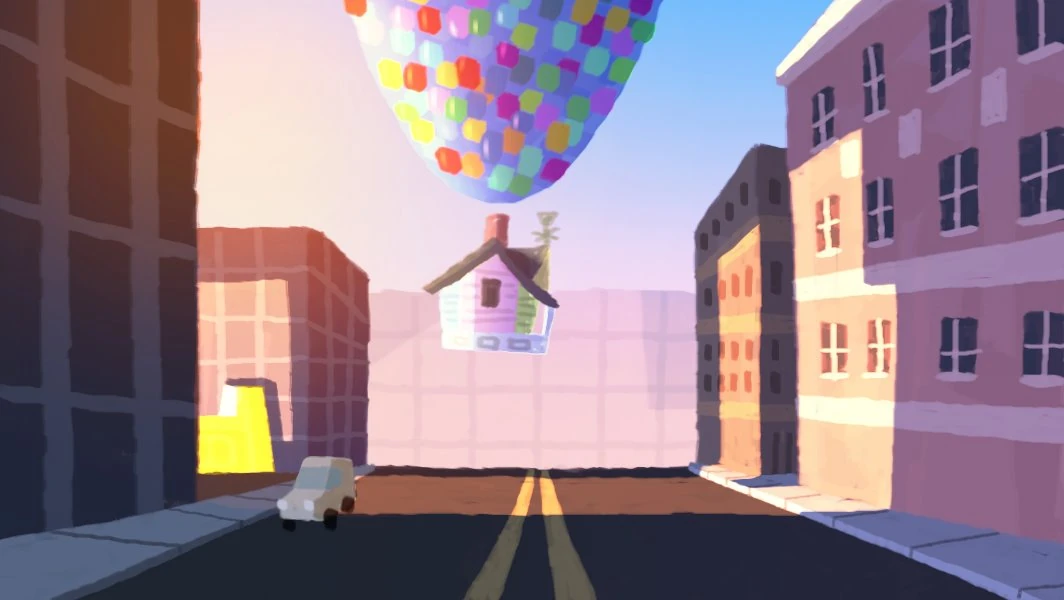
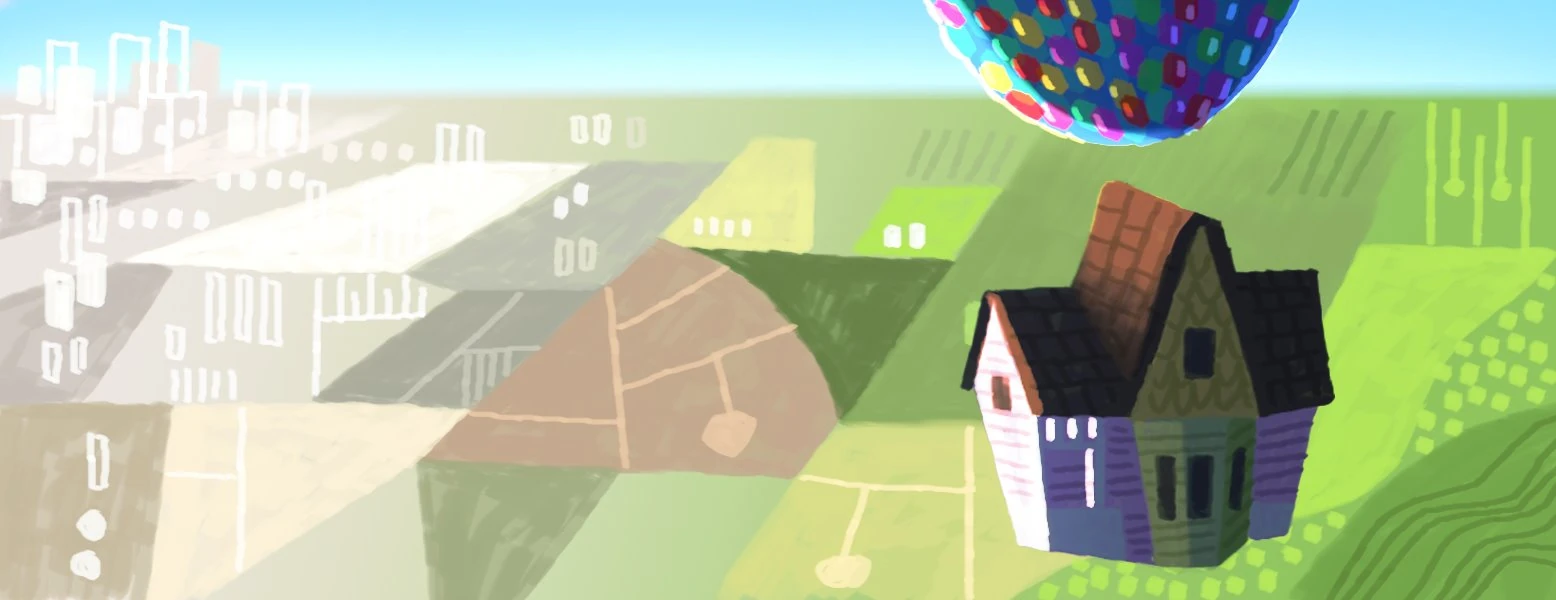

The 25 paintings of the marriage mark 35 against the 13 of the entire adventure, which is nearly three times as much, and 14 of the 23 most colourful paintings in the script fall before the funeral, inside the first third of it. Romano had already said this in words, near the top of this page, when he wrote that the idea was to keep Carl isolated in the frame and suggest his loss with composition and light.
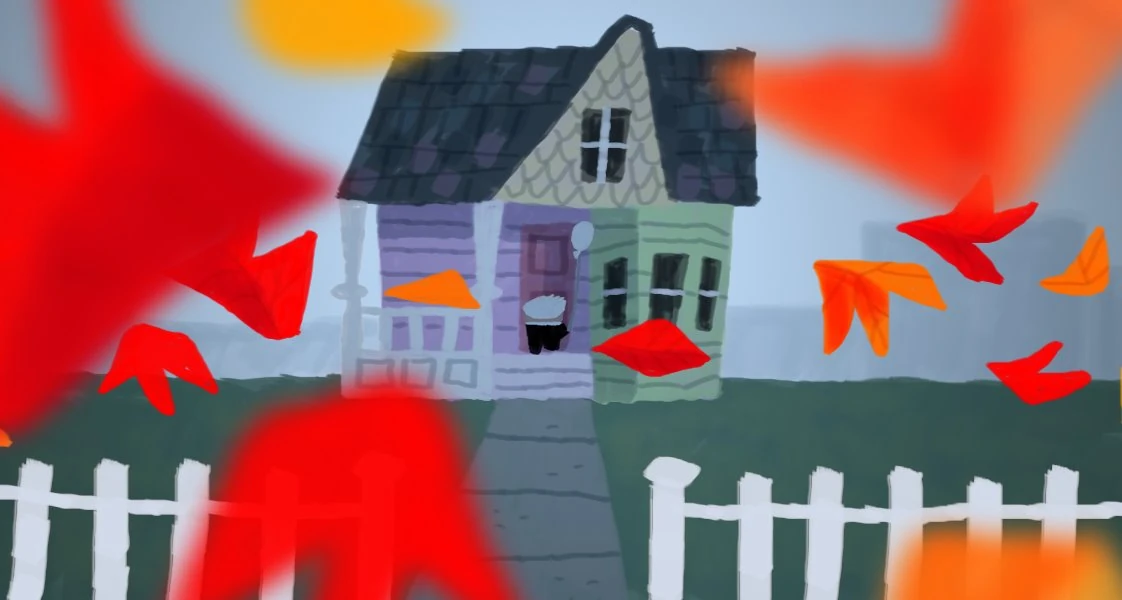
Long Story Short Our daily game. A news sentence, twelve words, keep the five that carry it. Two minutes, no account.Painting 47 is the most colourful painting anywhere in the script, which is what puts it at the top of the scale, and it is nearly three times the mark of the 25 paintings covering the marriage. What it shows is autumn leaves blowing past the house, four pictures after the funeral.
A lot rests on that 13, and the fair thing to ask is whether it only works because of where the lines were drawn, or because Carl spends so much of the stretch indoors. So here are the same 58 paintings, cut into five runs and measured one at a time.
| run | paintings | count | out of 100 |
|---|---|---|---|
| the widower, indoors | 48 to 61 | 14 | 11 |
| the house lifts, the storm | 62 to 74 | 13 | 12 |
| the tepui and the walk | 75 to 78 | 4 | 13 |
| the jungle | 79 to 92 | 14 | 16 |
| Muntz and the dirigible | 93 to 105 | 13 | 11 |
None of them reaches half of Ellie’s 35 and the highest is the jungle, which has a giant tropical bird in it. Carl flies a house to South America, walks it across a tepui, meets a dog with a collar that talks and fights a man in an airship inside this stretch, and the plan keeps the colour down through all of it.
The last 16 paintings mark 36, level with the 35 of the paintings covering Ellie, and it would be easy to read that as the film handing Carl his colour back at the end. The paint does not support it, because the two stretches are not made of the same thing.
Hers are daylight, mostly gold and green, while the ending is the burning house, the searchlights on the dirigible and a long run of sunsets over the tepui, and 6 of those 16 paintings sit in the red to yellow band, marking 47 between them, so a good part of what comes back is firelight.
What the measurement shows is that the plan runs dim through the middle and bright at both ends. Whether anyone meant it to come back, it does not say.
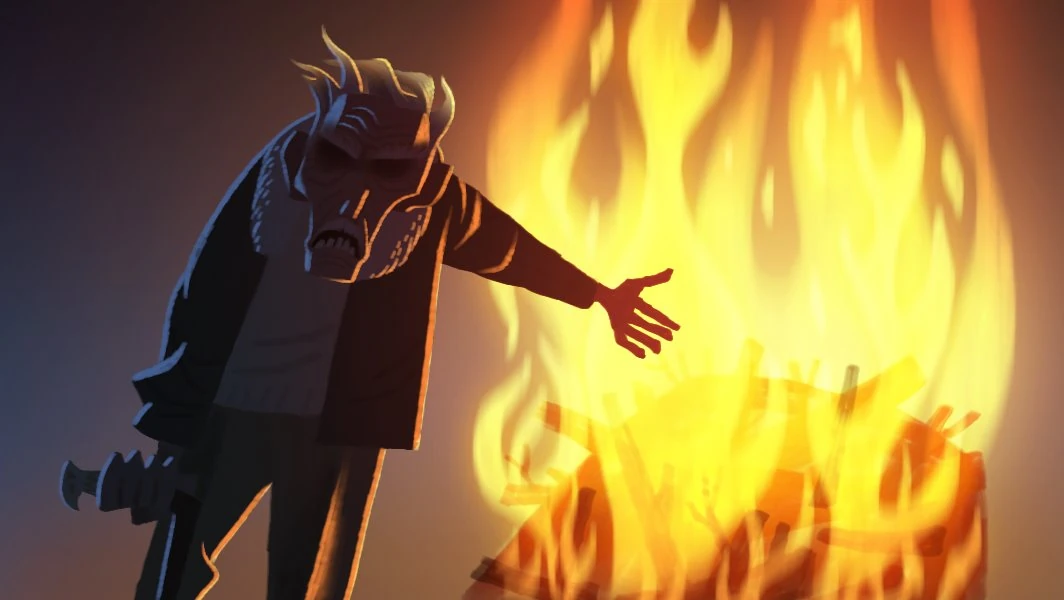
Romano was on Up from 2005 to 2008 and the colour script was the last thing he did on it, so the 121 paintings above came at the end of three years on the film. For a good part of that time he was working out how the house should sit against the sky by building a small one and photographing it.
“I made these figures then lit and photographed them on my desktop. The smallest figure is roughly the size of a grape. It was a way of arranging and finding interesting compositions.”
The figures were balsa wood, wire and acrylic, and he also flew out to Venezuela with part of the crew, among them the environment artist Nat McLaughlin and the head of story Ronnie Del Carmen, and went up Roraima, the highest of the tepuis, a mile above the jungle floor.
Back home he painted a map in gouache, charting the route the characters take and where Muntz keeps his hangar, at a crossroads between the bird’s nesting grounds and Paradise Falls.
Then he cut the still pictures together in After Effects and played music over them, Nelson Riddle on one, Ravel on another, John Williams over the tepui, to find out whether any of it felt like a film yet.
“Using music and sound also helped the tone of a scene or idea..a way of filmmaking on a very small scale.”
Charles Muntz began as Howard Hughes, and in an earlier version of the story he was after the snipe eggs because they reversed old age like a fountain of youth, which did not survive into the script above.
When he posted all of this he listed the people who had settled the look with him: Bryn Imagire the shading art director, Daniel Lopez Munoz and Albert Lozano on character design, Greg Dykstra sculpting, Don Shank, Nat McLaughlin, Noah Klocek and Daniel Arriaga on environments, and Paul Conrad on graphics, and then he wrote one more line about them.
“Despite many challenges, these artists were always focused on what was really important...the art.”
In the same May post Romano said there had been two colour scripts for Up, an early pass for tone and this one for light, and about the second one he added this.
“This was my last assignment on UP. Other artists also contributed greatly to the lighting design after I left the show.” Lou Romano, May 2009. The lighting team on Up was led by Jean-Claude Kalache.
The earlier script is the same film with everything taken out except shape and colour, and Romano’s note on it is that these are very simple but help give a sense of the film’s tone, which he takes further with lighting keys. Only Act I of it was published, though he says the same was done for Acts II and III.
Long Story Short One news sentence a day, cut to the five words that carry it. Two minutes, no account.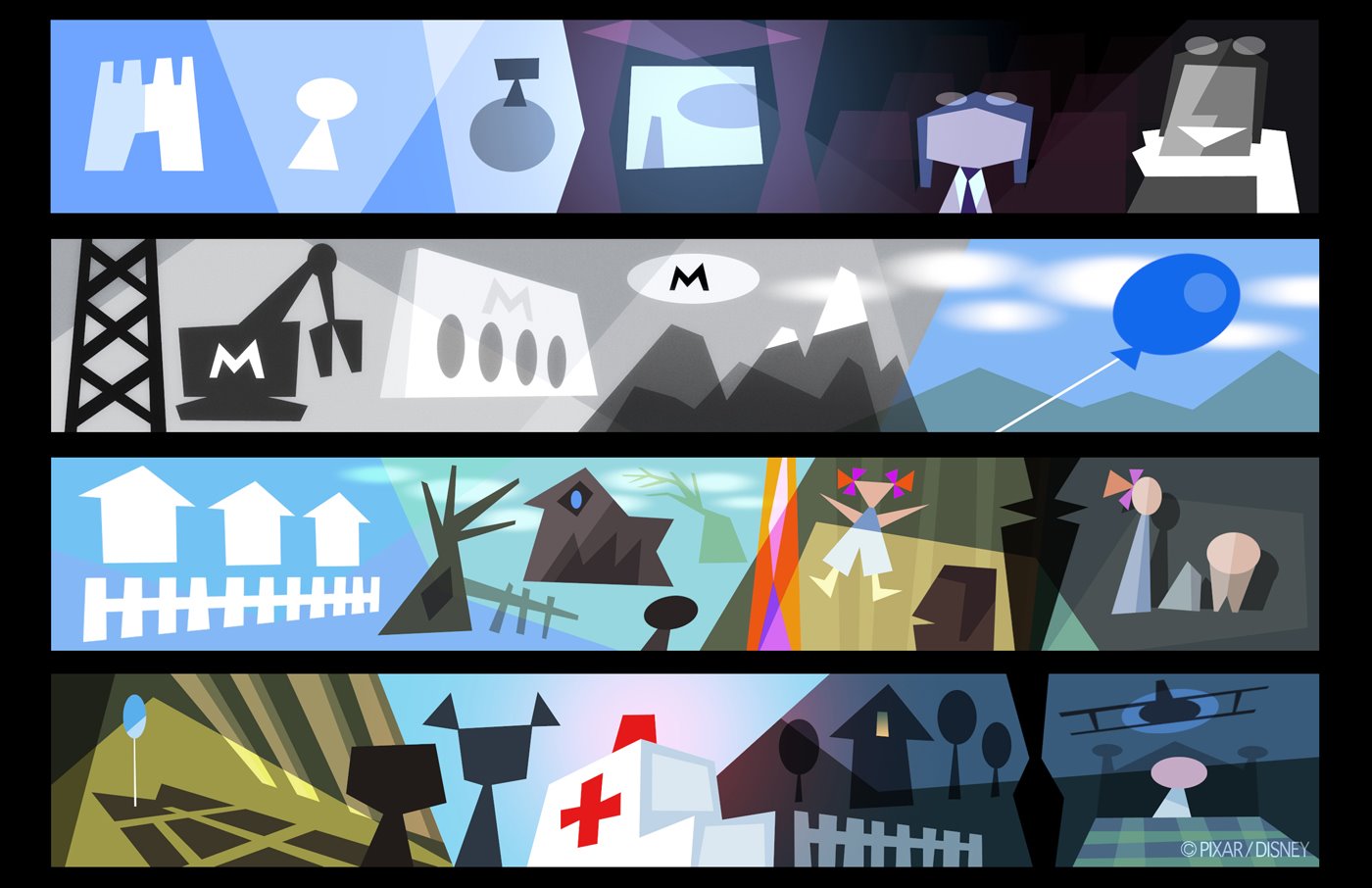
Each painting is reduced to one colour by a lightness-weighted mode in Oklab, meaning every pixel votes for its own colour with a weight equal to its own lightness, so a lamp-lit room at night is read by its lamp, which is how a person reads it too. The colour reported is the average of the winning group, so every colour on this page is one Romano actually mixed.
The mark out of 100 is that colour’s chroma, its distance from grey in the same space, divided by the chroma of painting 47 and multiplied by a hundred. It is a straight rescale and nothing else, so every ratio between two paintings is exactly what it was in the measurement. The raw readings are in the file below if you would rather have them.
This measures the plan and not the film, and how much of the plan came through the lighting department is a different measurement that needs the film itself, which we do not have.
Our free daily game. One news sentence, twelve words, keep the five that carry the story and let the rest go. Two minutes, no account, a new one every morning.
Play today’sThey go out free, every so often, and nothing on this page is locked.