It's four o'clock on a Tuesday.
Somewhere in London,
a pub door just swung open.
The oldest one still pouring claims 1538.
Here's how we got them. A site called closedpubs.co.uk has been collecting photographs of dead London pubs since 2003. Volunteers upload them. It holds 4,656 pictures covering 5,029 closed pubs. One user, Darkstar, took 478 of those pictures on his own.
Add the 3,479 still pouring, which we took from OpenStreetMap, and you get 8,508 public houses. We're not aware of anyone else who has put both halves in one place.
It isn't a complete list. Nobody has one.
♬♫♩♪ In my old worn-out shoes, in the rain and the snow…
A line from 'Streets of London' by Ralph McTell, 1969.
The London
Public Houses
Every London pub we could find, photographed, named and mapped.
Data: closedpubs.co.uk archive, OpenStreetMap, ONS UK Business Counts, Apple Vision OCR.
A short history of London pubs.
Most of the names you'll see in this article come from one of seven eras. Here's a tour of all of them, in order.
Before 1500
Monastic alehouses, Templar lands
London pubs are old. There were alehouses on these streets before there was an England: licensed by parish priests, run out of the back of monastic kitchens, drunk in by pilgrims walking to Canterbury.
The pubs called St James, St Bride, Cross Keys, and Lamb & Flag cluster around the old monastic estates of Clerkenwell, Smithfield, and Holborn for one simple reason: that's where they started.
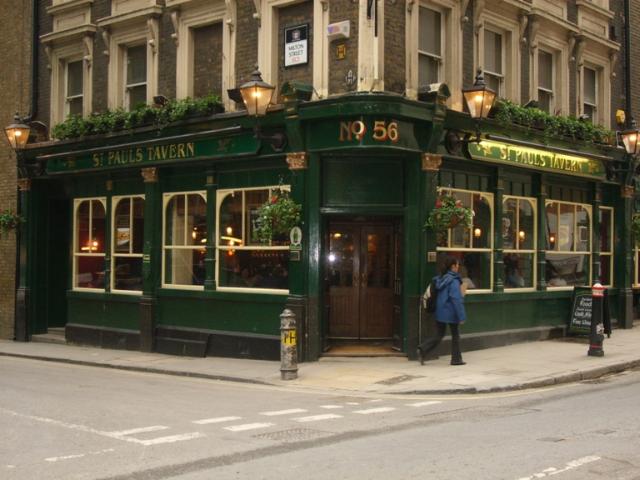
St Paul's Tavern · Clerkenwell, EC1. Still pouring.
1530s
Henry VIII orders the signs
When Henry VIII broke with Rome in the 1530s, a religious pub name stopped being a safe thing to have over your door. Landlords swapped saints for sovereigns. Nobody ordered them to. The Crown is the third most common pub name in Britain today, behind the Red Lion and the Royal Oak.
Most of the Crowns you walk past today are older than the buildings they're hanging on. Ye Olde Cheshire Cheese, on Fleet Street, puts 1538 over its door. It is still pouring.
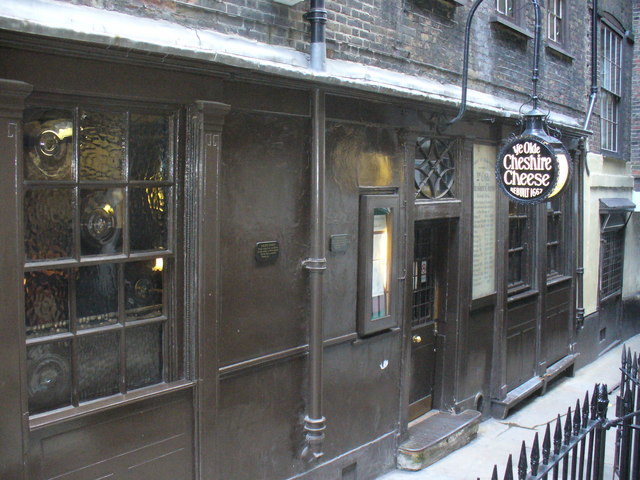
Ye Olde Cheshire Cheese · Wine Office Court, EC4 · est. 1538.
1651
Charles II hides in an oak tree
On 6 September 1651, Charles II spent a day hiding from Cromwell's army inside a hollow oak at Boscobel House, Shropshire. He restored the monarchy nine years later.
For two centuries afterwards, naming your pub The Royal Oak was loyalist code. London has 65 of them. Twenty-four are still pouring.
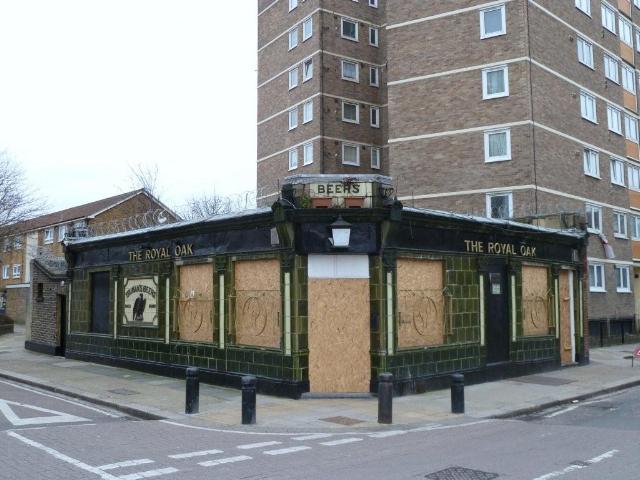
The Royal Oak · North Woolwich, E16 · green-tiled fascia, boarded.
1700–1830
The trades drank at the trades
The pub closest to where the bricklayers lived was called the Bricklayer's Arms. Plumbers, Carpenters, Coopers, Shepherd. The trade map of London made literal.
The Red Lion spread along the roads out of the city in the same period. Where it came from is still argued over: John of Gaunt's badge, a local landowner's arms, or the Scottish royal lion that joined the English arms in 1603. It is now the most common pub name in Britain.
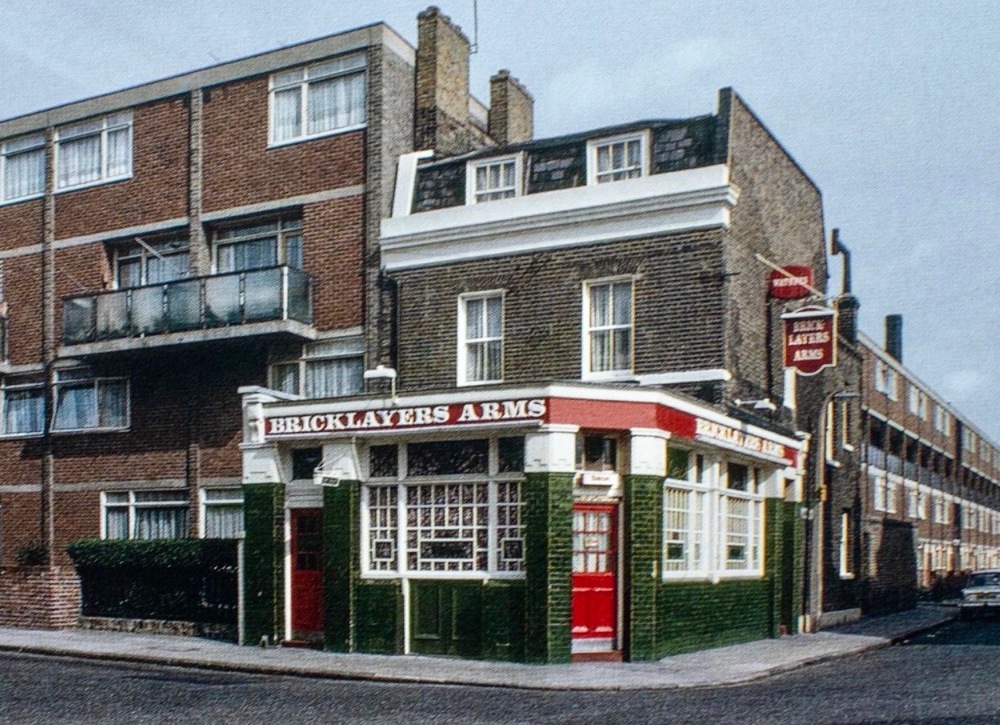
Bricklayers Arms · Whitechapel, E1 · green tile, closed 2004.
1830–1914
The breweries write their names in stone
The Victorians built thousands of pubs. They also did something new: they engraved the brewery's name above the door. CHARRINGTONS ENTIRE. WHITBREAD ALES. TRUMAN'S FINE ALES & STOUT.
It was a property mark. Each pub was tied to one brewery and sold only that brewery's beer. By 1900 most of London's pubs were tied. You can still read the brewery's name on the side of buildings that haven't been a pub for thirty years.
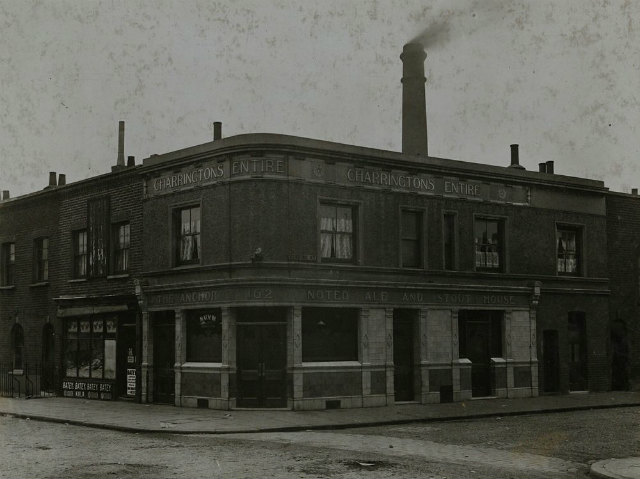
The Anchor · Poplar, E14 · "CHARRINGTONS ENTIRE" painted on the top fascia.
1914–1989
The Big Six and the break-up
Through the twentieth century the brewing industry consolidated into six companies: Allied, Bass, Courage, Grand Metropolitan, Scottish & Newcastle and Whitbread. The trade press called them the Big Six. By the late 1980s they had a tie on more than a third of Britain's 83,000 pubs and most of the beer going into them.
The 1989 Beer Orders capped each of them at 2,000 tied pubs and made them let tenants buy a guest beer from someone else. The pubs they sold went mostly to property companies. None of the six brews under its own name now. Bass and Courage survive as labels owned by conglomerates that don't run pubs.
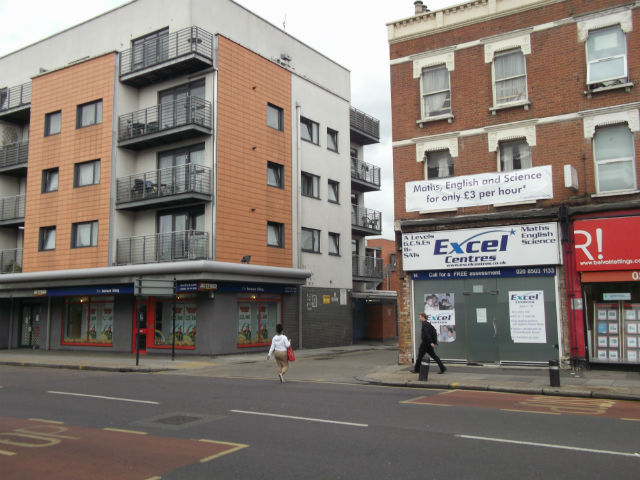
The Charleston · Stratford, E15 · Charrington-tied · closed 1999.
1990–2026
The Wetherspoons era
The first one opened on Colney Hatch Lane in Muswell Hill in December 1979. Tim Martin took over the lease about ten months later and named it after a teacher of his in New Zealand who couldn't control a class. The hunch underneath it: most British people don't want a curated craft experience. They want a pint of bitter for £3 and somewhere to sit. Wetherspoons now runs 108 pubs in London. Greene King runs 183 and nobody writes essays about that.
Meanwhile London keeps losing them. Our archive records 14 closures in 2025 and three so far in 2026: the Orange Tree in Winchmore Hill, the Greyhound in Battersea, the Laurie Arms in Hammersmith. Those are the ones somebody photographed. The real number is higher and nobody counts it.
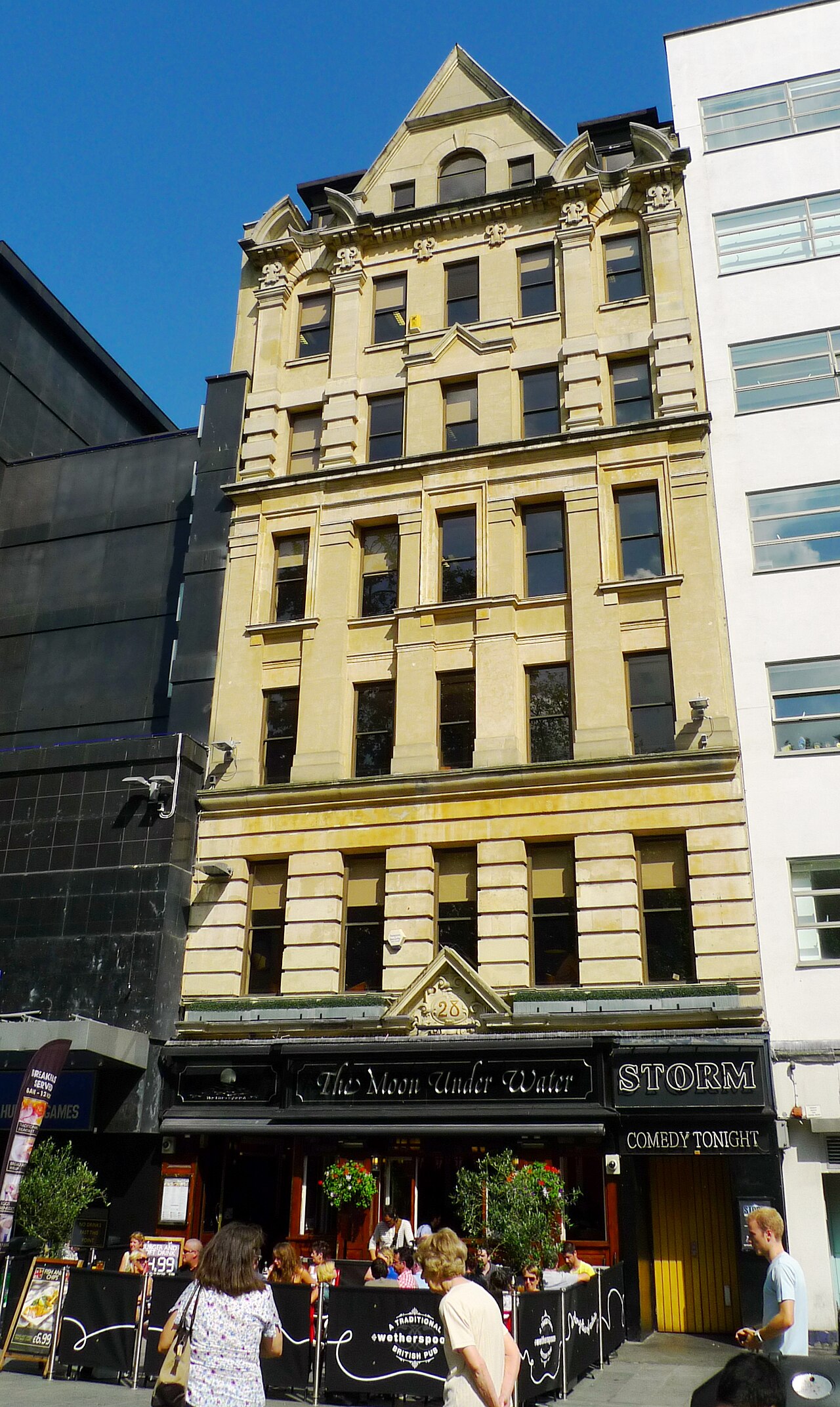
The Moon Under Water · Leicester Square, WC2 · one of 108 London Wetherspoons.
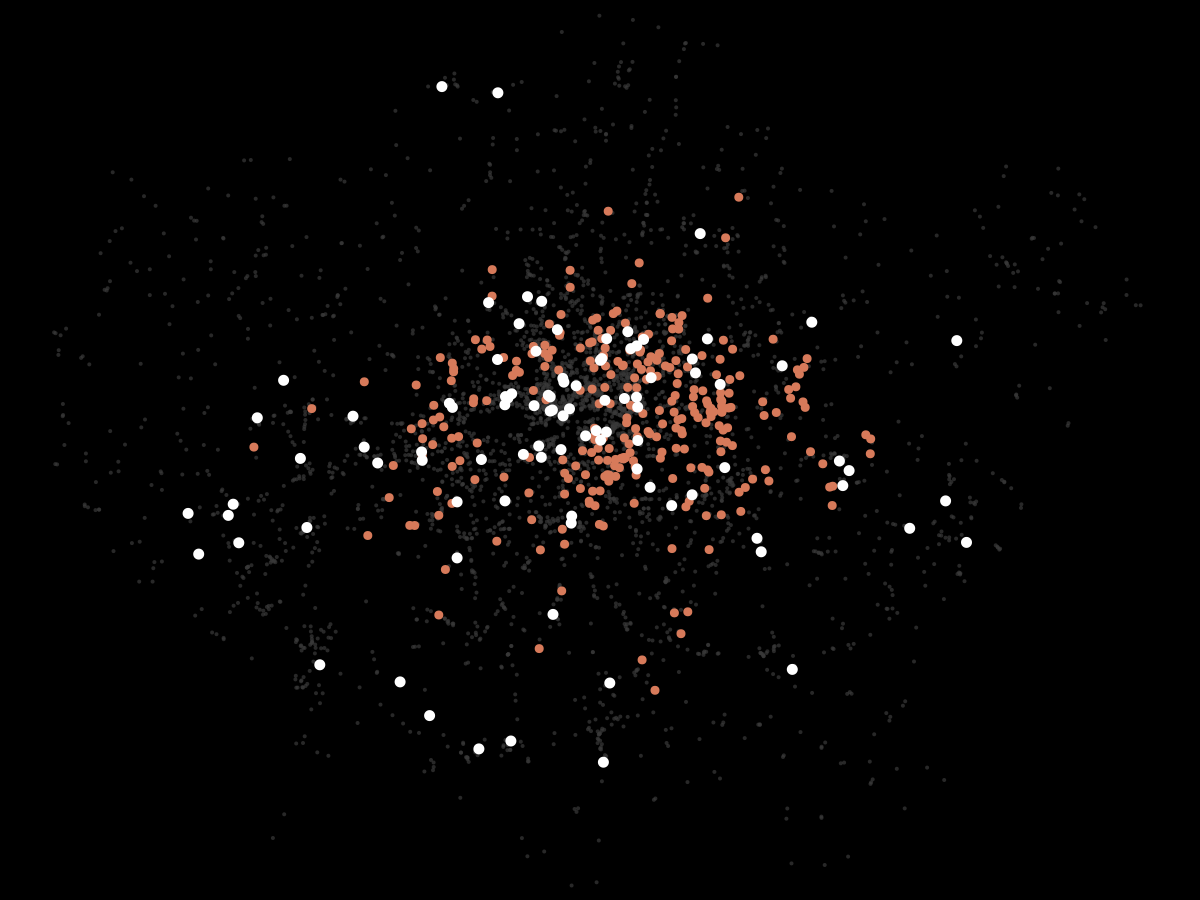
Here are 7,779 of them.
White dots are still pouring: 3,479. Coral dots have closed: 4,300. Zoom in, click any dot.
Map by Google. Another 729 closed pubs sit in the archive with a postcode too vague to place, so they aren't on here. Browse the full archive →
Let's start with the Crown. Crown, Rose & Crown, Crown & Anchor, Crown & Sceptre: taken together it's the most common pub-name theme in Britain, and has been since Henry VIII told every innkeeper to fly a royal sign in the 1530s.
London has 219 Crown-themed pubs. Eighty-six are still pouring tonight. The other 133 have closed.
(As an exact pub name, "Crown" comes second to "Prince of Wales" in our ranking. We'll get there.)
219 Crowns, on a map of London.
White dots are still trading. Coral dots have closed. Click any of them.
Loading map…
Click any dot for the pub's name, address, photograph, and (if closed) what the building is now.
The Names
A pub name in London usually means one of four things: a royal (Crown, Duke of York), an animal (Red Lion, White Hart), a trade (Bricklayer's, Carpenter's), or a saint. Most are older than the buildings they're on. Here are the eight patterns that come up most.
Crown
219 mapped · 86 still tradingThe third most common pub name in Britain, after the Red Lion and the Royal Oak. Most of them predate 1649, the year Cromwell beheaded Charles I and the Republic ordered royalist signs down. The Crowns that didn't repaint to "Republican Tree" or "Commonwealth Arms" were quiet loyalists; by 1660 most of the names that had changed reverted.
The Crowns you walk past today are the ones that never moved.

Duke, Earl, Marquis
384 mapped · 96 still tradingName the pub after the man who owned the land and you had said something useful about who to be polite to. A Duke of York in one parish, a Marquis of Granby on the coaching road, an Earl of Warwick where there had once been an Earl of Warwick.
Most of the men are forgotten. The pubs are not.
The Royal Oak
65 mapped · 24 still tradingIn 1651, Charles II spent a day hiding from Cromwell's army inside a hollow oak tree at Boscobel House. He restored the monarchy nine years later. For two centuries afterwards, naming your pub The Royal Oak was loyalist code.
Forty-one of the sixty-five have closed. Twenty-four are still pulling pints. One of those, on Tabard Street in Borough, was a run-down Courage house until Harvey's of Lewes took it over in 1997.

Red Lion
69 mapped · 25 still tradingNobody agrees where it came from. John of Gaunt used a red lion as his badge in the fourteenth century. So did plenty of local landowners. And in 1603 the Scottish royal lion was joined to the arms of England, which put one on a lot of walls. Whichever it was, Red Lion is the most common pub name in Britain.
Twenty-five are still open in 2026. The Red Lion on Parliament Street is so close to the House of Commons it has its own division bell. The MPs walk over.

The Trades
293 mapped · 103 still tradingA Bricklayer's Arms in Bermondsey, where the brickworks were. A Carpenter's Arms in Marylebone, near the cabinet shops. A Plumber's Arms in Pimlico, the lead-workers' parish. A Plough at every parish boundary the agricultural labourers walked to.
Nobody planned it. The pub went up where the work was, then got named after the men standing in it.

The Thames
364 mapped · 129 still tradingLook at where the dots thicken and you have found the river. The Thames was where the trade was. Coal from Newcastle, hops from Kent, gin from Holland. The watermen who moved it drank within sight of the wharves.
Inland of Cannon Street, the Anchors disappear.

The Chains
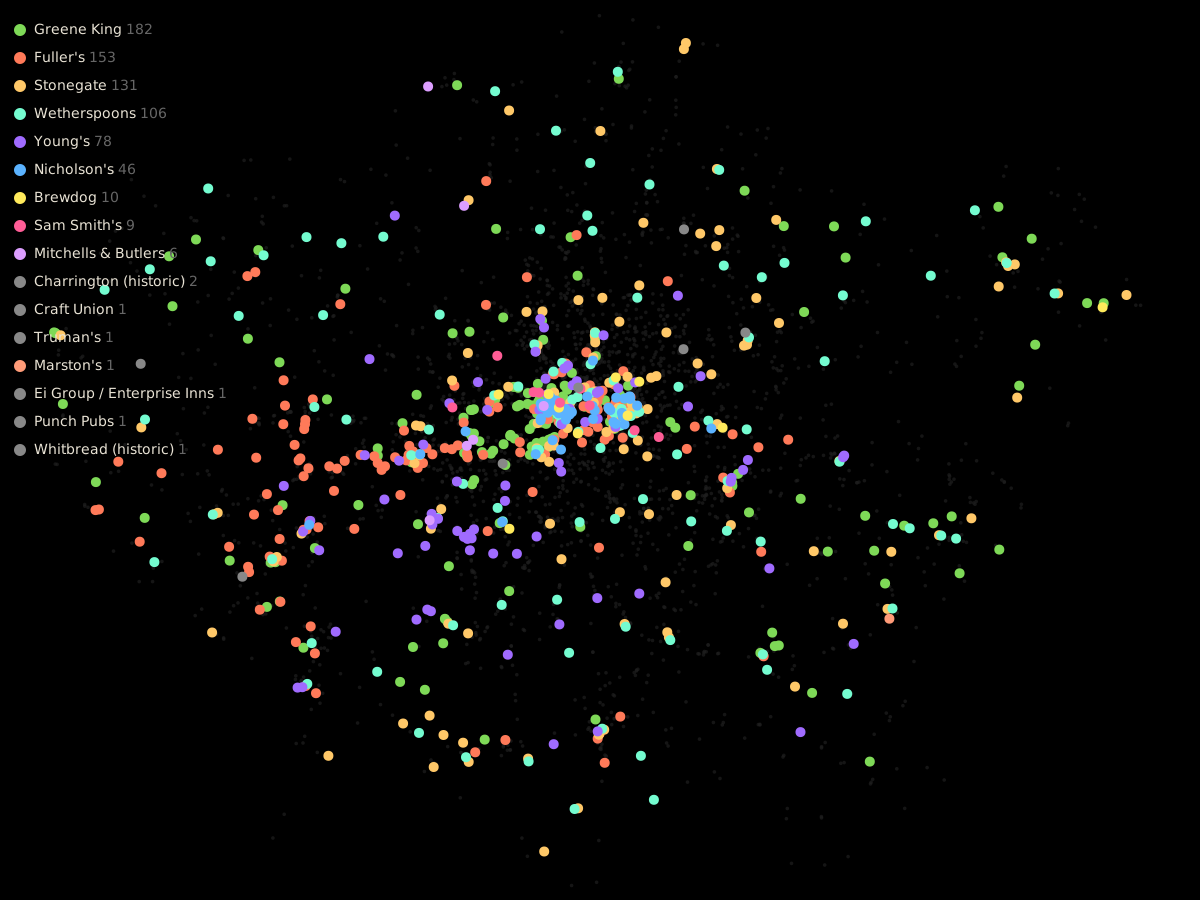
729 mapped · fifteen operatorsGreene King runs 183. Fuller's 153. Stonegate 132. Wetherspoons 108. Young's 78. Another ten operators split what's left. That's 733 of London's pubs tied to a chain. The other 2,746 answer to nobody.
It used to be worse. John Charrington bought into the Mile End brewery in 1766 and the family name ended up over half the east end. Their red C is still on 70 shopfronts in our archive, all of them shut. Charrington merged into Bass in 1967 and Mile End stopped brewing in January 1975.
???
130 mapped · 69 still tradingThese pubs cluster around the medieval monastic estates of London: Clerkenwell, Smithfield, Holborn. And around the Knights Templar churches that survived the 1312 papal suppression.

The Photos
The maps are useful. The pubs themselves are better. Five photo grids of London pubs you can walk past, photographed before some of them closed.
The X Arms
Bricklayer's, Carpenter's, Plumber's, Mason's, Shipwright's, Builder's. One sign per craft, on the corner where that craft drank. Sixty-eight of them have closed in our archive. Twenty-nine are still open.
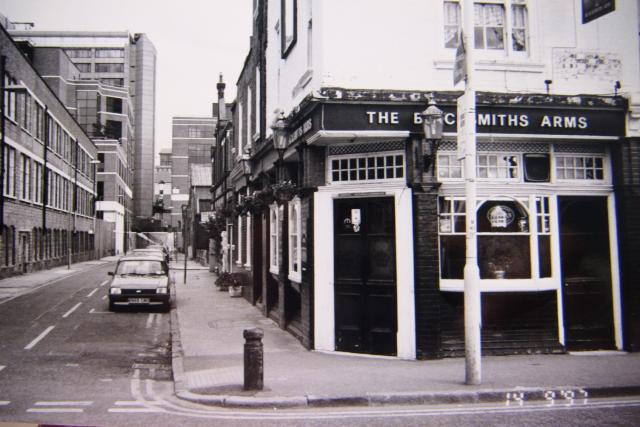 Blacksmiths Arms · Poplar
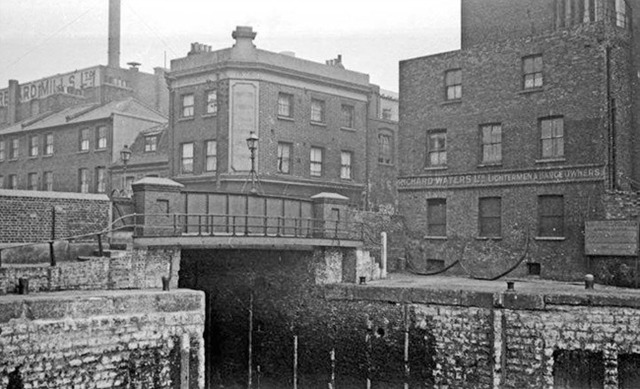 Bricklayers Arms · Poplar
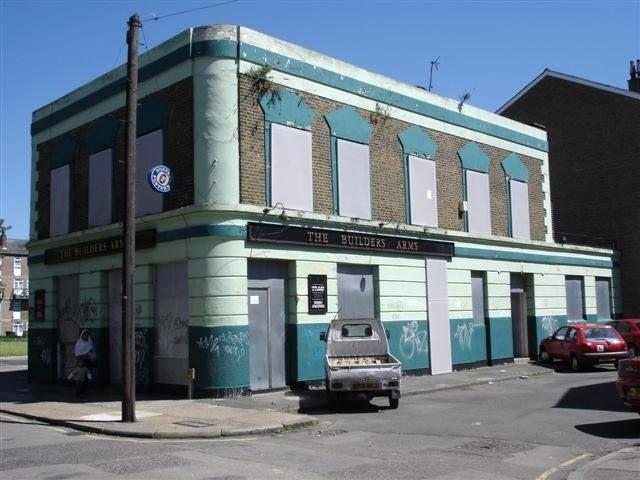 Builders Arms · Poplar · closed 2004
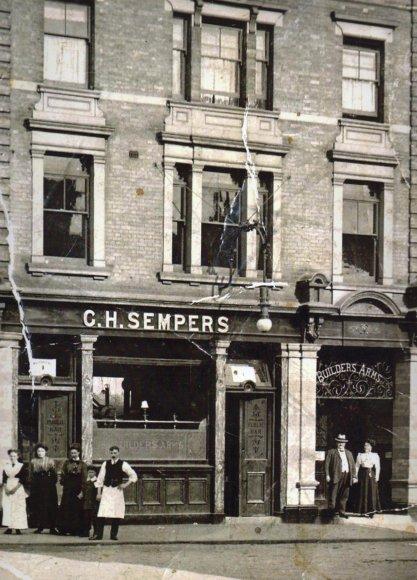 Builders Arms · Poplar
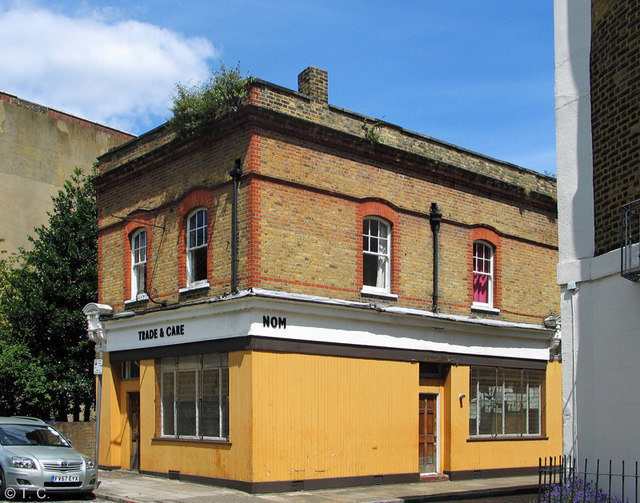 Coopers Arms · Poplar
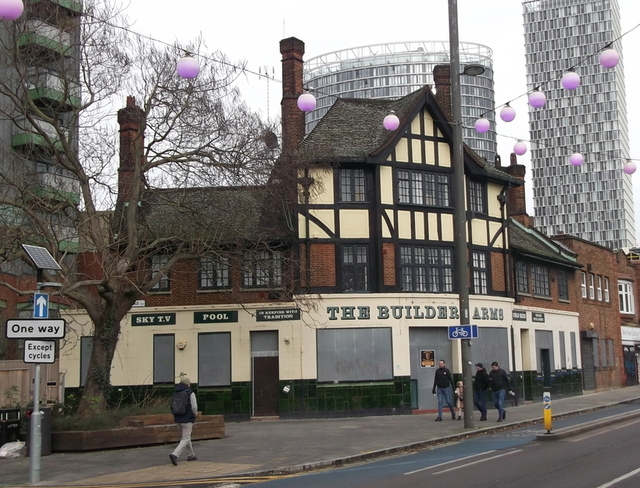 Builders Arms · Stratford · closed 2020
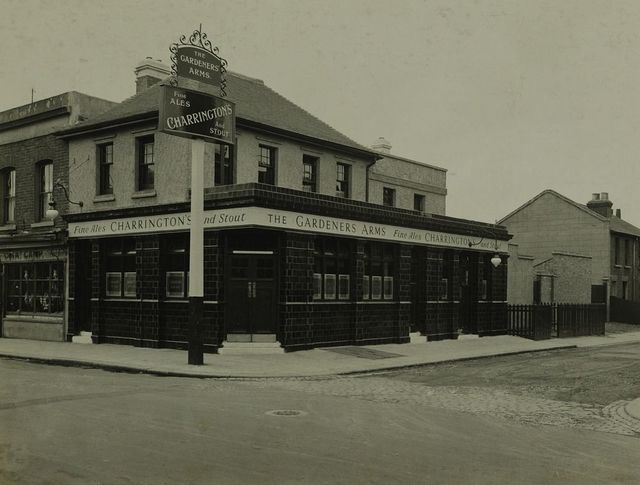 Gardeners Arms · Walthamstow · closed 1967
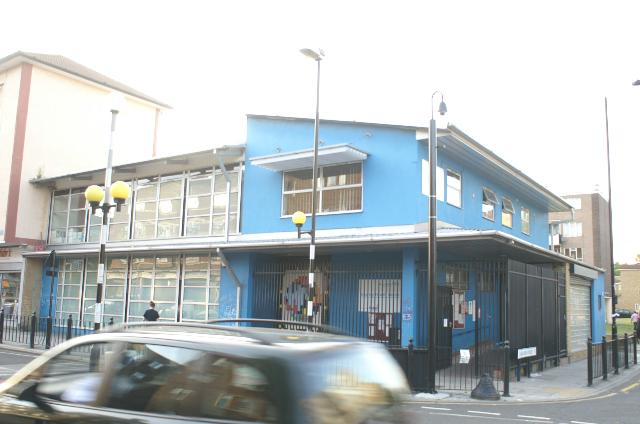 Carpenters Arms · Stepney · closed 1999
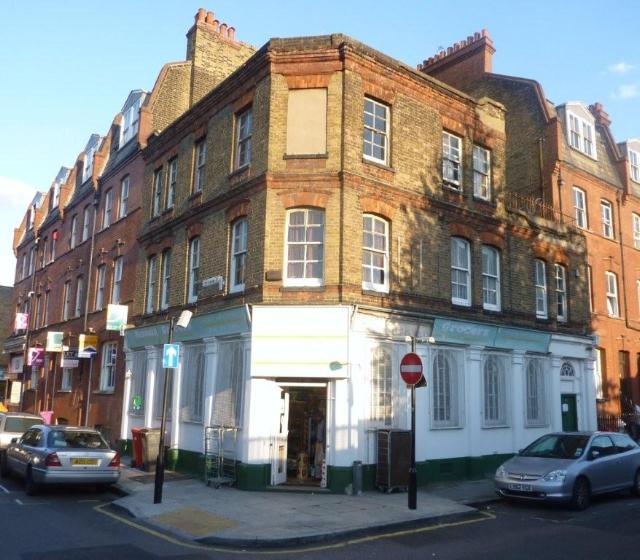 Bricklayers Arms · Whitechapel · closed 1920
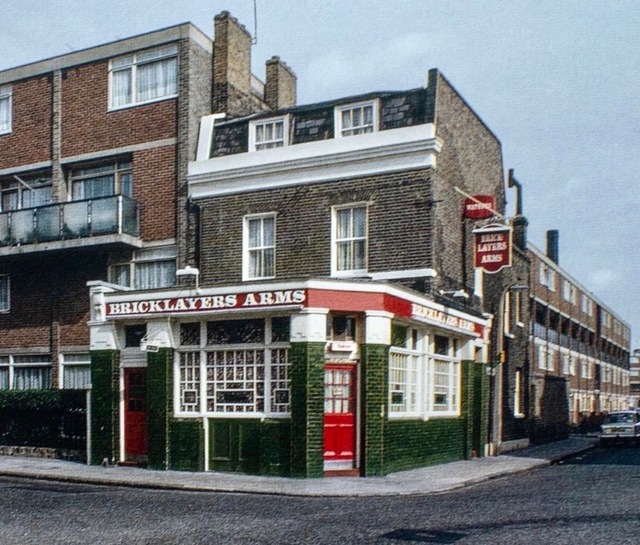 Bricklayers Arms · Whitechapel · closed 2004Bricklayers Arms · Whitechapel
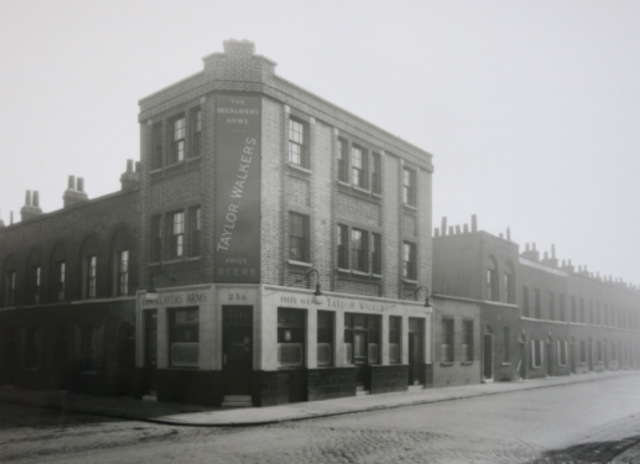 Bricklayers Arms · Bethnal Green
The Lost Pubs of West London
Two hundred and twenty-three closures in W1, W10 and W11. Twelve of them here. The caption tells you the year it went.
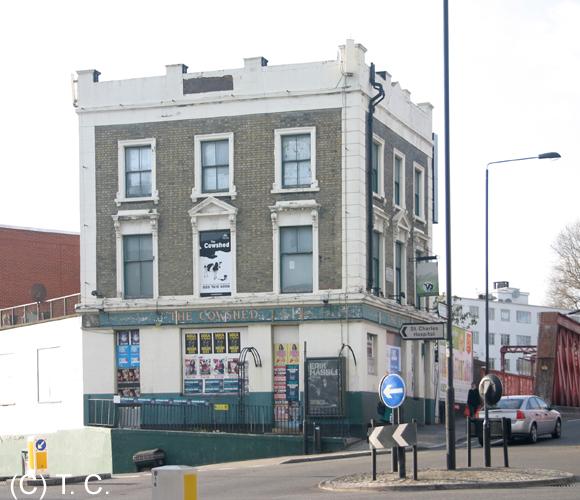 Admiral Blake · North Kensington · closed 2012
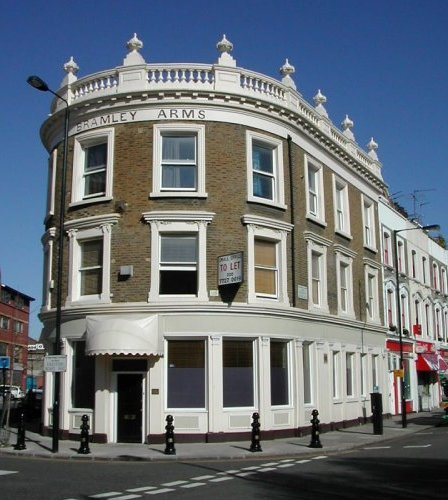 Bramley Arms · North Kensington · closed 1980
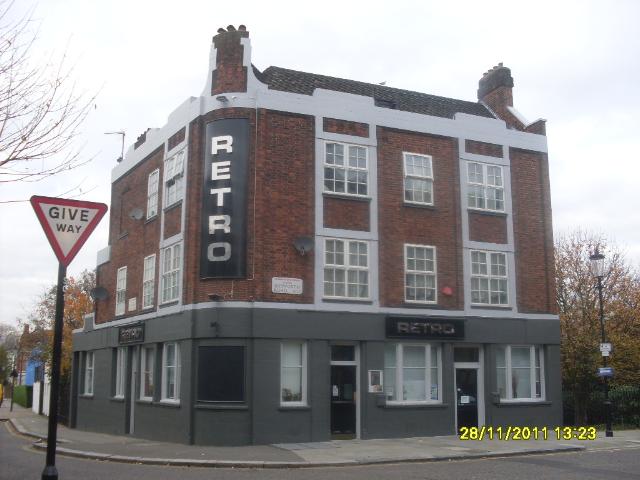 Earl Derby · North Kensington · closed 2011
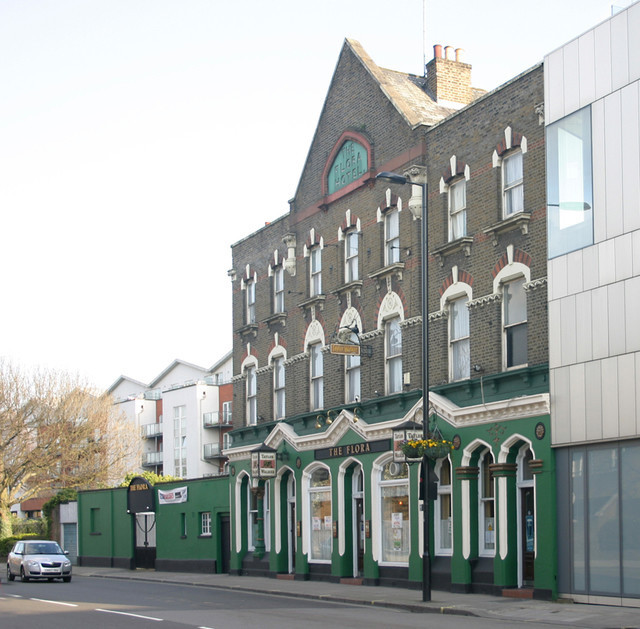 Flora Hotel · North Kensington · closed 2016
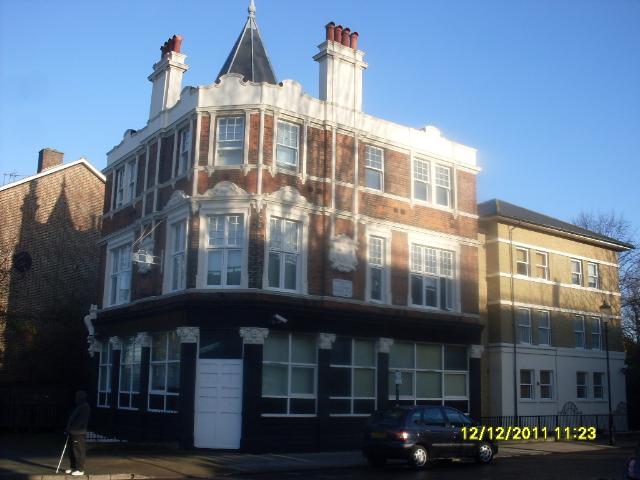 Latimer Arms · North Kensington · closed 1998
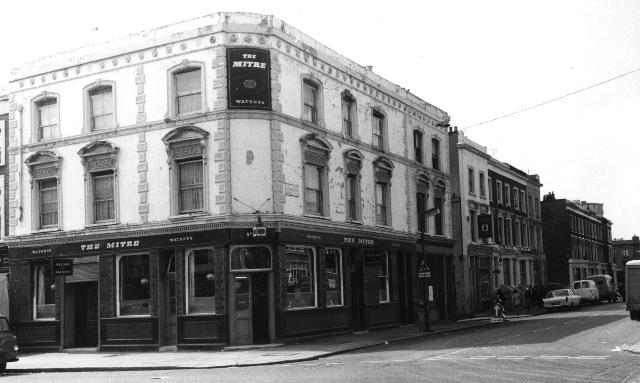 The Mitre · North Kensington · closed 1972
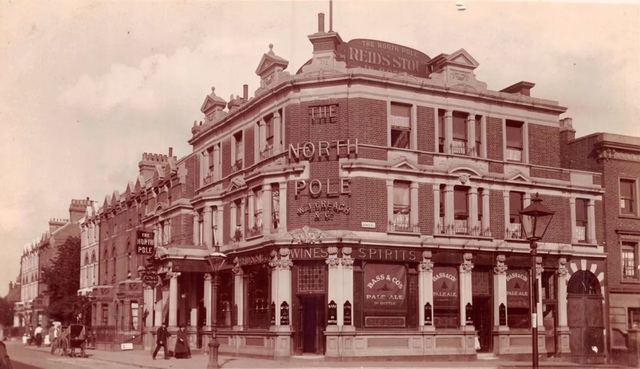 North Pole · North Kensington · closed 2012
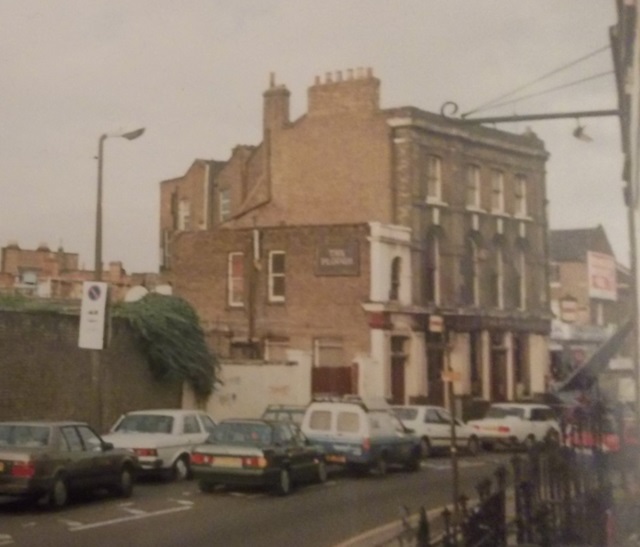 The Plough · North Kensington · closed 1986
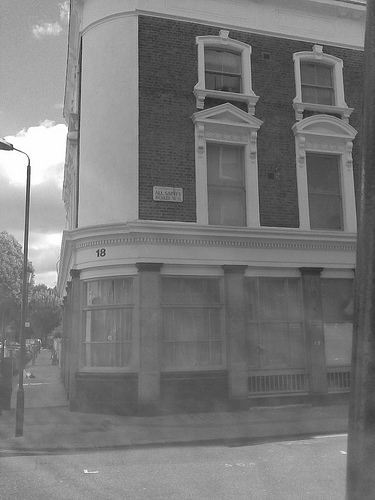 The Apollo · Holland Park · closed 1983
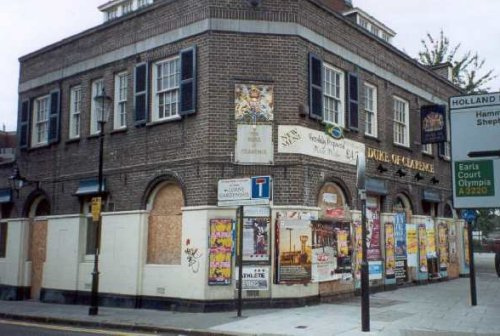 Duke Of Clarence · Holland Park · closed 2001
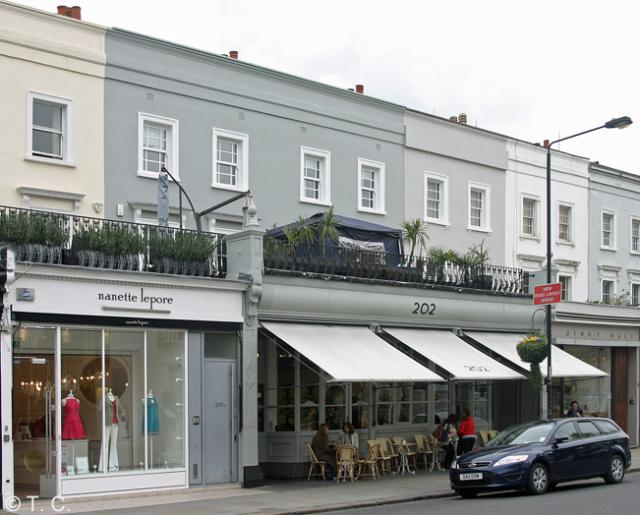 Duke Of Norfolk · Holland Park · closed 2002
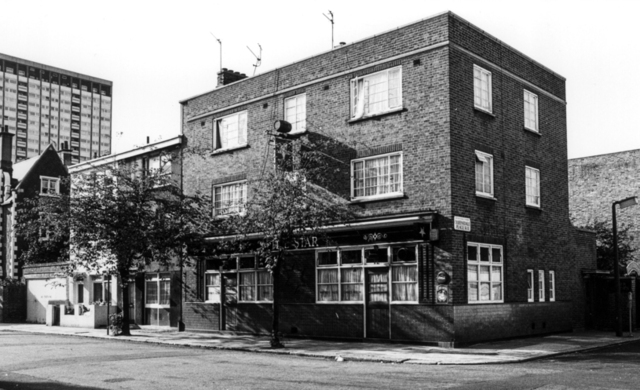 The Star · Holland Park · closed 1998
The Last Five Years
Twelve London pubs that closed since 2020. Ten of them last year, two this year. The skip arrived at all twelve.
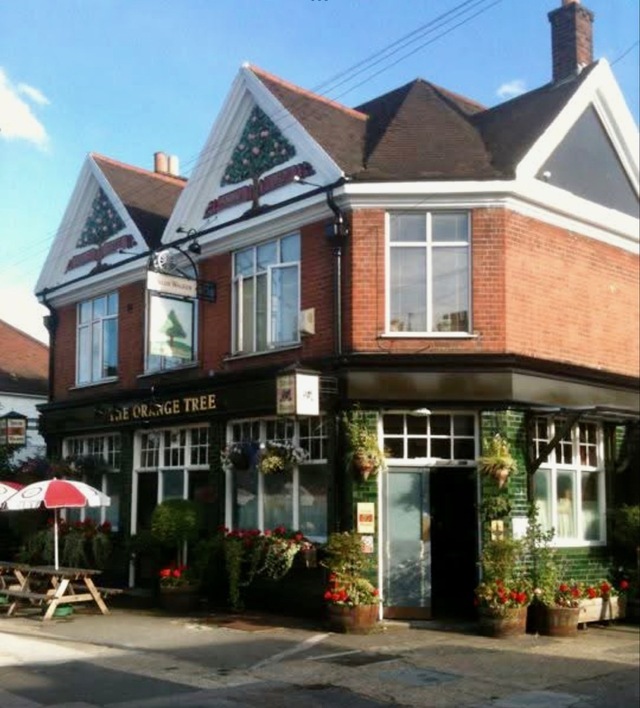 Orange Tree · Winchmore Hill · closed 2026
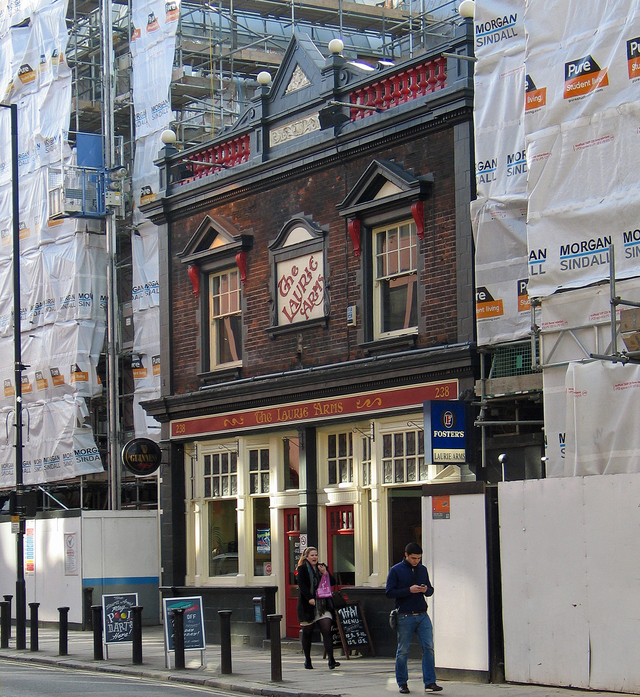 Laurie Arms · Hammersmith · closed 2026
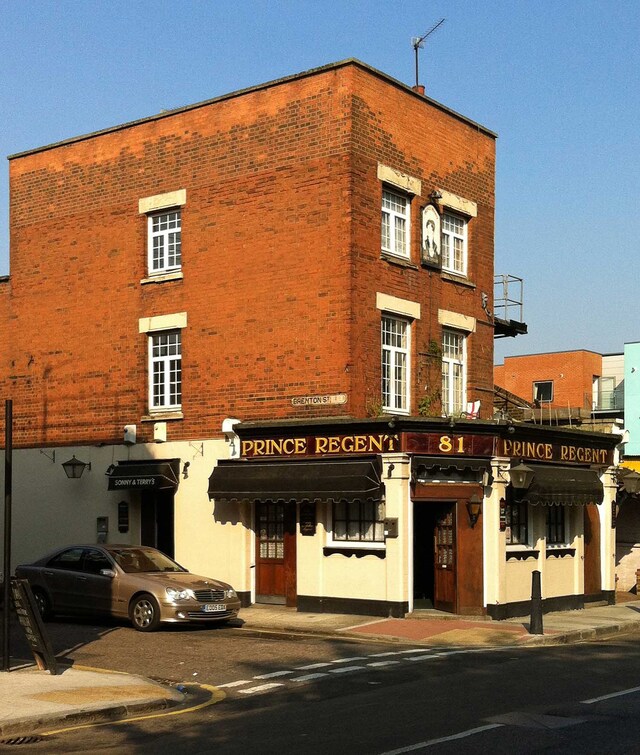 Prince Regent · Poplar · closed 2025
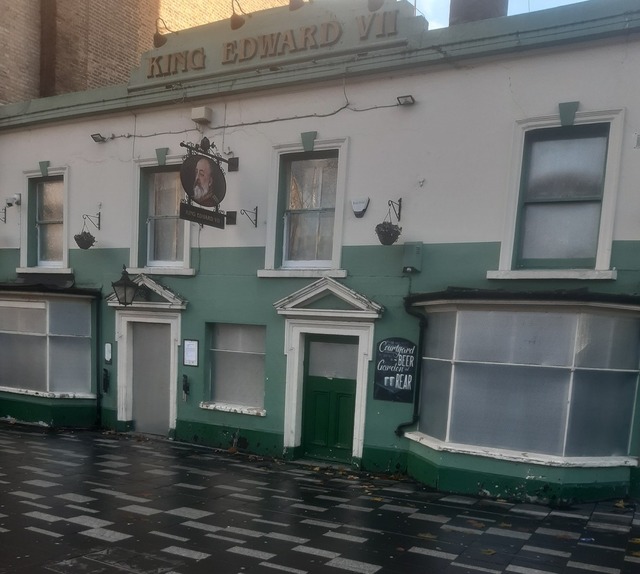 King Edward VII · Stratford · closed 2025
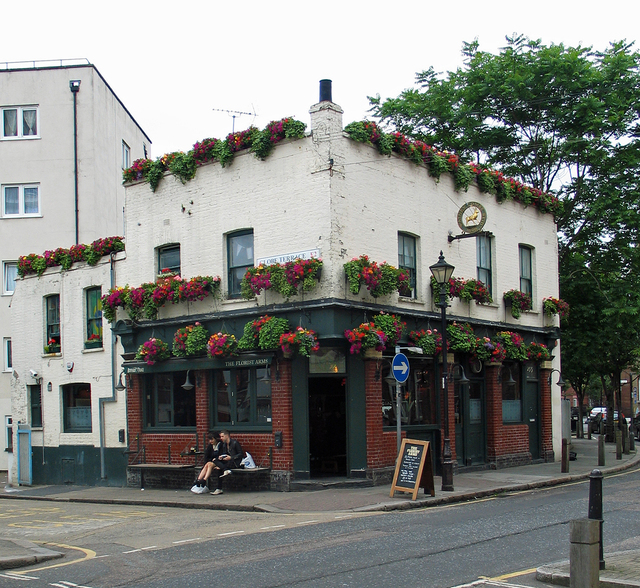 Florists Arms · Bethnal Green · closed 2025
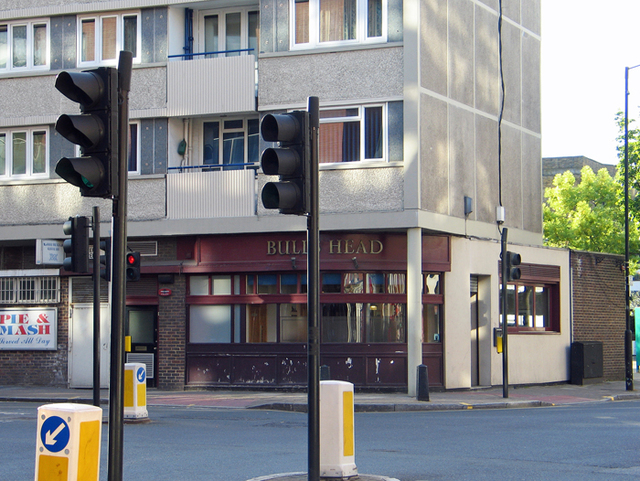 Bulls Head · Clerkenwell · closed 2025
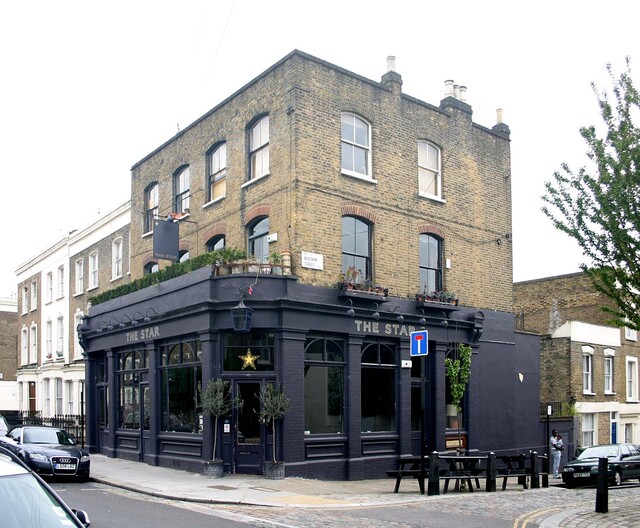 Totnes Castle · Upper Holloway · closed 2025
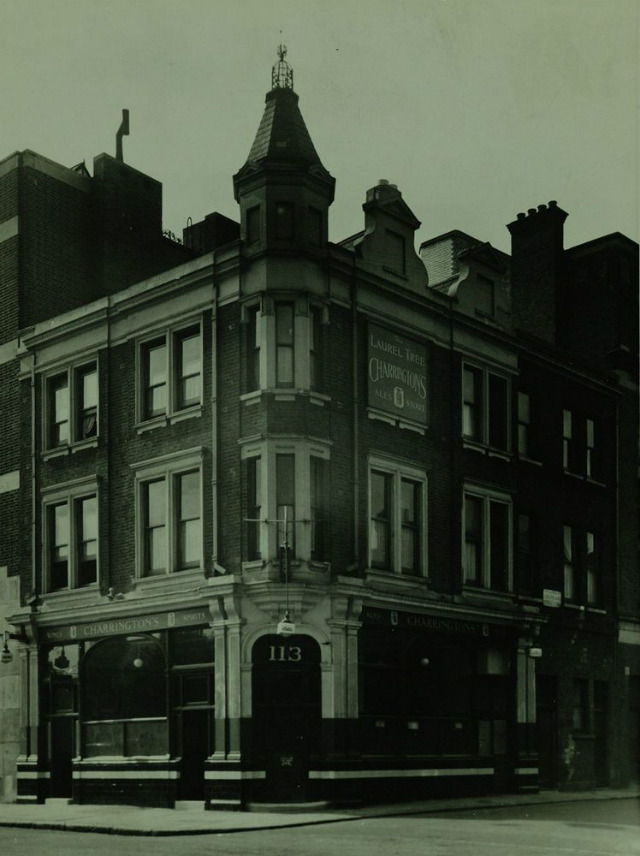 Laurel Tree · Camden · closed 2025
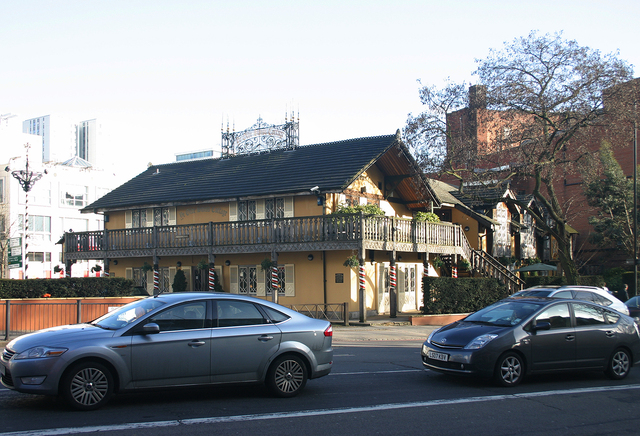 Olde Swiss Cottage · Hampstead · closed 2025
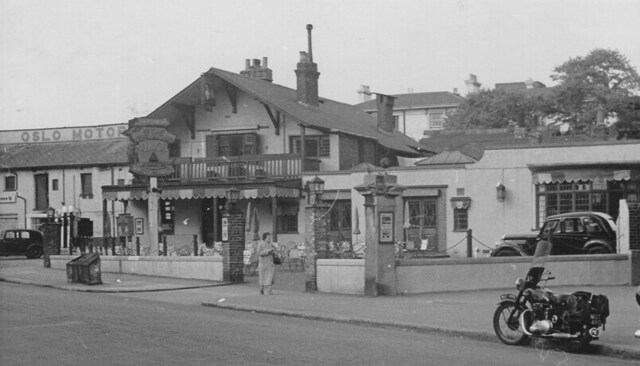 Swiss Cottage · Hampstead · closed 2025
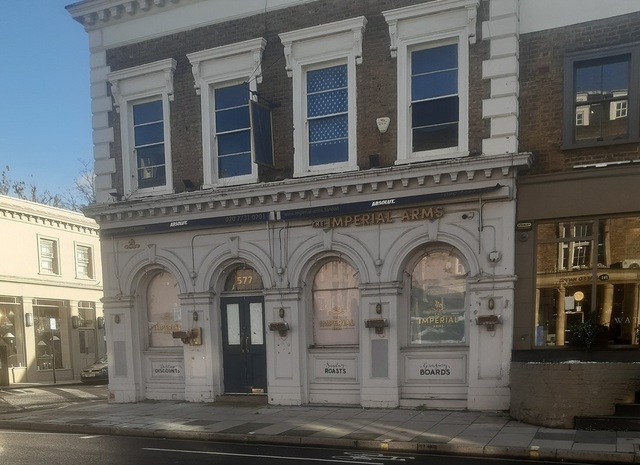 Imperial Arms · Fulham · closed 2025
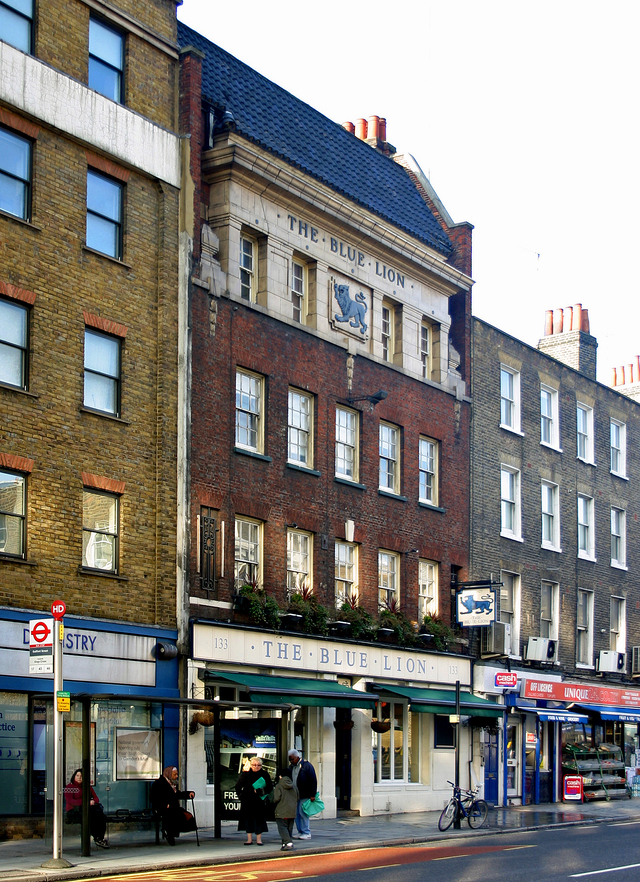 Blue Lion · WC1 · closed 2025
What They Became
1,430 of the closed pubs come with a note saying what the building is now. Two hundred and eight became flats. Three became a Costcutter. One became a Buddhist school.
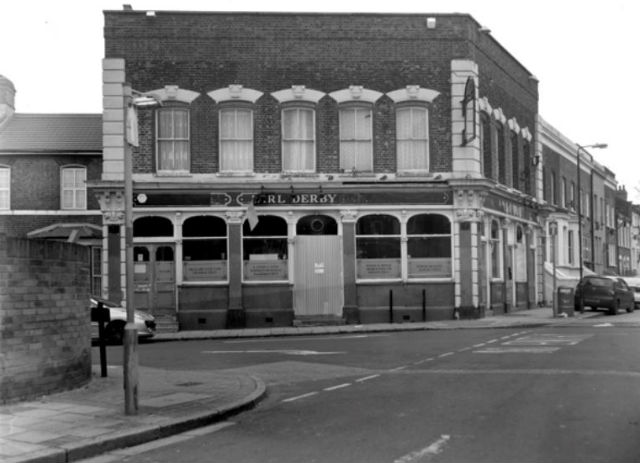 Earl Derby · Plaistow · now residential
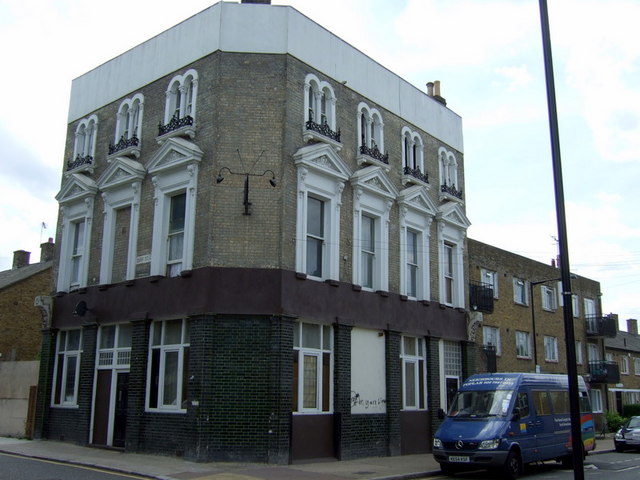 African Queen · Poplar · now residential
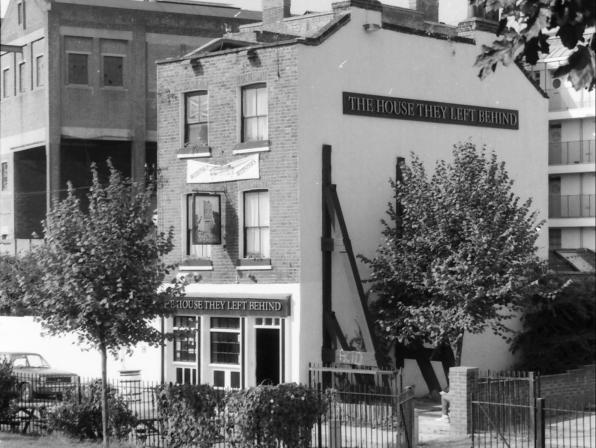 Black Horse · Poplar · now private residential
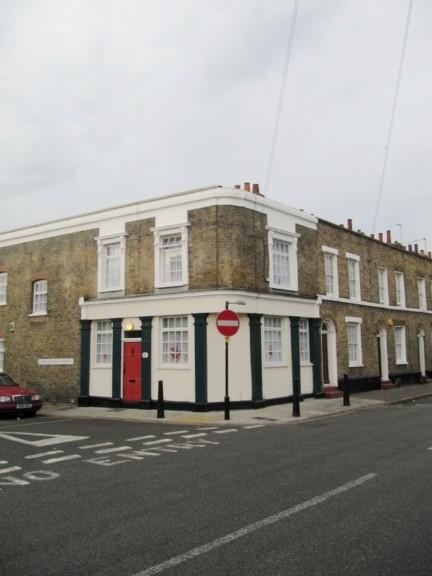 Crows Nest · Poplar · now residential
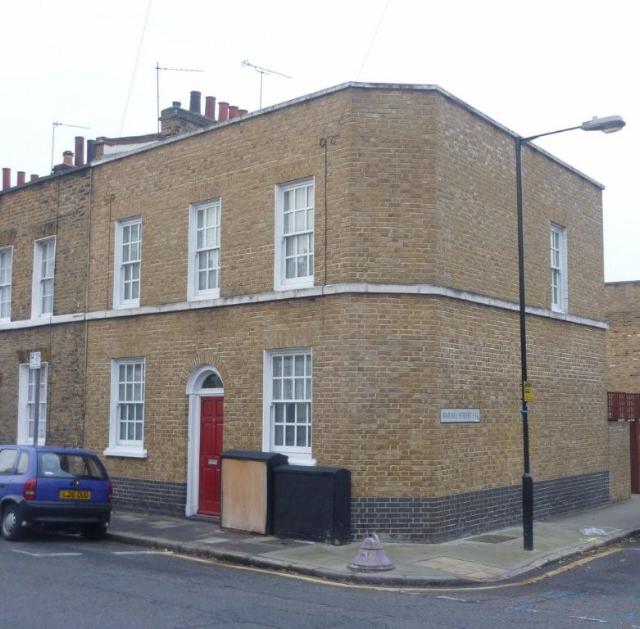 Duke Of York · Poplar · now private residential
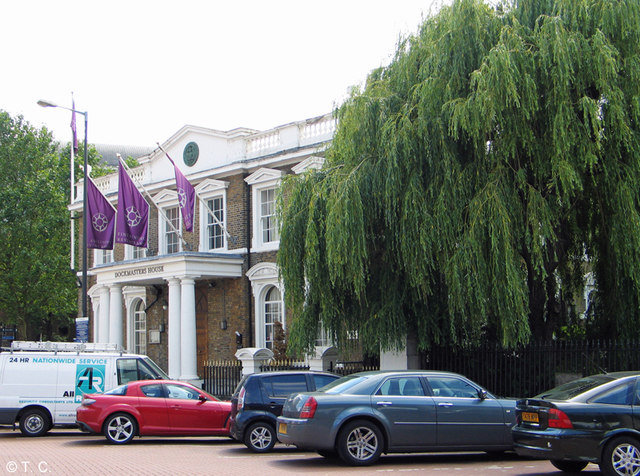 Jamaica Tavern · Poplar · now a restaurant
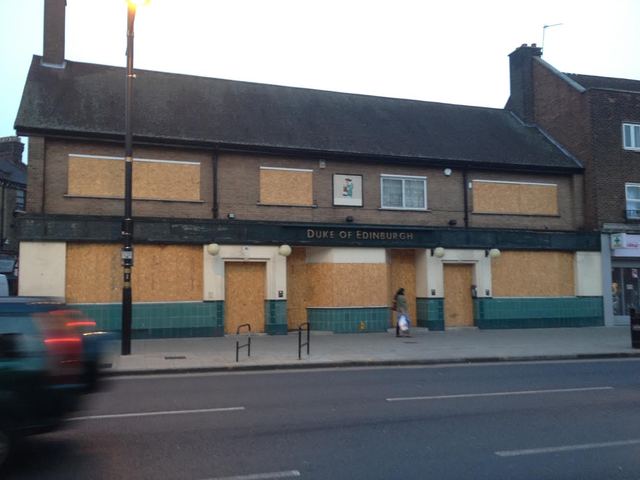 Duke Of Edinburgh · Plaistow · now retail
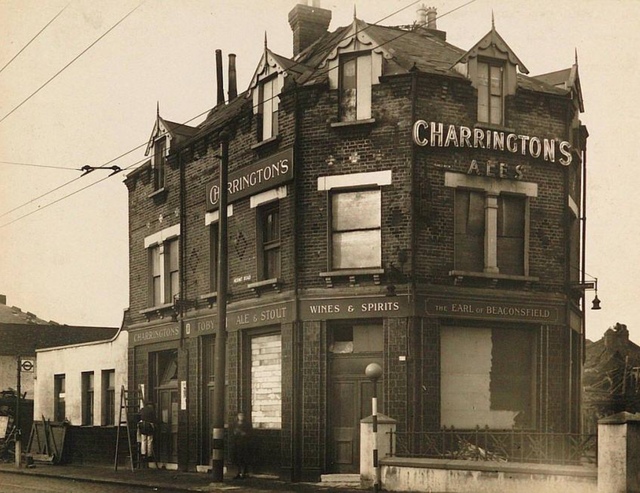 Earl Of Beaconsfield · Plaistow · demolished 2007
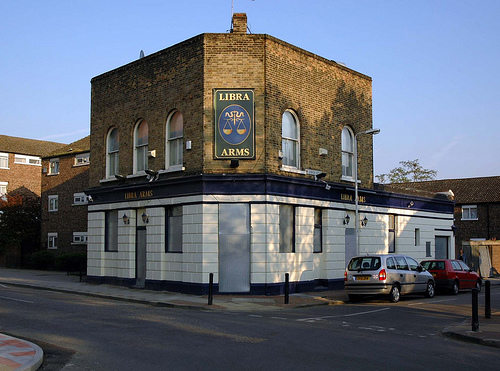 Libra Arms · Stratford · now a Costcutter
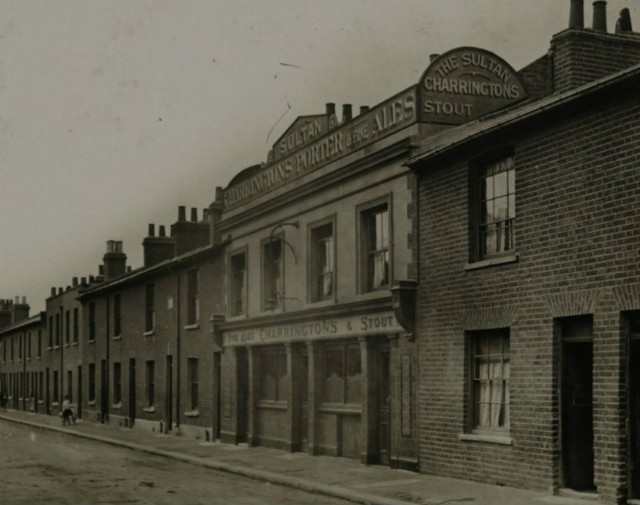 The Sultan · Plaistow · demolished 2005
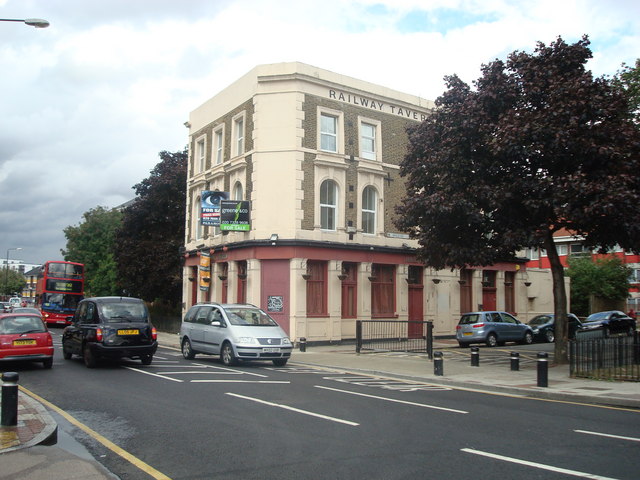 Railway Tavern · Stratford · now a convenience store
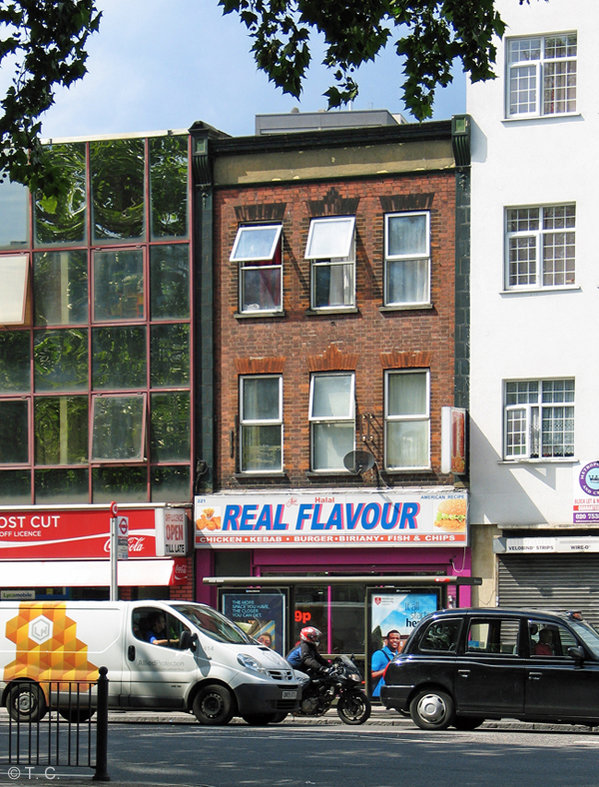 The Admiral · Poplar · now commercial
The Charrington Empire
Charrington brewed on the Mile End Road from 1766 until January 1975. Their red C is on the wall of 70 pubs in our archive. All closed.
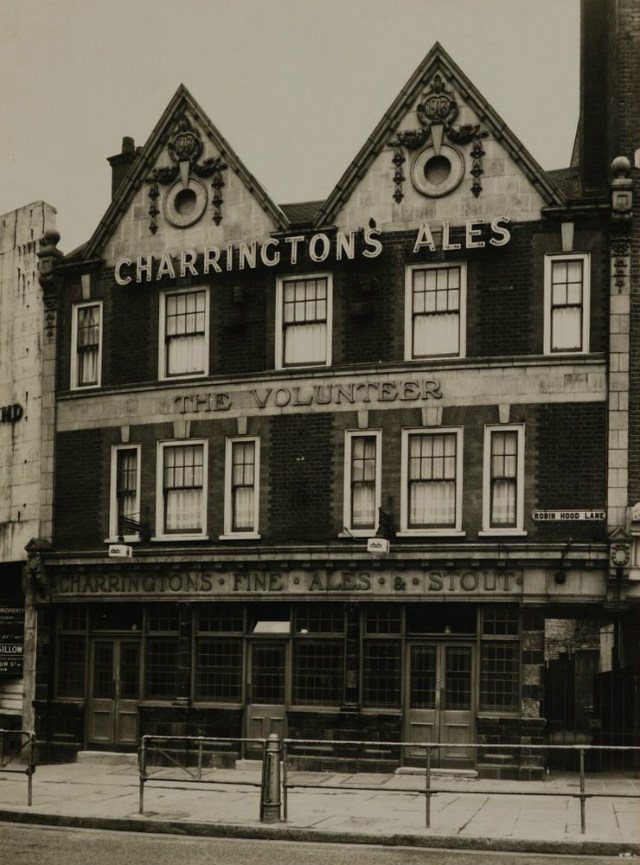 The Volunteer · Poplar · closed 1991
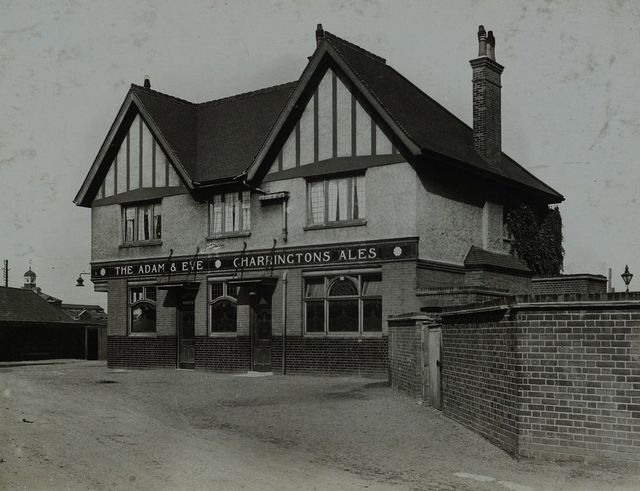 Adam & Eve · Stratford · closed 1994
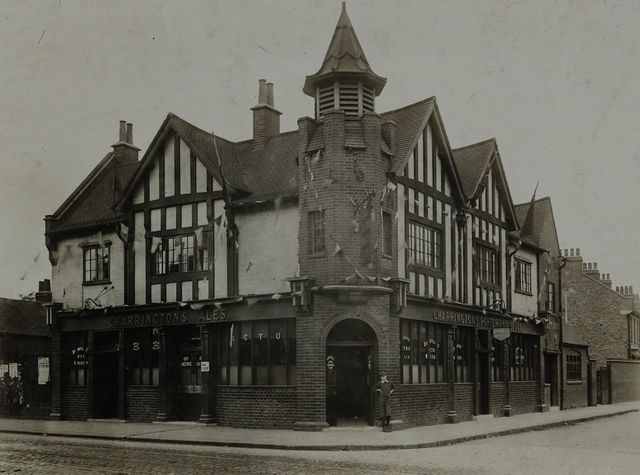 The Angel · Stratford · closed 2008
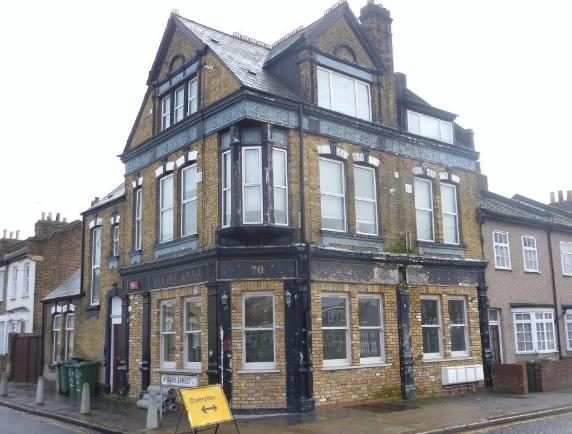 Bakers Arms · Stratford · closed 2001The Charleston · Stratford · closed 1999
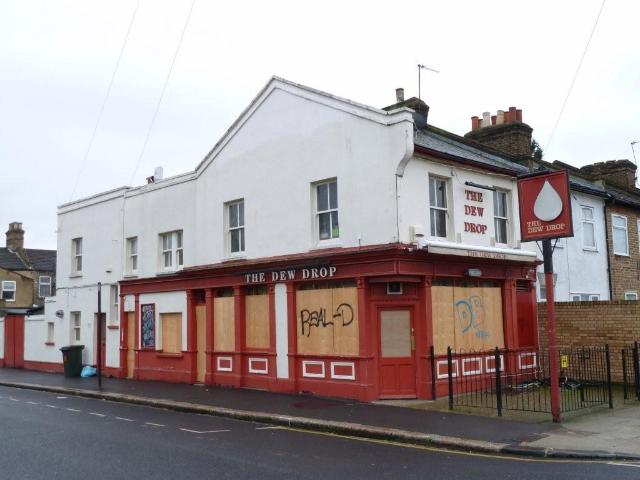 The Dewdrop · Stratford · closed 2011
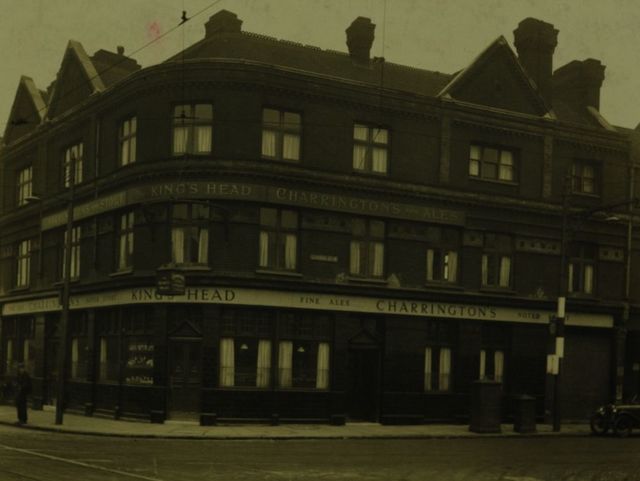 Kings Head · Stratford
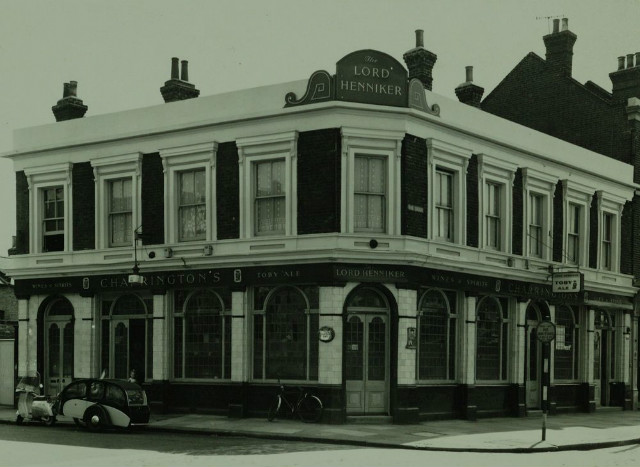 Lord Henniker · Stratford · closed 2003
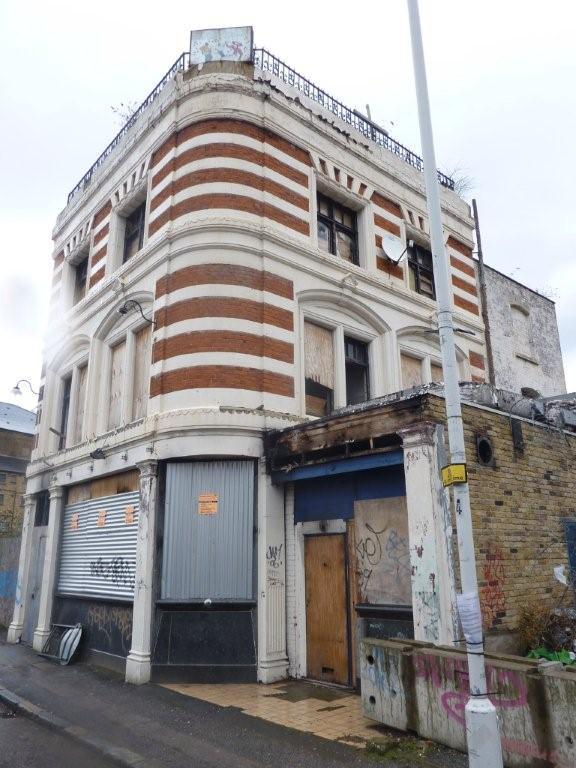 Railway Tavern · Stratford · closed 2005
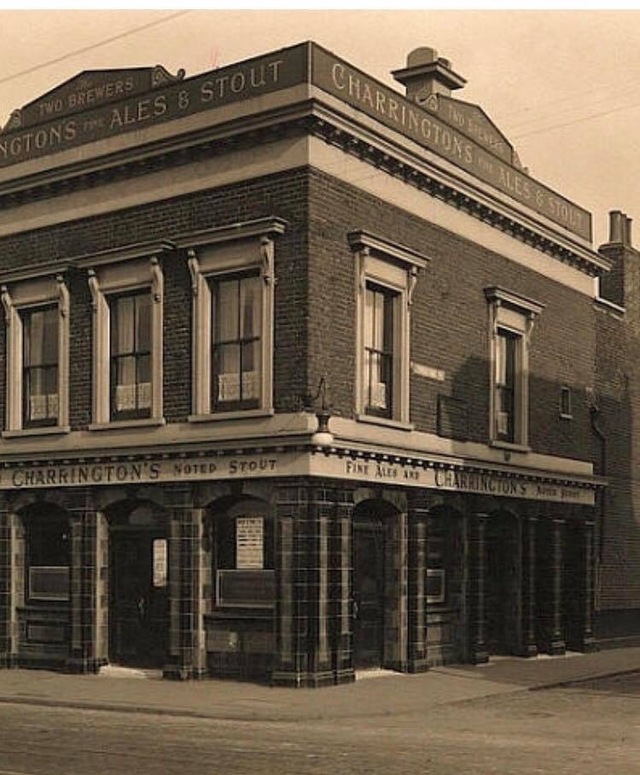 Two Brewers · Stratford · closed 1995
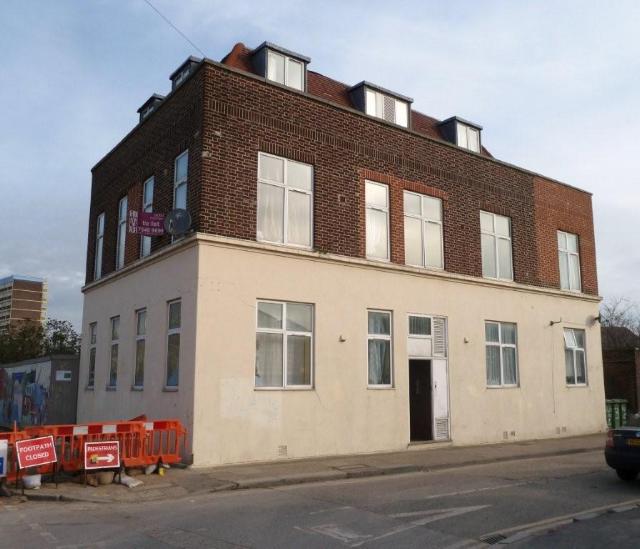 Flying Scud · North Woolwich · closed 1995
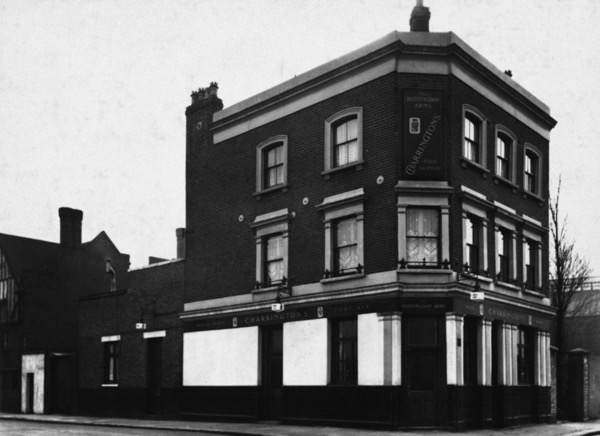 Huntingdon Arms · North Woolwich · closed 1986
The List
Every pub name in London, ranked. You'd expect the Crown at the top. It's second. Scroll past the top twenty and the tail gets strange.
The Moon Under Water
Wetherspoons runs 108 pubs in London. Five of them are called The Moon Under Water, after Orwell's 1946 essay describing his perfect pub. At the end of the essay Orwell admits the place doesn't exist. Tim Martin built it five times. Three are pictured; the other two are on London Road in Streatham and Staines Road in Hounslow.
Leicester Square · WC2H 7LE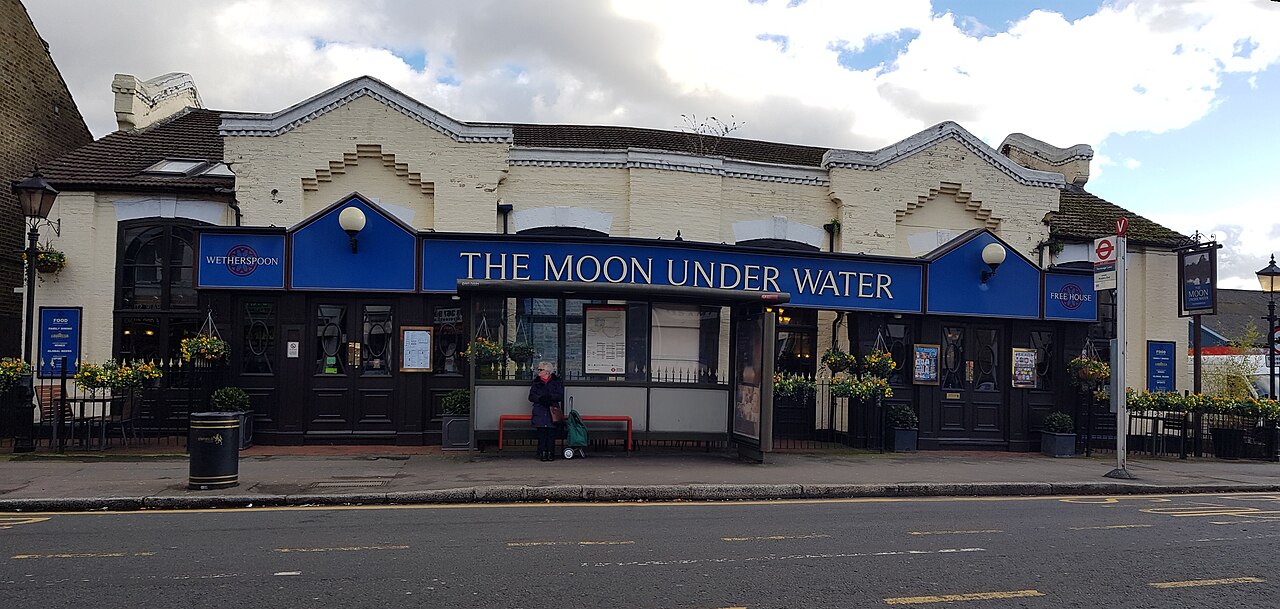 Chase Side · Enfield
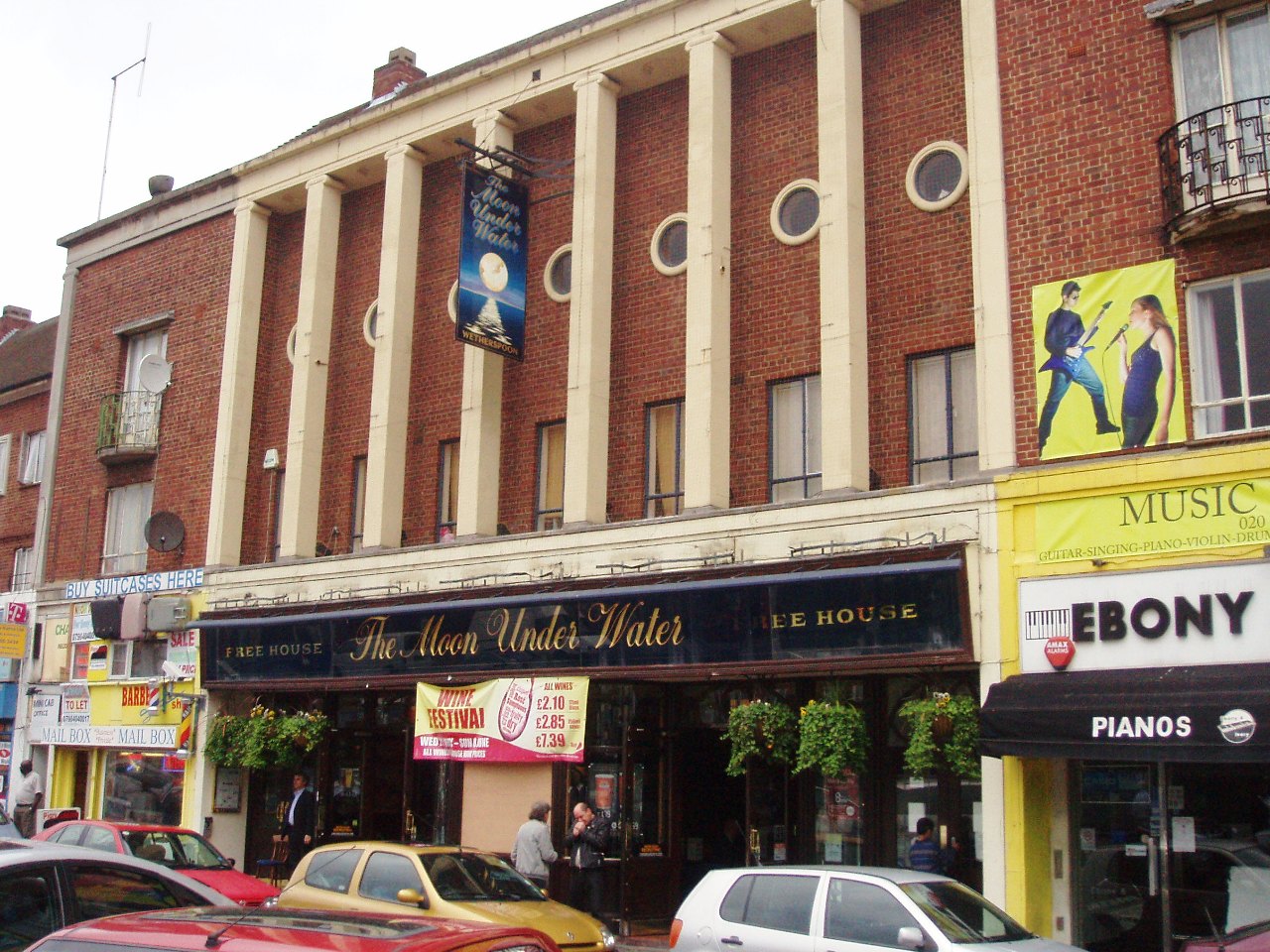 The Hyde · Colindale · NW9 6RR
Photos: Ewan Munro / Wikimedia Commons (Leicester Sq, CC BY-SA 2.0) · Flickr / Wikimedia Commons (Enfield + Colindale, CC BY-SA 2.0).
The Charrington Empire
Charrington brewed on the Mile End Road from 1766. Their red C is still painted on 70 pubs in our archive, all of them shut. The company merged into Bass in 1967, the brewery stopped in January 1975, and the site is a retail park now. Watney's, Whitbread, Ind Coope: we have their pubs too, and they went the same way.
The Volunteer · Poplar · closed 1991Adam & Eve · Stratford · closed 1994The Angel · Stratford · closed 2008Bakers Arms · Stratford · closed 2001The Pub That Changed Its Name
London had five pubs called The Black Boy. Four are in our archive as closed: Poplar, Shoreditch, South Tottenham, and the Black Boy & Still in Hampstead. Only the Shoreditch one has a date on it, 1900. The rest just stopped, and nobody wrote down when. Haringey Council renamed Black Boy Lane in Tottenham to La Rose Lane after a campaign that started in 2020, and the sign went up in January 2023. John La Rose founded Britain's first Caribbean publisher, a mile away. The street took two years and a consultation. The pubs took nobody's permission at all.
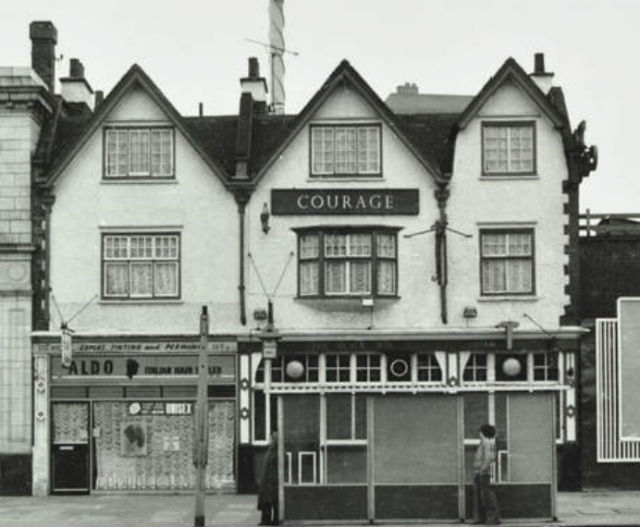 Black Boy · Shoreditch · closed 1900
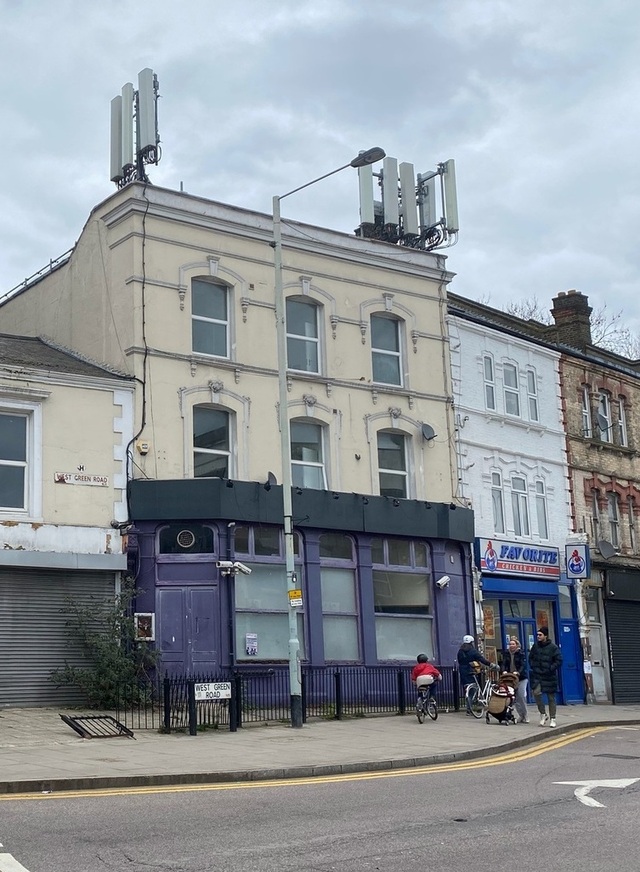 Black Boy · South Tottenham
What the OCR saw
Our pipeline ran Apple Vision OCR on every sign in the archive. Mostly it worked. Sometimes it didn't. The Earl of Beaconsfield's sign came back as CHARPINCTONS PRINGTONS WINES & SPIRITS. The Castle's came back as GARRINGTON'S. The Foresters Arms became THE HOMESTERS ARMS. Every misread is one pub whose sign was already too faded to read in the photograph.
Earl Of Beaconsfield · OCR'd as CHARPINCTONS PRINGTONS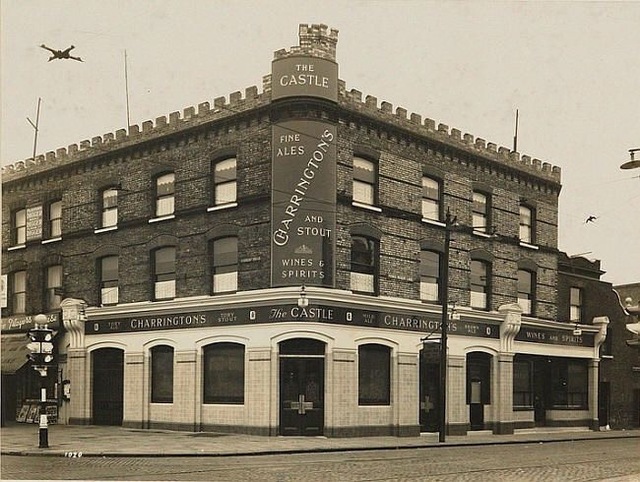 The Castle · OCR'd as GARRINGTON'S
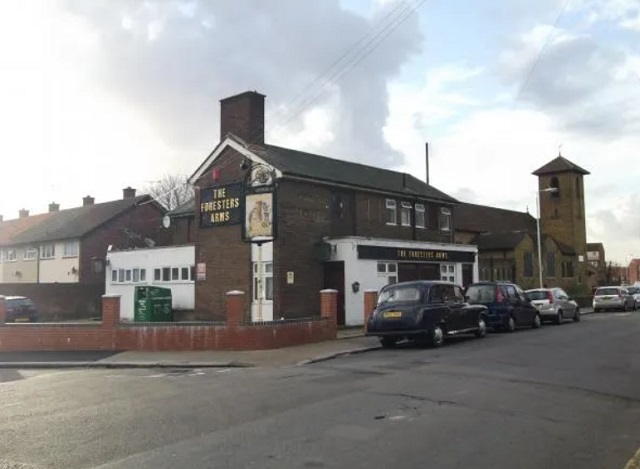 Foresters Arms · OCR'd as HOMESTERS ARMS
Filthy MacNasty's
One pub in London carries this name, on Amwell Street in Finsbury. Three hundred names in our ranking appear more than once. This one doesn't, which is the whole reason it's here.
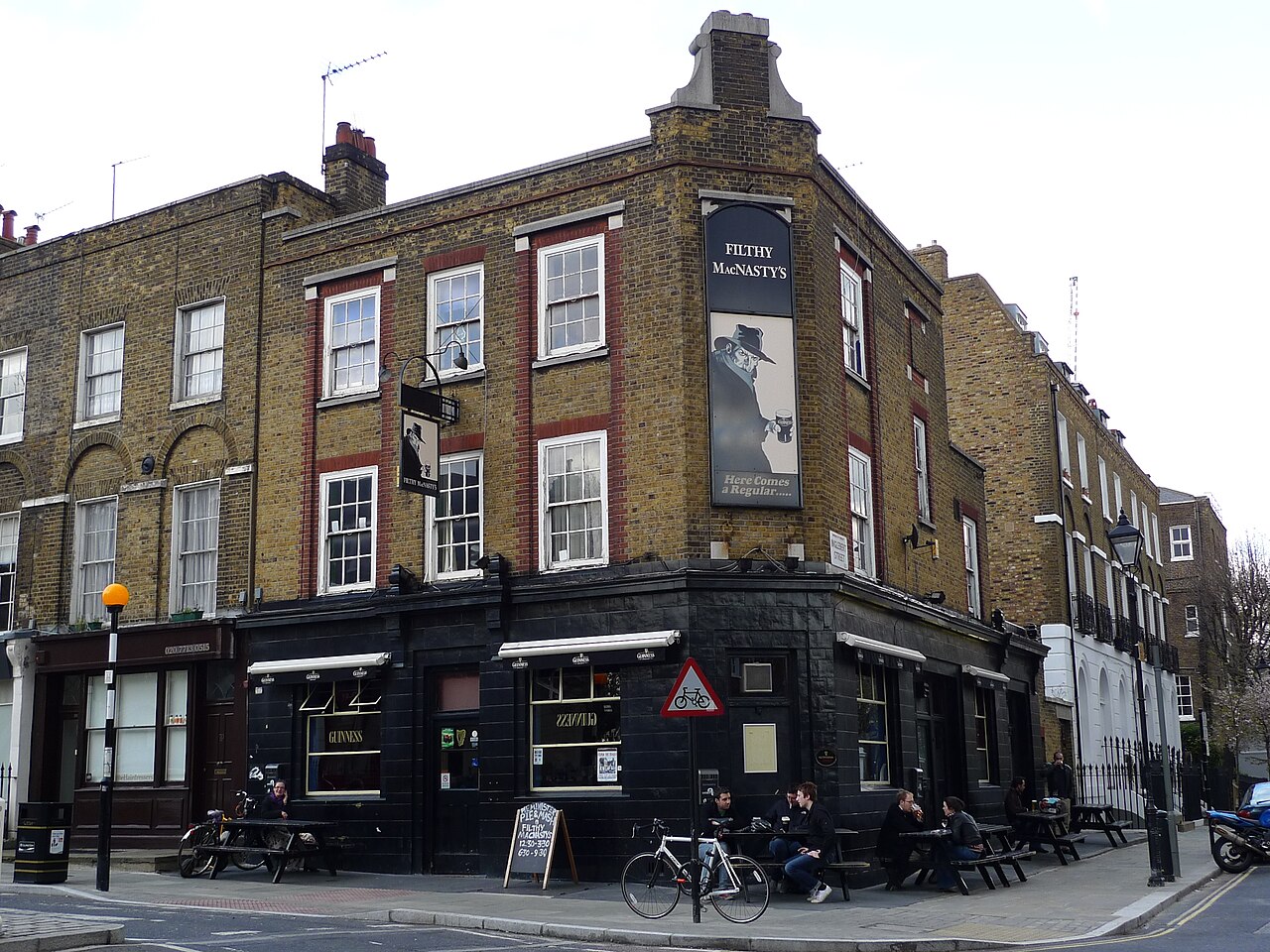 Filthy MacNasty's · Finsbury, EC1
Ye Olde Cheshire Cheese
The sign says 1538. The building burned in the Great Fire of 1666 and went back up on the same cellars a year later. It's still open, and it's run by Samuel Smith's, a Tadcaster brewery that was never part of the Big Six and so had nothing to divest in 1989.
Ye Olde Cheshire Cheese · Fleet Street, EC4 · est. 1538The Last One
Three pubs have gone into the archive so far this year: the Orange Tree in Winchmore Hill, the Greyhound in Battersea, the Laurie Arms in Hammersmith. Fourteen went in 2025. Those are only the ones somebody photographed, so the real count is worse. New ones keep arriving.
Orange Tree · Winchmore Hill · closed 2026Laurie Arms · Hammersmith · closed 2026Prince Regent · Poplar · closed 2025King Edward VII · Stratford · closed 2025Darkstar's Archive
478 of the photographs in this piece are credited to one user: Darkstar. The next closest, Timothy Keane, has 392. The site doesn't list a real name and we didn't find one.
A fair number of the lost pubs you've scrolled past are here because he was there with a camera on the morning the carpenters arrived.
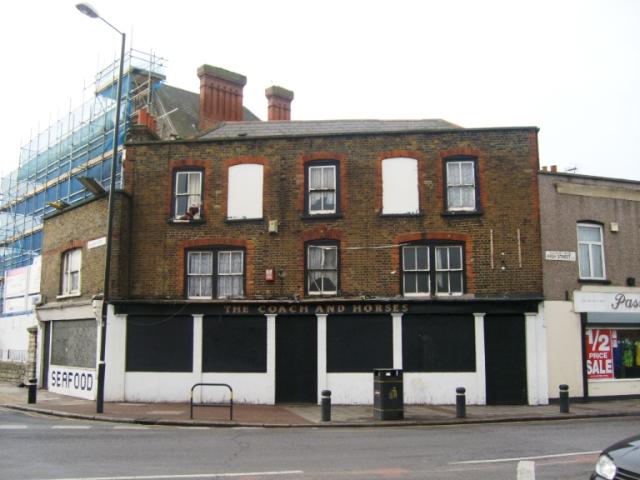 Coach & Horses · by Darkstar
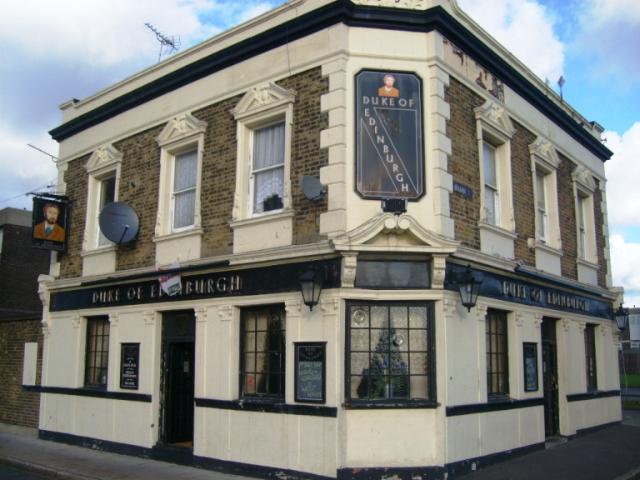 Duke Of Edinburgh · by Darkstar
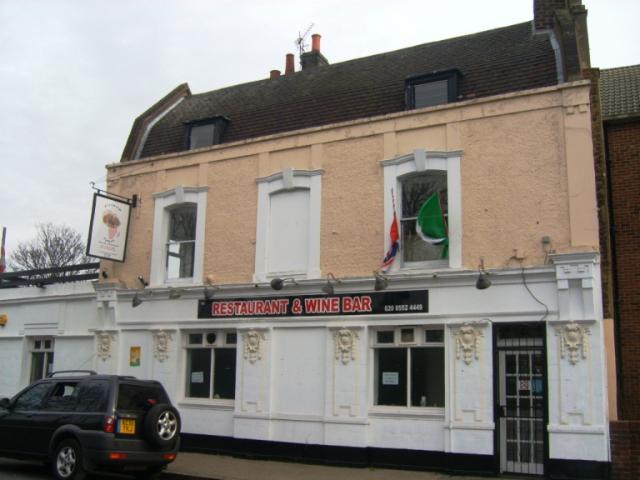 Greyhound & Hare · by Darkstar
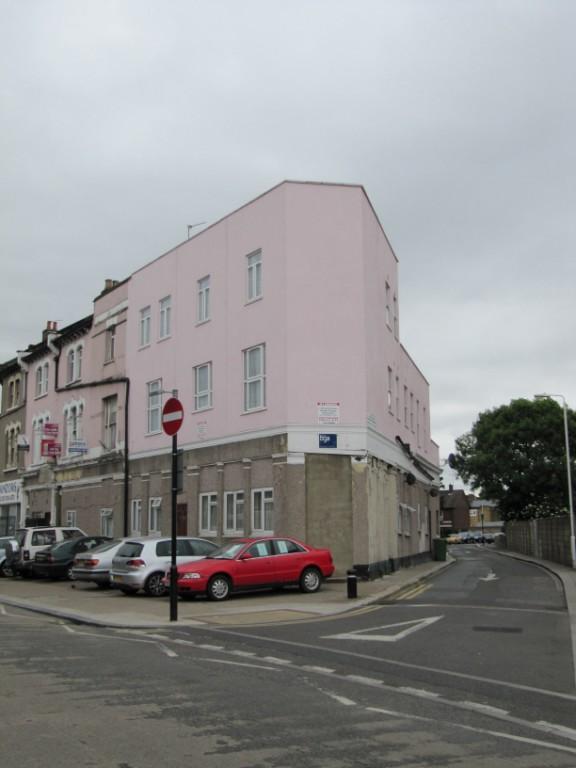 Memory Lane · by Darkstar
The wall.
Sixty London pubs, picked at random. Another 2,989 are in the archive, sorted by the decade they closed.
Browse the whole archive →
London keeps losing pubs and nobody counts them properly. We have a closure year for 1,925 of the 5,029 that have shut. The other 3,104 just stopped, on a date nobody bothered to write down.
Not the breweries, not the councils, not the licensing bodies, not the historians. None of them kept the list.
What exists instead is 4,656 photographs, uploaded since 2003 by people doing it for nothing. Five hundred and seventy are credited by name. The biggest single contributor goes by Darkstar and has put up 478 of them. We don't know who he is.
When they stop, the record stops. The pub you walked past today is somewhere in the archive, or it isn't. If it isn't, nobody got there with a camera in time.
Found a pub we missed? Tell us about it below.